
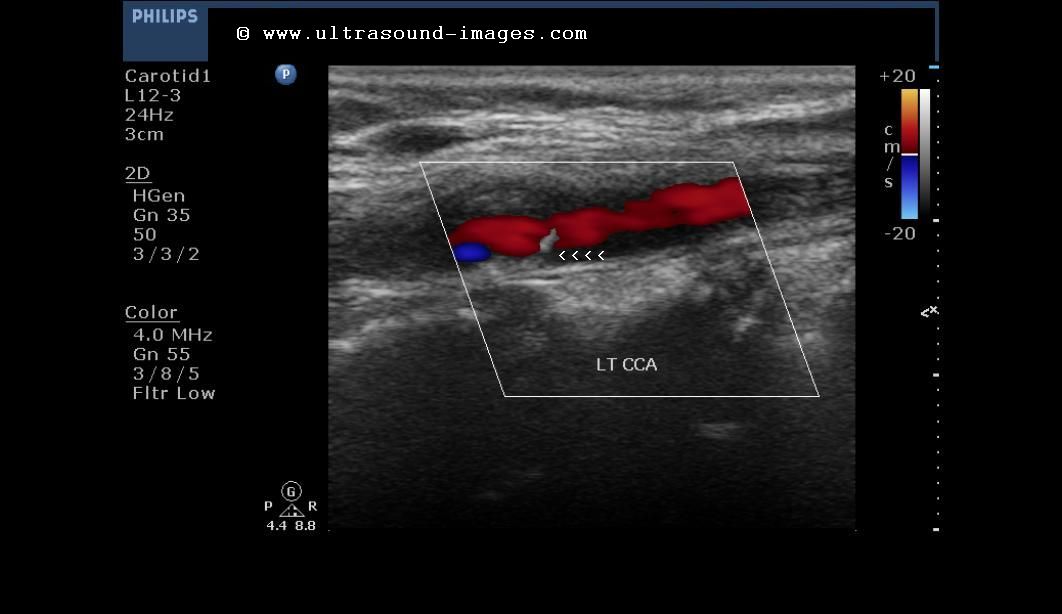
When you step into a clinician’s office and hear the term “CCA” associated with a carotid ultrasound, a whirlwind of questions may erupt in your mind. What does CCA entail? How does it relate to your health? Unraveling these queries reveals not merely a medical acronym but a window into understanding critical aspects of our cardiovascular system.
To commence, let’s delve into the meaning behind the acronym itself. CCA stands for Common Carotid Artery. This vital blood vessel plays a pivotal role in transporting oxygen-rich blood from the heart to the brain, face, and neck. Understanding its function is essential, as it embodies a primary pathway for cerebral perfusion, which is crucial for sustaining cognitive function.
As you contemplate your circulatory system, picture the common carotid arteries—two principal conduits located on either side of your neck. They bifurcate into the internal and external carotid arteries. Herein lies their significance: while the internal carotid artery supplies blood to the brain, the external carotid artery nourishes the face and neck. Hence, understanding the CCA is tantamount to delving into the very architecture that supports cerebral health.
The carotid ultrasound is a non-invasive diagnostic procedure that utilizes sound waves to create images of the carotid arteries. When healthcare providers conduct a carotid ultrasound, they aim to visualize the structures of the CCA, assess blood flow, and detect any abnormalities, such as plaque buildup or stenosis. This evaluation can be vital in predicting the risk of stroke or transient ischemic attacks (TIAs), thereby empowering patients with preventive strategies.
So, why does a healthcare professional prioritize examining the CCA? The insights gained from studying the carotid arteries are vast. A carotid ultrasound assesses the thickness of the arterial walls, revealing how they respond to a myriad of risk factors, including hypertension, diabetes, and hyperlipidemia. A thickening wall could suggest atherosclerosis, a progressive condition that occurs when fatty deposits accumulate, narrowing the arteries and hindering blood flow.
Moreover, consider the alarming fact that a significant percentage of strokes are attributed to carotid artery disease. Understanding the intricate behaviors of the CCA through ultrasound can afford a comprehensive approach to mitigating such risks. The procedure serves as a preventative measure—a way of maintaining your health before conditions become critical.
Imagine the ultrasound process: patients lie comfortably while a sonographer applies a water-based gel to the neck area, which optimizes sound wave transmission. As the transducer emits sound waves, it captures images of the blood vessels, providing real-time information regarding the velocity of blood flow. These measurements are colored and quantified, offering a vivid portrayal of vascular health. This imaging technique is remarkably effective in rendering data that can dictate management strategies for patients at risk of cardiovascular diseases.
Yet, it is also essential to address the limitations of carotid ultrasound in conjunction with the CCA. While it is a reliable tool, it is not the sole modality for assessing vascular health. Clinicians may also rely on additional imaging techniques, such as magnetic resonance angiography (MRA) or computed tomography angiography (CTA), especially in complex cases where a more comprehensive examination is required. Each method has its nuances, and understanding these can deepen a patient’s insight into their health journey.
Furthermore, distinguishing between the CCA’s anatomy and pathology can engender an understanding of various conditions such as carotid artery dissection and aneurysms. Carotid artery dissection, for instance, can lead to severe consequences if not recognized and managed promptly. An ultrasound can reveal a flap in the arterial wall, leading to a potential stroke. Recognizing these early warning signs cultivates a sense of urgency in patients and emphasizes the importance of regular check-ups.
In contemporary medical practice, health is not merely the absence of disease; it encompasses proactive engagement with one’s well-being. The CCA and its evaluation through carotid ultrasound stand as a testament to this philosophy. Engaging with your healthcare provider about your cardiovascular health can illuminate pathways for improvement and prevention.
So, what’s next for individuals contemplating their cardiovascular health? Engaging in lifestyle modifications such as regular exercise, a balanced diet rich in omega-3 fatty acids, and routine health screenings can significantly bolster vascular health. The understanding that the common carotid artery is a barometer for overall vascular condition is a critical approach to maintaining health.
In conclusion, the CCA—common carotid artery—represents more than a mere medical term. It symbolizes a lifeline that requires vigilant monitoring and care. By understanding its significance through carotid ultrasound, you can unlock the mysteries of your cardiovascular health and embark on a journey towards a more informed, proactive lifestyle. Embrace the empowerment that comes from knowledge, and don’t hesitate to advocate for your health by seeking the clarity and insight that understanding your CCA provides.












