
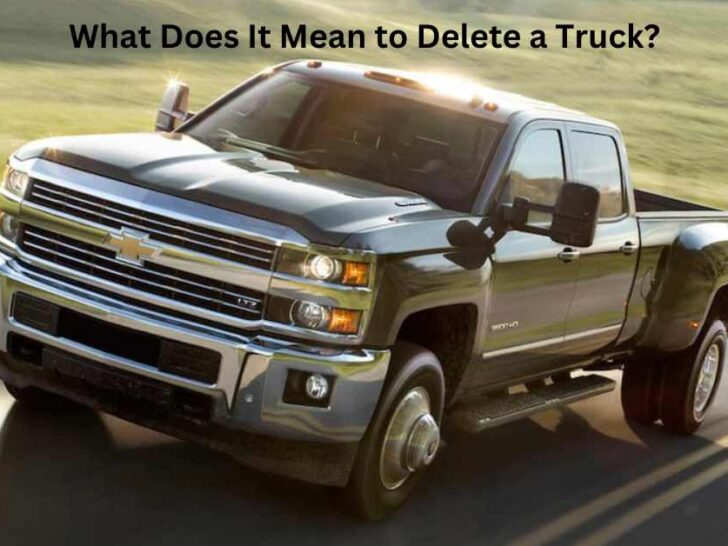
Understanding Truck Deletion: A Deep Dive Into Logistics Language
In the world of heavy-duty vehicles, the term “delete” can evoke confusion, intrigue, or even a sense of rebellion. Much like the cryptic language of poets or the symbols adorning ancient maps, truck deletion encapsulates a complex universe of meanings and implications within the logistics sector. This article delves into the multifaceted concept of deleting a truck, peeling back the layers like the pages of an ancient tome to shed light on its significance in modern automotive parlance.
1. The Essence of Truck Deletion
At its core, truck deletion refers to the act of removing specific components or systems from a truck, particularly those associated with emissions control. Imagine it as taking the intricate gears of a finely tuned watch and removing the unneeded cogs to enhance performance. The primary motivation behind this act is often the pursuit of greater power and efficiency. However, it is crucial to understand both the mechanical transformations and the legal implications that accompany this action.
2. Unpacking the Mechanics: What is Being Deleted?
When one delves into the realm of truck deletion, the common targets are components like the Diesel Exhaust Fluid (DEF) systems, EGR (Exhaust Gas Recirculation) systems, and DPF (Diesel Particulate Filter). Each piece plays a critical role in a vehicle’s ability to mitigate emissions and perform optimally according to environmental regulations. By removing these components, operators can significantly enhance horsepower, torque, and overall performance—but at what cost?
Think of it as an artist stripping away layers from a canvas to reveal the raw, vibrant colors beneath. In this light, deletion serves as both a technical upgrade and a controversial aesthetic choice, drawing the line between utility and legality.
3. Performance vs. Responsibility: A Moral Quandary
The allure of a deleted truck lies in the performance boost it facilitates. For many truck owners—particularly those operating in high-stakes industries like freight and construction—this enhancement can mean the difference between profit and loss. The promise of unparalleled acceleration and improved fuel efficiency beckons like a siren in the foggy distance. Yet, this potent blend of power and speed also raises ethical questions: at what point does the pursuit of performance interfere with environmental stewardship?
Considering the ecological implications, the decision to delete a truck echoes the timeless dilemma of modern society: how do we propel forward without leaving a trail of destruction in our wake? Such discourse is essential in an era where sustainability begins to shape consumer choices, challenging the very foundations of traditional logistics practices.
4. The Legal Labyrinth: Navigating the Regulation Maze
To delete or not to delete – that is not merely a question of performance; it is also a legal conundrum. In many jurisdictions, tampering with emissions control systems can result in hefty fines and legal repercussions. The Environmental Protection Agency (EPA) has stringent policies in place to combat such modifications. Navigating this regulatory labyrinth requires truck owners to balance their instinct to push technological boundaries with the legal frameworks designed to protect our environment.
Failure to comply can lead to serious ramifications, akin to a ship sailing into treacherous waters with no compass. This unpredictability reinforces the need for a thorough understanding of local emissions laws and regulations before embarking on the journey of truck deletion.
5. The Community of Delete Enthusiasts
Despite the potential pitfalls, a vibrant community of truck enthusiasts and modifiers thrives within the deletion culture. These individuals often gather at events, share knowledge, and engage in spirited debates over the merits and challenges of deleting trucks. This community serves as a melting pot for ideas, blending mechanics with camaraderie—a place where the love for enhanced vehicle performance transcends mere functionality.
It’s not merely about the truck itself; it’s about belonging to a subculture where every modification becomes a badge of honor, a testament to one’s dedication to pushing the limits of automotive engineering.
6. The Counter-Movement: Advocating for Eco-Friendly Solutions
Interestingly, alongside the deletion culture, there exists a counter-movement advocating for eco-friendly practices. Many modification enthusiasts are beginning to champion alternative solutions that enhance performance without circumventing emissions laws. Innovations like remapping engines or utilizing advanced aftermarket components that comply with regulations have started to gain traction. This pivot towards sustainable practices embodies a growing awareness of environmental issues while still satisfying the insatiable thirst for power and speed.
As this dialogue evolves, it becomes increasingly evident that the truck deletion narrative is not just a story of rebellion against the norms but one of innovation and redefinition in an undoubtedly complex automotive realm.
7. The Road Ahead: The Future of Truck Deletion
What lies ahead in the world of truck deletion? As technology advances and emissions regulations become even more stringent, it will be crucial to find solutions that marry performance with compliance. The future may very well see a synthesis of deletion techniques with cutting-edge environmentally conscious technologies.
Imagine a landscape where trucks not only perform optimally but also do so while minimizing their ecological footprint. Just as artists evolve, adopting new mediums, so too will the trucking industry adapt to emerging needs and priorities, transforming challenges into opportunities for progress.
Conclusion: Crafting a Narrative Beyond Deletion
To delete a truck is to engage in a delicate dance with performance, legality, and ethics. Understanding this complex phenomenon requires a recognition of its many layers and implications. As truck owners and enthusiasts grapple with the desires and responsibilities of their modified machines, the dialogue between power and preservation will continue to shape the future of the logistics landscape.
In this swirling maelstrom of innovation and accountability, one thing remains clear: the conversation surrounding truck deletion is not just about the vehicles themselves but also about building a sustainable narrative for future generations.












