
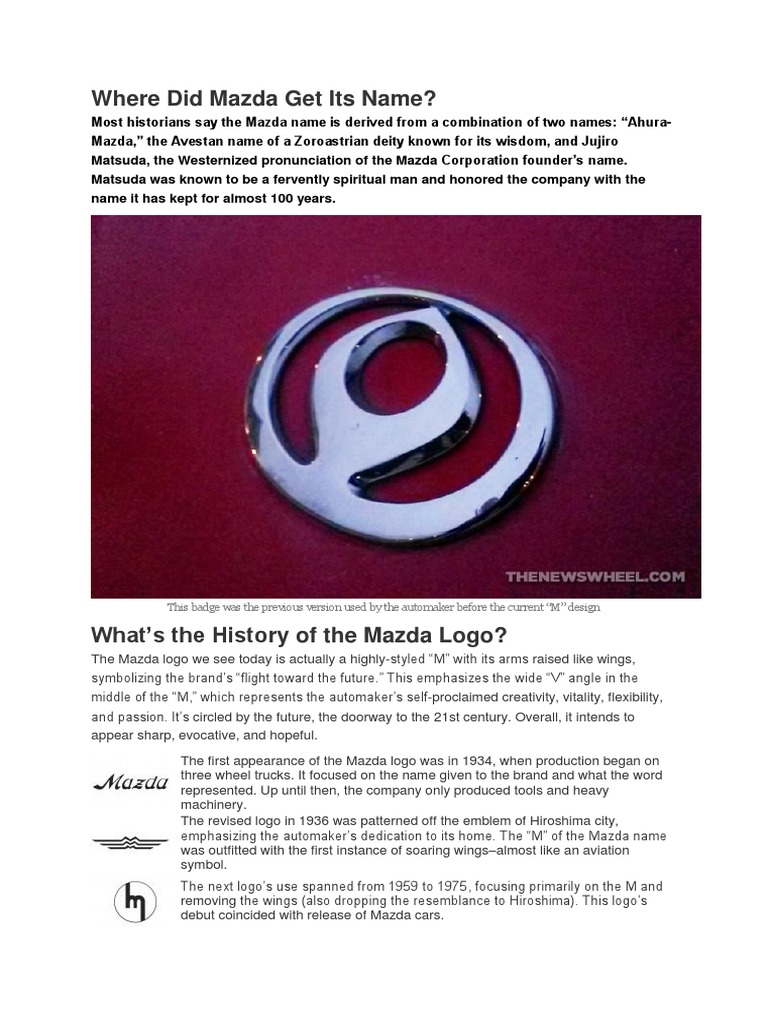
The automotive industry is replete with fascinating tales of branding and etymology, yet few stories are as intriguing as that of Mazda. To comprehend the significance of the name “Mazda,” one must embark on a journey through time, culture, and philosophy. So, what does Mazda mean? Let’s delve into its origins, meanings, and how it encapsulates the essence of the brand itself.
At the heart of Mazda’s name lies the word “Ahura Mazda,” which translates to “Wise Lord” in ancient Persian. This deity epitomizes wisdom, light, and goodness. The connection is not merely incidental; it reflects a philosophy that encourages enlightenment and innovation. By adopting this moniker, Mazda inherently positioned itself as a purveyor of progress and enlightenment within the automotive realm. Here we find the first layer of meaning: Mazda is synonymous with a pursuit of wisdom and a commitment to excellence.
What’s even more intriguing is how this name reflects the company’s foundational philosophy. In 1920, the company—originally named toyosho, which translates to ‘make valuable things’—pivoted towards the name Mazda. This crucial rebranding coincided with the burgeoning automobile industry in Japan and marked a significant transition in the company’s trajectory. The officials recognized the transformative nature of technology and aimed to embody a spirit of ingenuity and vision. Moreover, it symbolizes a resolute belief in the partnership between man and machine. This duality captures the essence of Mazda’s engineering ethos: a harmonious blend of human creativity and technological prowess.
The narrative continues to unfold as we explore the company’s early years. Mazda started manufacturing tools and machinery, but it wasn’t until 1931 that they produced their first car, the Mazda-Go. The unique design and engineering of this three-wheeled truck, combined with its innovative manufacturing processes, propelled the brand into the automotive market. With the name Mazda firmly anchored, the company commenced its quest to innovate and disrupt the automobile landscape. This wasn’t just about creating vehicles; it was a revolution in how mobility could be experienced.
As the years unfolded, Mazda became synonymous with resilience and adaptability. This can be traced back to their unique product offerings, which often challenge the status quo. Take, for instance, their famed Wankel rotary engine, a feat of engineering that defied conventional practices in automotive design. The engine itself serves as a metaphor for the brand: compact, efficient, and significantly divergent from the mainstream. It perfectly illustrates how Mazda remains steadfast in its commitment to innovation, aligning with the philosophical underpinnings suggested by its name.
Delving deeper into the brand’s ethos reveals a nuanced understanding of the relationship between the name Mazda and the company’s corporate culture. The underlying tenet of “human-centric” design permeates the organization. This ethos manifests in their vehicles, designed not merely for functionality but to create a visceral and emotional connection with drivers. Mazda adheres to the belief that cars should resonate with their owners; they should be extensions of individual lifestyles and values. In this sense, the name Mazda evokes more than just a brand—it reflects a lifestyle steeped in thoughtful design and purity of intent.
Another compelling facet of the Mazda narrative lies in their commitment to sustainability. As the urgency for environmental stewardship reaches a crescendo in the automotive sector, Mazda’s name evokes a prescient vision for the future. Centuries of history underscore the alertness and wisdom implied in “Ahura Mazda”—the company endeavors to balance performance with ecological responsibility. This alignment with sustainable practices reinforces the significance of the name, as it symbolizes a shift in perspective towards a more sustainable automotive future.
The brand’s journey from its roots to the modern-day exemplifies the dynamism of Mazda. It seamlessly melds tradition with innovation and cherishes its past while eagerly looking towards the future. Every vehicle resonates with this philosophy—be it the engaging Miata sports car or the luxurious Mazda6 sedan. It’s about creating an experience, not just a mode of transportation. The vehicles become a canvas for individual expression, aligning perfectly with the meaning imbued in their name.
The curiosity surrounding the name Mazda can also be viewed through the lens of Japanese culture. In Japan, the concept of naming carries profound significance, often encapsulating the spirit and philosophy of the entity it represents. Mazda embodies notions of community, craftsmanship, and a pursuit of perfection. These culturally ingrained values further fortify the interpretation of the brand name and enhance its vibrancy in the global marketplace.
In conclusion, the name Mazda is imbued with deep meanings that go beyond mere nomenclature. It signifies a blend of wisdom, innovation, and the pursuit of excellence, drawing on both ancient philosophy and modern automotive design. Each facet of the company reflects the layers of meaning embedded within its name, presenting a narrative that is as compelling as the vehicles that bear it. Through a name derived from a deity of wisdom and light, Mazda not only connects its heritage to a philosophical lineage but also emphasizes its relentless quest for progress and a future defined by sustainable innovation. Hence, in pondering what Mazda means, one discovers a profound invitation to engage with a legacy that promises to inspire curiosity and evoke transformation in the world of mobility.












