
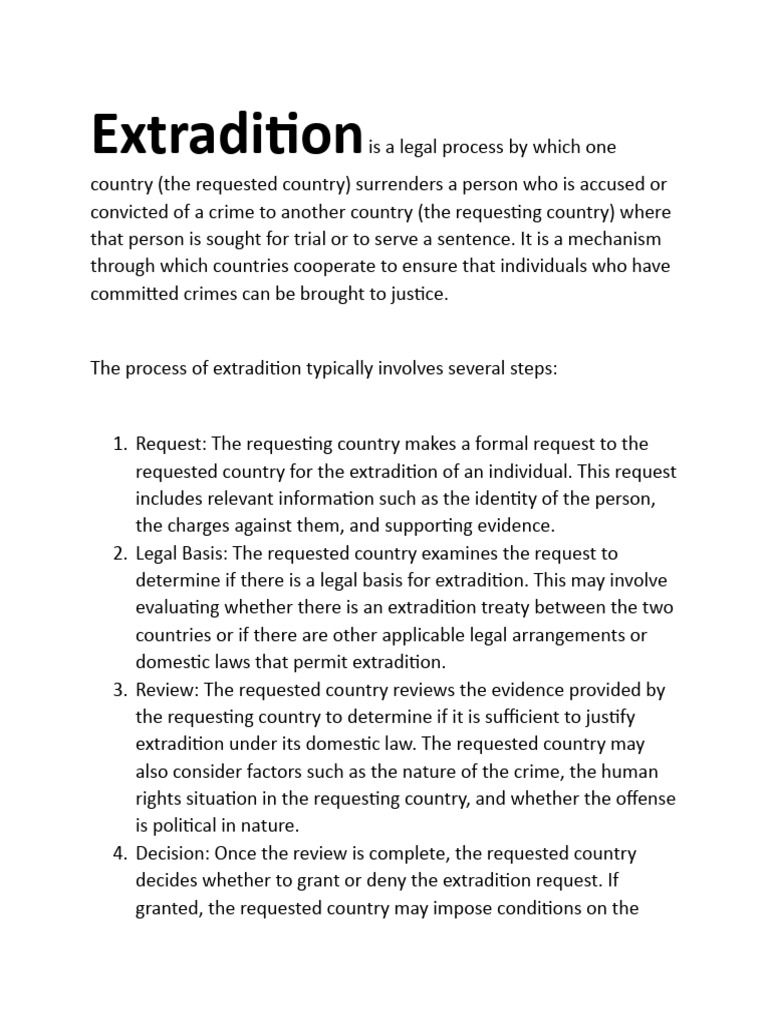
Extradition is a complex legal process that allows one jurisdiction to surrender an individual to another jurisdiction for prosecution or to serve a sentence. Within the ambit of extradition law, the term “waived extradition” emerges as a crucial concept. When an individual waives their right to extradition, it signifies a critical decision that can have profound implications for their legal rights and freedom. This article elucidates what waived extradition means, the legal rights at stake, and the multifaceted dimensions of this legal phenomenon.
Understanding Extradition
To grasp the notion of waived extradition, one must first comprehend the foundational principles of extradition. Extradition treaties between nations stipulate the terms and conditions under which one country can request the return of an accused or convicted individual. Typically, these agreements require a formal judicial process, wherein both the requesting and requested states assess the validity of the extradition claim and the gravity of the charges.
However, extradition is not universally applicable. Various considerations, such as the nature of the offense, human rights concerns, and the legal framework of the states involved, all play a pivotal role in determining whether extradition will proceed.
What Is Waived Extradition?
Waived extradition occurs when an individual voluntarily relinquishes their right to contest an extradition request. This may happen during an extradition hearing or through a formal declaration where the individual explicitly consents to be extradited to the requesting jurisdiction. The motivations for waiving this right can be diverse, ranging from a desire for a swifter resolution of legal matters to a strategic decision based on the individual’s assessment of their prospects in the foreign legal system.
Legal Rights Implicated in Waived Extradition
When it comes to extricating oneself from the jurisdictional bindings that extradition entails, several legal rights come into play, and understanding these rights is essential for any individual facing extradition:
- Right to Due Process: Individuals facing extradition retain the right to due process, which mandates a fair and impartial judicial proceeding. However, once a person waives this right, they essentially forfeit their ability to contest the extradition on legal grounds.
- Right to Counsel: Those subject to extradition are entitled to legal representation. If an individual waives extradition, they are often engaging with legal counsel to better understand the implications of such a decision.
- Right to Challenge Charges: Normally, extradition allows for a challenge against the validity of the charges. However, waiving extradition restricts the ability to dispute the accusations presented by the requesting state.
It is crucial to understand that waiving extradition does not absolve the individual of the charges against them. Rather, it expedites the process of facing those charges, which can be both advantageous and disadvantageous, depending on individual circumstances.
Factors Influencing the Decision to Waive Extradition
There are several dimensions to consider when an individual contemplates waiving their extradition rights:
- Legal Strategy: Legal representatives may advise clients to waive extradition to expedite legal proceedings. In some cases, facing charges directly in the requesting country may lead to more favorable outcomes than prolonged extradition disputes.
- Assessment of Charges: If an individual perceives the charges to be less severe than initially perceived or believes they can successfully defend against them in the requesting jurisdiction, they may opt to waive extradition.
- Personal Factors: Emotional or psychological pressure can also influence the decision. The desire for closure or a personal belief in reform can prompt individuals to face their charges head-on rather than prolonging the process through legal contestation.
Potential Consequences of Waived Extradition
Waiving extradition is not an innocuous choice; the ramifications can be significant:
- Immediate Transfer: Once extradition is waived, the individual will typically be promptly transferred to the requesting jurisdiction, where they will face the legal proceedings awaiting them.
- Implications for Legal Defense: The decision may curtail the individual’s defense strategy. By preemptively conceding to extradition, defendants may lose the opportunity to gather evidence or challenge the merits of the requesting state’s case.
- Impact on Sentencing: In some cases, courts in the requesting jurisdiction may consider the waiver of extradition during sentencing, potentially resulting in harsher penalties if viewed as an admission of guilt.
Conclusion
In conclusion, waived extradition represents a pivotal juncture in the life of an individual facing international legal proceedings. By relinquishing their right to contest extradition, individuals make a strategic choice that can have long-lasting implications for their freedom and legal rights. Understanding the nuances of this decision, including the legal rights involved and the potential consequences, is essential for anyone navigating the intricacies of extradition law. Given the complexity of international legal frameworks and the varying circumstances surrounding extradition cases, individuals should engage with experienced legal counsel to weigh their options thoughtfully and seek a resolution that aligns with their best interests.












