
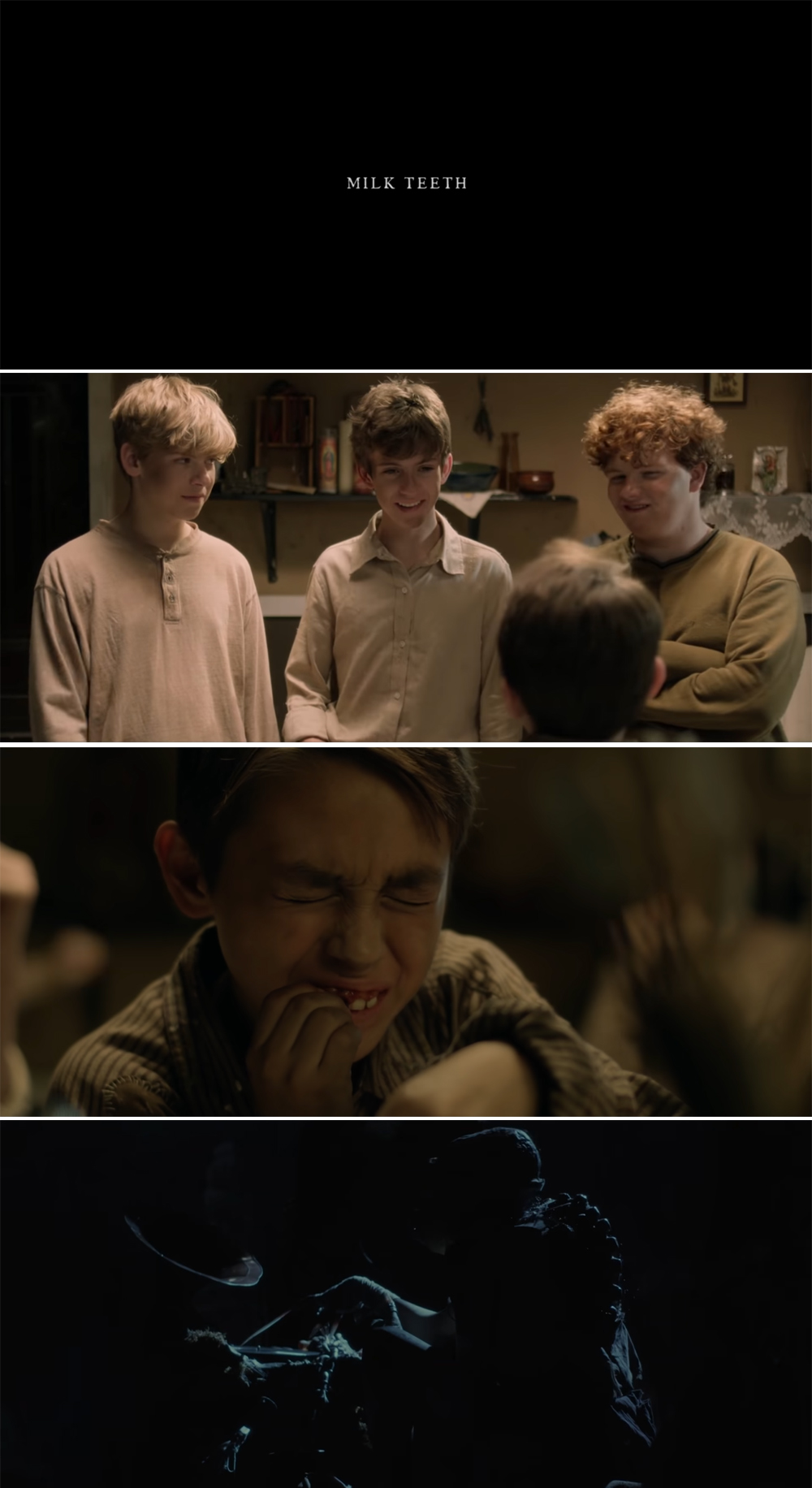
The short film “Milk Teeth” navigates the treacherous waters of childhood fears and the complexities of human emotions, culminating in an ending that begs for contemplation. This cinematic piece employs a chilling metaphor to explore themes of innocence, betrayal, and the inexorable transition from childhood to adulthood. Central to its narrative is the symbolism of teeth, particularly the notion of “milk teeth,” serving as a harrowing reminder of the fragility of youth.
The film opens with a seemingly innocuous slice of life, portraying a young child, innocent and curious. However, this façade is soon cracked, revealing the darker undercurrents that ripple just beneath the surface. The protagonist’s journey is punctuated by encounters that oscillate between whimsy and menace, establishing an atmosphere ripe for introspection. Each frame is imbued with a sense of foreboding that subtly culminates in the film’s denouement.
As the narrative unfolds, a series of unsettling events commence, unsettling the viewer and heightening their awareness of the child’s perception of events. This dissonance between appearance and reality is critical to understanding the film’s thematic core. The child’s milk teeth, those placeholders of innocence, become emblematic of the naive trust inherent to youth—trust that is, inevitably, fraught with the potential for disillusionment.
In the final scenes, the viewer is confronted with a visceral climax that encapsulates the journey undertaken. The protagonist’s encounter with a sinister figure—a monstrosity that could ostensibly symbolize the fears and betrayals that lurk in the minds of children—forces a reckoning. The grotesque entity serves as a metaphysical embodiment of all that challenges a child’s perception: the inevitable transition from innocence to awareness, from the idyllic realm of imagination to the stark porousness of reality.
The metaphorical implications of the ending extend beyond the narrative itself. The grotesquery of the figure can be interpreted as the horrific realization that not all beings are inherently good, a disheartening awakening to malice that lurks within human interactions. Childhood encapsulates both the sweet and bitter; the initial surrender of trust is often followed by a shattering of ideals, represented by the loss of milk teeth—those symbols of an ephemeral phase in life.
Milk teeth, in a biological sense, are temporary. They signify growth, a necessary stage leading to the development of permanent teeth. Symbolically, their loss speaks to a child’s first forays into the adult world, laden with trials that lead to personal evolution. The ending of “Milk Teeth” navigates this transformation, suggesting that the transition may come at a painful cost. The audience is left to grapple with the implication that wisdom is often born from hardship, a notion that resonates starkly in adulthood.
Moreover, the haunting visuals during the film’s conclusion enhance its emotive power. The use of light and shadow creates stark contrasts that mirror the dualities of innocence and malevolence, thus provoking an internal dialogue regarding the nature of trust. The dimly lit corridors where the final encounters unfold evoke a sense of claustrophobia, a physical representation of fear. One can almost feel the weight of shadow draping over the characters—a reminder of their plight, trapped between safety and the encroaching unknown.
The reactions of the protagonist in the film’s conclusion are particularly poignant. There is a resignation to the truth; this expression conveys a grueling acceptance—an acknowledgment that the world is far more complex than initially perceivable. This moment encapsulates a rite of passage that resonates universally. All too often, the safeguard of childhood inevitably yields to the grittiness of reality, leaving one to ponder the cost of growing up.
What remains particularly striking about “Milk Teeth” is its unorthodox way of addressing the oft-ignored psychological ramifications that accompany maturation. Far too many narratives gloss over this aspect, celebrating childhood without acknowledging the inherent vulnerabilities it masks. The film, however, delves into these depths, laying bare the raw, unsettling realities that children may face. The essence of its metaphor hauntingly arises from the paradox of milk teeth—as they fall away, so too does an unblemished perception of the world.
In conclusion, the ending of “Milk Teeth” renders a powerful commentary on the complexities of growing up, articulated through its metaphorical landscape of teeth—the bitter awareness of loss and the inevitable march toward maturity. It Is an unsettling examination of the transformation from the simplicity of childhood to the intricate web of human interactions that define adulthood. Through its unsettling imagery and stark portrayal of fear, the film not only terrifies but evokes a deeper understanding of naiveté lost, becoming a piece that lingers long after the credits roll.
Ultimately, “Milk Teeth” encourages viewers to confront their own realizations of innocence and betrayal, prompting a moment of reflection: What was lost in the transition from the sanctuary of childhood to the often-harrowing realm of adult existence? The film leaves us with this lingering question, imbuing its conclusion with a haunting resonance that transcends the narrative, striking a chord within the emotional psyche of all who dare to watch.












