
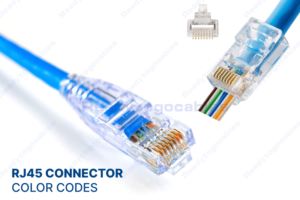
As technology continues to evolve, the importance of proper networking infrastructure cannot be overstated. Among the most essential components of this infrastructure is the RJ45 cable, commonly used in Ethernet networking. To the untrained eye, these cables may appear simply as a collection of colored wires encased in plastic, but the colors denote more than just aesthetics; they represent a crucial system of organization that governs the functionality of the network. Understanding what these colors signify can dramatically alter one’s perspective on cabling and networking.
The Anatomy of an RJ45 Cable
The RJ45 connector typically comprises eight wires twisted in pairs, leading to the performance of a multitude of networking tasks. These wires each contain a specific color code that serves as a visual guide to their respective functions within the larger scheme of data transmission. The colors primarily fall into two categories based on pairing: solid colors and striped colors. This nuanced layering of design signifies a well-thought-out methodology in networking.
The Role of Twisted Pairs
At the heart of an RJ45 cable are its twisted pairs, designed to minimize electromagnetic interference (EMI) and crosstalk between wires. Each pair consists of one solid color and one striped color. The most commonly used color codes for wiring RJ45 connectors are based on the T568A and T568B standards. Understanding these standards is paramount for anyone involved in networking.
Exploring T568A and T568B Standards
The T568A and T568B standards detail the layout of the wires in an RJ45 connector. Although both standards achieve the same functionality, they differ in the arrangement of wire colors. While T568A arranges the colors in a certain order, T568B adopts a different sequence. These distinctions lead to a critical decision point for installers: which standard to adopt. Many opt for T568B due to its widespread use in existing systems, yet T568A has its own advantages and is often favored in residential applications. This divergence naturally piques curiosity, as both standards are integral to ensuring compatibility among different devices.
A Deep Dive into Wire Colors
So what do these colors mean in terms of functionality? Let’s explore:
- 1. White/Orange and Orange: The first pair of wires is commonly used for transmitting data. When considering speed and efficiency, this pair’s role becomes significant. They are designed to carry signals to and fro, facilitating seamless communication.
- 2. White/Green and Green: Often utilized for the second pair, this set primarily handles receiving data. This bi-directional communication pair guarantees the connection remains robust, reaffirming its pivotal role in networking.
- 3. White/Brown and Brown: The third pair plays a lesser but important role; utilized in applications that require Power over Ethernet (PoE). This means it can provide electrical power along with data, highlighting the flexibility and multifunctionality of RJ45 cables.
- 4. White/Blue and Blue: This pair is employed less in standard Ethernet configurations but can be used for additional services, such as telephone lines. This versatility is emblematic of the RJ45 cable’s adaptability.
The Implications of Incorrect Wiring
Incorrect wiring according to the predetermined color codes can have far-reaching consequences. Miswiring can result in network failures, degraded performance, and devices failing to communicate appropriately. Such errors often simmer beneath the surface, eventually erupting into a host of operational issues that can cripple an organization’s productivity.
Color Codes in Practice
It’s vital to recognize that while color codes provide an organizational structure, the fact is that they also serve as a visual learning tool for technicians. Technicians can quickly ascertain the integrity of a connection by simply observing the arrangement of wires at the connector. This ease of identification aids in troubleshooting, serving as a valuable asset in maintaining network health.
The Future of RJ45 Cables
As the realm of technology embarks on an inexorable journey towards increased speed and efficiency, the RJ45 cable finds itself adapting as well. Innovations in cabling technology, such as the introduction of Category 6 and Category 7 cables, promise not only faster data speeds but also enhanced capabilities for handling the increasing demand for bandwidth. Yet, understanding the fundamental color codes—even as the technology evolves—will remain a necessity, anchoring one’s comprehension of networking.
Conclusion: The Significance of Color Codes
In sum, the colors of an RJ45 cable serve a purpose far beyond mere decoration. They form an integral part of the network’s wiring standards, shaping the efficiency and functionality of our interconnected world. Understanding these codes is not just a technical requirement but a gateway to mastering network infrastructure. Whether you are an IT novice or a seasoned professional, grasping the significance of these colors promises to enhance your ability to navigate the complex landscape of networking.












