
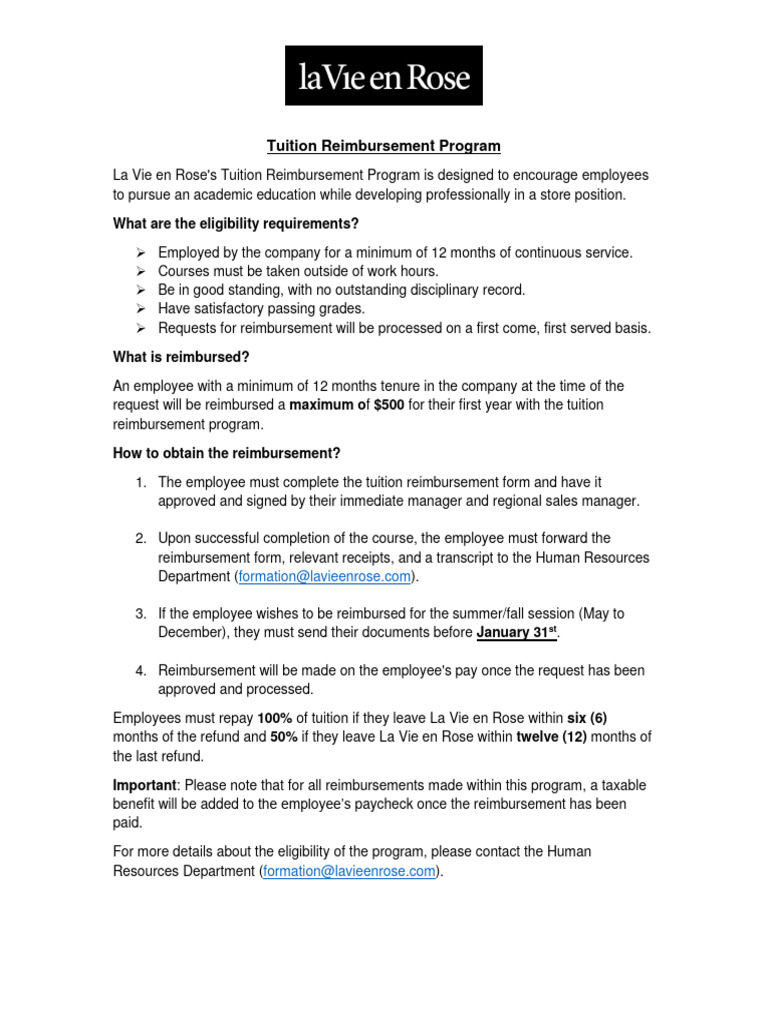
When navigating the labyrinthine world of educational benefits, the term “per calendar year” serves as a beacon, guiding both employees and employers through the intricacies of tuition reimbursement programs. Understanding this phrase is like deciphering a treasure map; each detail must be scrutinized to uncover the bounty of educational advancement and financial support lurking below the surface.
At its core, “per calendar year” refers to a specific timeframe during which eligible employees can receive tuition reimbursement. Unlike academic or fiscal years, which may pivot on the school’s schedule or a company’s financial reporting, the calendar year is steadfast, aligning from January 1st to December 31st. This clarity is crucial—it delineates the boundaries within which the financial assistance can be claimed, allowing employees to plan their educational pursuits with precision.
### The Foundation of Tuition Reimbursement
Before delving deeper into the implications of “per calendar year,” it’s essential to grasp the essence of tuition reimbursement programs. These initiatives are designed not only to subsidize educational expenses but also to cultivate a skilled workforce. As organizations invest in their employees’ edification, they foster a culture of continuous growth. The result? A symbiotic relationship where both parties flourish, akin to the intertwined roots of a flourishing tree.
Nevertheless, while the ethos of these programs is undoubtedly commendable, the mechanics can become cumbersome. Each company may have its own parameters, funding limits, and specific requirements for eligibility. The phrase “per calendar year” becomes pivotal here, as it influences decision-making across a myriad of vital factors—from the types of courses eligible for reimbursement to the caps established on funding.
### Financial Expectations and Budgeting
Grasping what “per calendar year” entails allows employees to formulate realistic financial expectations. It’s akin to preparing for a grand banquet; one must know the size of the table before inviting guests. If a company has a reimbursement cap of $5,000 per calendar year, employees should strategically propose tuition plans that fall within or efficiently utilize this budget. For instance, enrolling in a master’s program may necessitate a well-thought-out approach, with a clear understanding of when and how to utilize these funds, to ensure that educational aspirations align harmoniously with financial realities.
Employees must take into account whether their courses or programs cross over into the subsequent year. Programs that traverse this pivotal date can inject complication into the reimbursement process. Understanding these nuances is crucial, akin to navigating a river with many bends—failing to recognize the flow could lead one off course.
### The Calendar Year Cycle and Academic Planning
Utilizing the “per calendar year” designation may undoubtedly influence an employee’s academic trajectory. With a firm starting point, individuals can plan their courses meticulously. For example, let’s consider an employee aiming to achieve a degree within a designated time frame. A thorough understanding of the reimbursement cycle enables them to maximize their reimbursement, perhaps focusing on courses that can be completed within a single calendar year, thus avoiding pitfalls associated with timing and reimbursement eligibility.
As the year marches on, the cadence of classes typically follows suit. Those intimately aware of their company’s policy can identify prime opportunities for higher learning. Conversely, an employee unfamiliar with the calendar year stipulation might forfeit thousands of dollars in potential reimbursement simply by mismanaging timelines. The delicacy of this timing mirrors the careful choreography of a ballet, where each movement must harmonize with the rhythm of the music.
### Implications for Employers
For employers, understanding the implications of “per calendar year” is equally paramount. Companies must create equitable and appealing tuition reimbursement plans that reflect a commitment to professional development while also protecting their financial interests. Establishing clear communication regarding eligibility, deadlines, and reimbursement limits will enhance employee satisfaction and retention, analogous to crafting a symphony where every note aligns to produce a melodious outcome.
Moreover, employers can leverage this time-bound structure to evaluate the effectiveness of their educational investments. By analyzing participation rates and the correlation between advanced degrees and employee performance, businesses can refine their programs, ensuring alignment between organizational goals and employee development.
### Challenges and Considerations
While the definition of “per calendar year” may seem straightforward, the practical realities can introduce an array of challenges for both parties. Employees might face hurdles in understanding eligibility, documentation requirements, or the feasibility of their selected programs within reimbursement limits. Employers, in turn, must balance financial allocations and foster an encouraging environment for learning. The landscape of tuition reimbursement is, therefore, as treacherous as it is rewarding, resembling a tightrope walk where careful attention to detail is paramount.
### Conclusion: Embracing the Learning Journey
Ultimately, “per calendar year” signifies much more than a simple time frame; it encompasses the broader ethos of professional growth, commitment, and careful planning. Just as a seasoned traveler prepares for a journey, both employees and employers must embrace this notion to capitalize on the potential that tuition reimbursement holds. With clarity on payment cycles and limits, individuals can chart their course toward edification and fulfillment. Thus, the journey—filled with challenges, insights, and rich rewards—becomes not just a financial transaction but a transformative experience, akin to an elaborate tapestry woven from the threads of ambition, possibility, and knowledge.












