
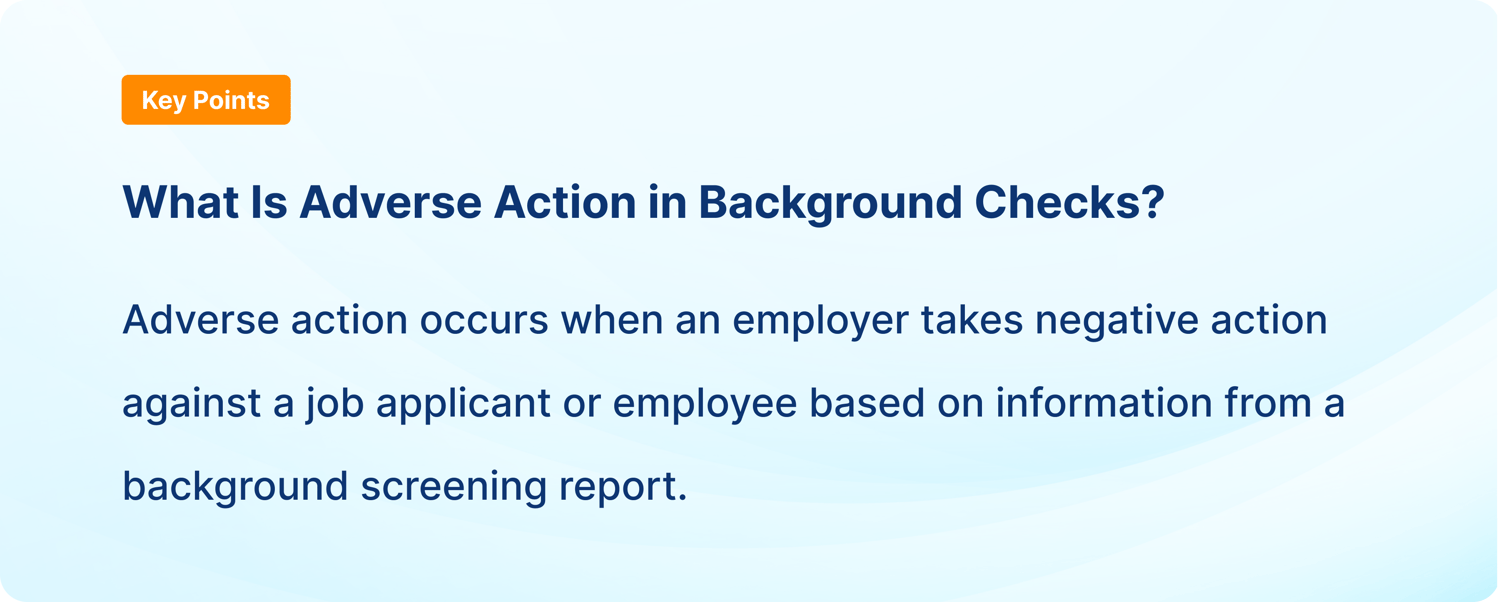
When embarking on a journey through the maze of employment, potential candidates may find themselves facing a critical juncture—pre-adverse action. This term, often cloaked in legal jargon, signifies a pivotal moment when a background check reveals information that may alter the course of a hiring decision. Much like a sailor charting a course through turbulent waters, understanding this concept is essential for navigating the complexities of employment procedures.
To fully comprehend what pre-adverse action means, one must first grasp the broader context of the background check process. Background checks serve as a lens through which employers scrutinize the history of prospective employees. Companies delve into an array of data—criminal records, credit history, employment history, and educational credentials. This multifaceted examination is intended to ensure that candidates align with the organization’s values, comply with legal standards, and pose no risks to the workplace environment.
Yet, what happens when the findings of a background check raise eyebrows? The pre-adverse action period is an employer’s initial notification to a candidate that their background check has unveiled information that could negatively impact their hiring process. This gesture can be likened to a lighthouse warning approaching vessels of impending cliffs hidden beneath turbulent waves. It is a protective measure, designed to be both transparent and fair.
In the realm of recruitment, the pre-adverse action process unfolds in several distinct stages. Initially, the employer conducts the background check, after which, if adverse information surfaces, they must communicate this to the candidate. The Fair Credit Reporting Act (FCRA) stipulates that candidates must receive a copy of the background report along with a summary of their rights. This is the employer’s way of keeping the lines of communication open, allowing candidates to scrutinize the findings before a final decision is made.
Why, you may wonder, is this process so crucial? The answer lies in fairness. Pre-adverse action provides candidates with an opportunity to respond to the findings. Perhaps the information is incorrect, incomplete, or outdated—a mere shipwreck of data from a bygone era that no longer represents the individual. In this vein, pre-adverse action is akin to a second chance, thriving on the principle that everyone deserves the opportunity to clarify misconceptions that could influence their career trajectory.
The candidate’s response during the pre-adverse action phase can take various forms. They may contest inaccuracies in the report, providing evidence or documentation that contradicts the findings. In such scenarios, employers are mandated to conduct a re-evaluation, akin to a jury deliberating over new evidence presented in court. By allowing candidates the chance to rectify discrepancies, employers not only adhere to the legal framework but also bolster their reputations as fair and just entities.
However, this pivotal moment can have far-reaching implications for both candidates and employers alike. For candidates, the stakes are high. A background check revealing unfavorably shaded facts can be devastating, influencing their confidence and prospects in the job market. For employers, failing to adhere to the legal protocols associated with pre-adverse action can lead to repercussions—financial repercussions that stretch into penalties or lawsuits. Thus, a meticulous approach to this procedure is not merely a bureaucratic obligation; it is the cornerstone of ethical hiring practices.
As candidates navigate this potential storm, it is imperative for them to understand their rights. The FCRA delineates specific obligations employers must uphold, ensuring candidates receive the necessary documentation to counter any adverse findings. This is where knowledge becomes a powerful ally. By understanding the pre-adverse action process, candidates can arm themselves with the reins of their destiny, ensuring they are not swept away in the tidal waves of misreported information.
Another intriguing aspect of pre-adverse action is the timeline it presents. The FCRA generally requires that candidates be given a reasonable timeframe—usually five days—to respond to the initial notification. During this window, they may undertake various strategies to gather evidence or present their case effectively. The urgency of the timeline fuels a sense of motivation, reminiscent of an athlete sprinting towards the finish line—a race against time that highlights the need for clarity and preparation.
Employers, too, must tread carefully within this timeframe. The decision to move forward with hiring should not be made hastily. Instead, it requires deliberation and a critical examination of the candidate’s response. Missing the nuances of this process can lead to misguided decisions. Herein lies the beauty of the pre-adverse action—when executed with integrity, it fosters a collaborative atmosphere where transparency reigns supreme.
In conclusion, pre-adverse action stands as a sentinel at the crossroads of employment and personal reputation. It is a legal safeguard that promises transparency while emphasizing the need for fairness. For candidates, it represents a vital opportunity to clarify and challenge any adverse findings, while for employers, it underscores the significance of ethical practices in hiring. A seamless understanding of this process transforms what may otherwise seem like a convoluted labyrinth into an accessible thoroughfare for all involved. Just as a lighthouse illuminates dark waters, pre-adverse action sheds light on the often murky waters of background checks, ensuring every candidate’s journey is navigated with clarity, integrity, and respect.












