
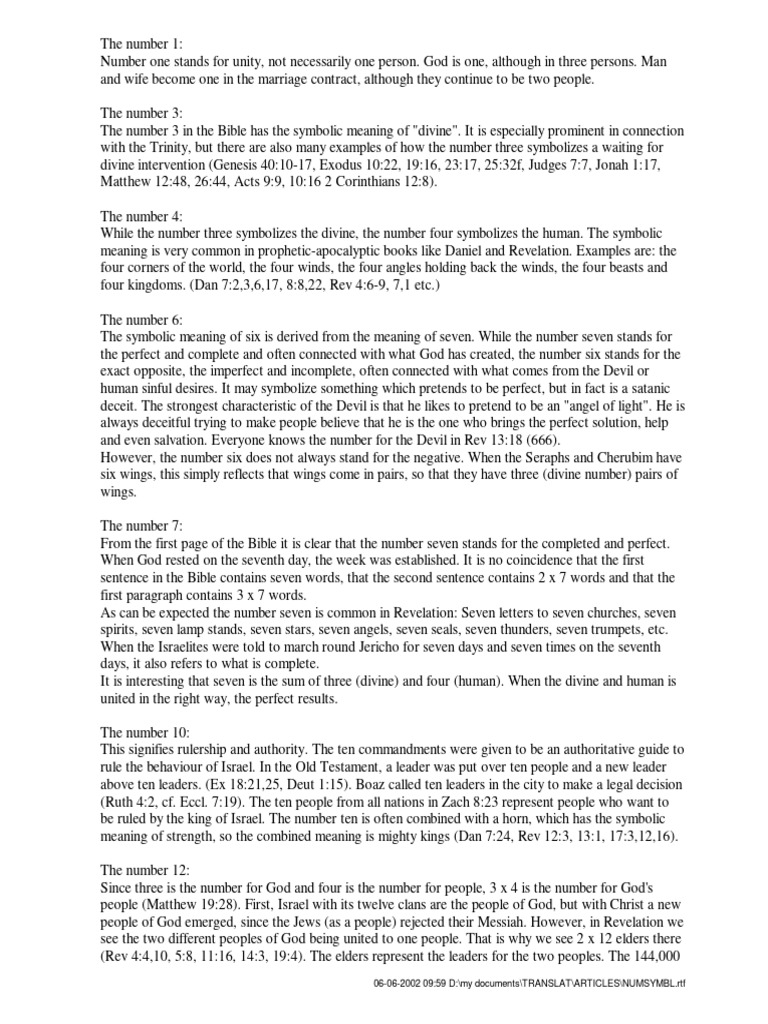
The number 23 has long captivated the minds of theologians, numerologists, and casual believers alike, heralding a profound significance that intertwines within the tapestry of Biblical texts. This enigmatic figure prompts one to explore deeper thematic elements within Scripture, bridging the divine with human experience. As we delve into the implications of the number 23, we uncover its multifaceted meanings, offering both historical context and spiritual perspective.
Historical Context and Numerical Significance
In the realm of biblical numerology, numbers are not mere quantities; they are imbued with powerful meanings that echo divine truths. The number 23 emerges from a composite of the numbers 2 and 3. The number 2 symbolizes unity, division, and witness, reflecting the dual nature of existence—light versus darkness, life versus death. Meanwhile, the number 3 embodies completion, divine perfection, and the Holy Trinity, marking a significant spiritual fulcrum.
When combined, these symbols yield intriguing insights. The union of 2 and 3 signifies not only the coexistence and collaboration of forces but also suggests a necessary tension required for creation and transformation. The number 23 thus becomes a pivotal link in the spiritual journey, inviting believers to contemplate their role in the divine narrative.
The Biblical Narrative and the Number 23
To understand the number 23 in the Bible, one must first consider its appearances in various scripts and stories. The most direct reference is found in the life of King David. In 1 Chronicles 23, we observe the division of the Levites into various groups, with Davids’ age at the time being 30—a significant age numerologically, as it resonates with maturity and responsibility. The following events leading to the organization of the Levites comprise 23, a profound spiritual orchestration that manifests through his leadership.
This organization highlights the importance of service and dedication, not only to God but to the community. The Levites were entrusted with carrying out sacred duties, underscoring the idea of stewardship that persists throughout Scriptural teachings. One encounters a liberating realization: the individual purpose resonates with a broader communal responsibility, transcending mere personal aspirations.
Moreover, 23 is notably present in chronological contexts. For instance, Exodus 23 reveals God’s promises to the Israelites regarding land, safety, and the covenant. The chapter delineates a promise of divine protection and prosperity, symbolizing God’s unwavering commitment to His people. This duality of divine promise—a covenant that calls for faithful adherence in return—invites readers to reflect on the mustering strength in obedience amidst uncertainty.
Twofold Themes: Judgment and Mercy
In addition to the themes of unity and stewardship, the number 23 resonates with concepts of judgment and mercy within the biblical narrative. The 23rd Psalm, an iconic passage, presents a personal testament to God’s unwavering guidance. The verse encapsulates a serene plea for comfort and reassurance: “Even though I walk through the valley of the shadow of death, I will fear no evil.” Here, the juxtaposition of life’s trials against the certainty of divine companionship illustrates the intricate dance between judgment and mercy.
This psalm reflects the duality of experience—as life unfolds, it presents both tribulations and triumphs. The significance of 23 lies not solely in its numerical value but in the invitation to inhabit a space where trust coexists with fear—the essence of humanity’s relationship with the divine. The promise of divine presence amid distress speaks volumes, encouraging believers to embrace uncertainty while nurturing resilience.
Contemplative Reflections and Theological Implications
Beyond mere numerical interpretations, the contemplation of 23 invites profound theological implications. It serves as a reminder that faith often requires venturing into the unknown. Just as the Israelites traversed barren lands in search of promise, so too must modern believers navigate personal deserts with tenacity and hope. The essence of faith dwells in acknowledging fragility while simultaneously embracing the strength granted through belief.
Furthermore, 23 is a number that challenges the dichotomy often present in religious discourse. It encourages an exploration of the self, unearthing latent meanings intertwined with personal and communal struggles. Each symbol reflects human experience interwoven with the divine narrative, reminding us that our journeys, marked by both light and shadow, are integral parts of a collective story.
Embracing the Mystique of 23
The allure of the number 23 lies not only in its appearances or its meanings but in its ability to spark curiosity and introspection. In an age where certainty often coexists with disillusionment, the invitation to unravel mysteries through astute observation becomes a key to spiritual awakening. As believers reflect on the multifaceted implications of 23, they are encouraged to engage further with the Scriptures, seeking new revelations and insights.
Thus, the question remains: what does 23 embody in your spiritual context? Are there moments in your life where the intersection of community, challenge, and divine promise has mirrored the intricacies of the number 23? As you ponder these contemplations, consider that the path ahead is illuminated by an age-old truth: in the embrace of uncertainty, transformation awaits.
In conclusion, the number 23 serves as a compelling focal point within Biblical study, brimming with rich symbolism and significance. It beckons believers to navigate their spiritual journeys with a sense of intentionality and wonder, ever aware of the profound connection between the divine and the human experience. As scripture unfolds, the promise of understanding deepens, inviting not just comprehension, but a transformation of the heart and soul.












