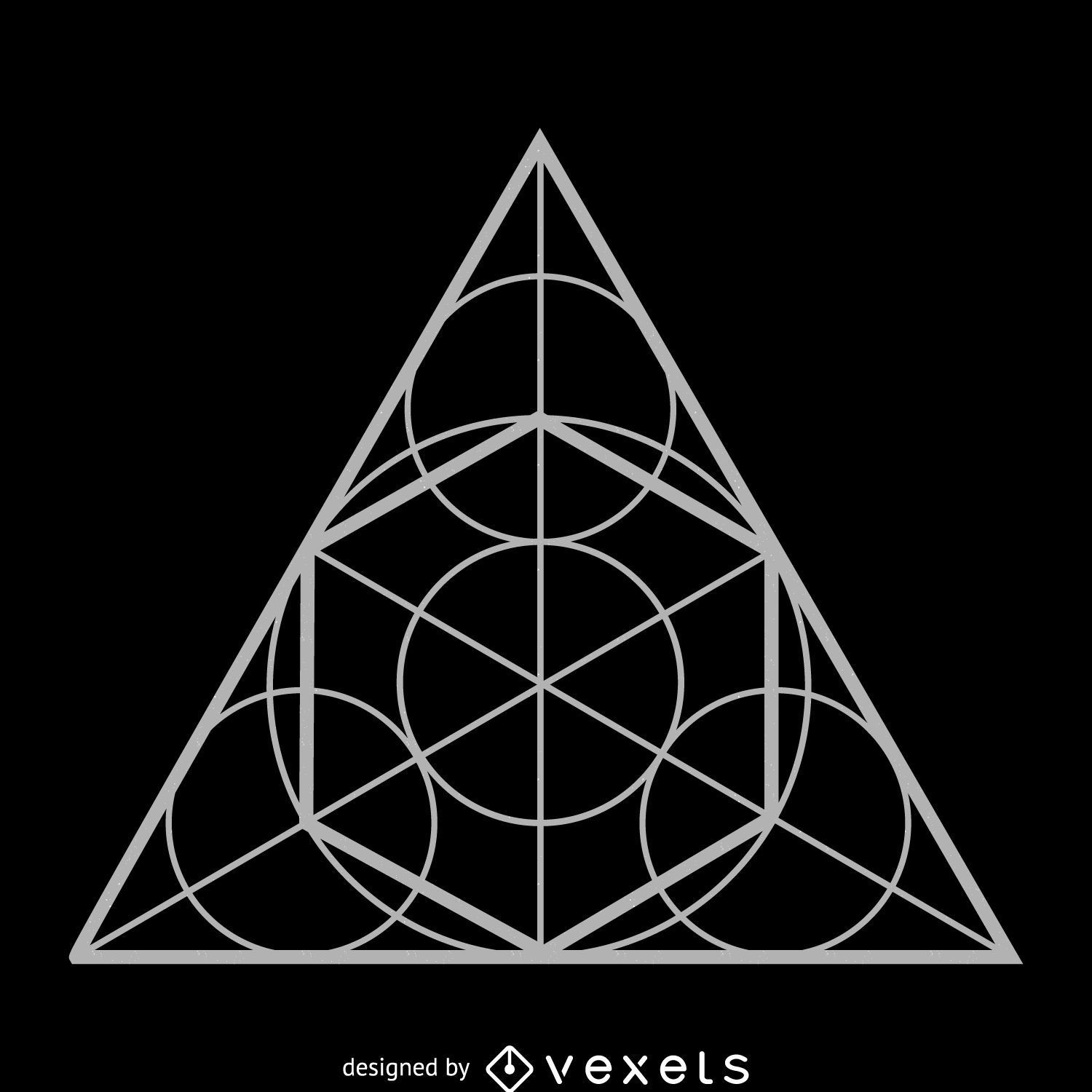
The intricate symbolism of sacred geometry has captivated humanity for millennia. It is a language of creation that conveys the profound connection between the cosmos and the human experience. At the heart of this venerable tradition lies the emblematic image of a triangle enclosed within a circle. This powerful motif beckons us to delve into its multifaceted meanings and what it signifies within the tapestry of sacred geometry.
To understand the deeper implications of the triangle within the circle, we must first appreciate the foundational elements of sacred geometry itself. Sacred geometry posits that there exists a universal blueprint governing the intricacies of life and the cosmos. It presents shapes and patterns that resonate with the essence of the natural world—constructs that manifest the very order of the universe.
1. Geometry as a Language of the Divine
Every shape in sacred geometry carries specific vibrations, enabling us to decipher the cosmos and our place within it. The triangle, a shape with three sides, is often associated with triads that emerge in various cultural and spiritual contexts. The father, son, and holy spirit in Christianity, the three gunas in Hindu philosophy, and even the ancient Egyptian notion of the triad gods exemplify this sacred connection. Enclosing the triangle within the circle suggests a protective embrace, an invitation to explore the interplay between the earthly and the divine.
2. The Significance of the Triangle
The triangle itself is a potent symbol representing stability and strength. Its three points can evoke a myriad of interpretations: past, present, and future; mind, body, and spirit; or even the synthesis of opposing forces. This geometric figure embodies equilibrium, and as such, it encourages reflection on the interconnectedness of various aspects of existence.
Through the lens of alchemy, the triangle symbolizes transformation. It reminds us that change is an integral part of our journey, as we break apart the old and emerge anew. The apex of the triangle often points upwards, signifying aspiration and enlightenment—a reminder that we can transcend our limitations if we seek to align with the higher aspects of our being.
3. The Circle as a Sacred Boundary
In contrast, the circle represents wholeness, unity, and cyclicality. Without a beginning or an end, it symbolizes eternity and the interconnectedness of all life. From a metaphysical perspective, the circle is often seen as the boundary that contains the triangle, suggesting that our experiences and transformations are safely cradled within the vast expanse of existence.
The interplay between the triangle and the circle can evoke a sense of duality and harmony. The triangle, striving for ascent and growth, finds solace and security within the gentle embrace of the circle. This relationship prompts contemplation on the balance between the pursuit of personal goals and the acceptance of the wholeness of life.
4. Union of Energies
Within the framework of sacred geometry, the triangle represents a dynamic interplay of energies: fire, water, and earth, or perhaps the activation of intention, contemplation, and manifestation. When set against the backdrop of the circle, these energies are harmonized and given space to flow. The union of these forces fosters a deeper understanding of life’s complexities and the ebb and flow of our experiences.
The combination of the triangle and circle can thus serve as a meditative tool, guiding practitioners towards inner exploration. Gazing upon this symbol can evoke a sense of peace, enabling individuals to tap into their intuitive wisdom and attune themselves with the rhythms of the universe.
5. Symbolism Across Cultures
The triangle within the circle has transcended cultures and epochs, appearing in various traditions around the globe. For instance, in Buddhism, it represents the convergence of the three jewels: the Buddha, the Dharma, and the Sangha. In Christianity, it can be interpreted as a representation of the Holy Trinity. Many Native American tribes see it as a symbol of natural elements and the balance of life. This cross-cultural resonance reveals a shared understanding of the deeper dimensions of existence, hinting at a universal truth woven through the tapestry of human consciousness.
6. Practical Applications
In contemporary practice, the triangle within the circle can be harnessed in numerous ways. Artists may use this symbol to inspire creativity, while spiritual seekers may incorporate it into their meditation routines. Its visual appeal has found its way into various domains, from architecture to graphic design. Moreover, as we navigate the complexities of modern life, reflecting upon this symbol can offer solace and guidance.
7. A Call to Explore
Finally, the triangle enclosed in the circle beckons us to engage in a personal journey of discovery. It invites introspection and challenges us to explore our inner landscapes. What does the triangle represent to you within the context of your life? How might the circle provide a sense of security as you navigate through transitions? This symbol offers a canvas upon which we can project our aspirations, struggles, and victories.
As we traverse the realms of sacred geometry, the triangle within the circle emerges as a timeless and profound emblem. It encapsulates the elegance of balance, the promise of transformation, and the quest for connection—both with ourselves and the universe at large. In pondering its significance, we engage in an alchemical dance of enlightenment, inviting an expansive perspective that reflects the deeper truths of our existence. The beauty of sacred geometry lies not only in its intricate forms but also in the endless opportunities for reflection and growth it presents.