
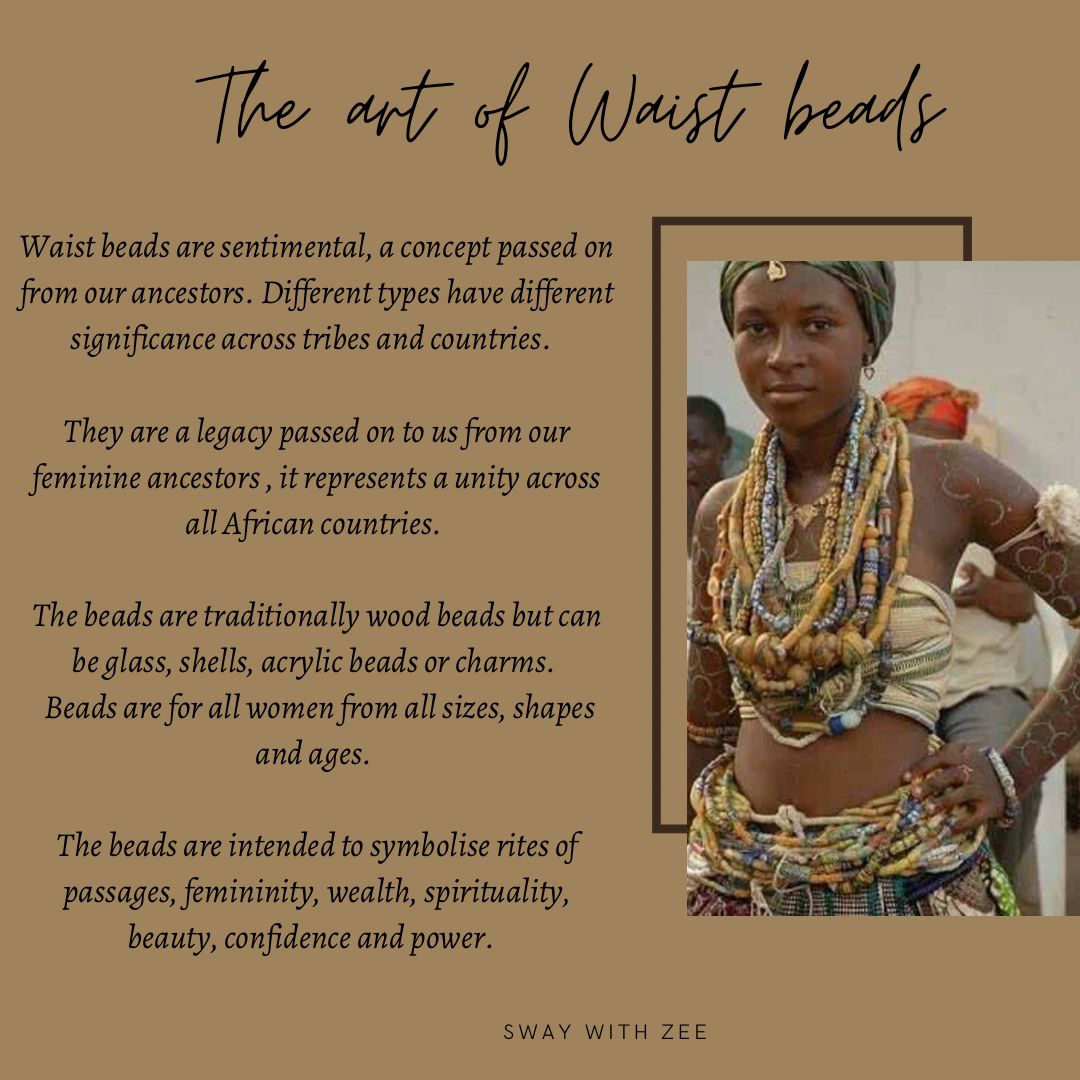
Waist beads, often regarded as a colorful adornment for the body, carry a profound significance that intertwines culture, beauty, and tradition. But what do waist beads really mean? How can these decorative pieces challenge modern perceptions of femininity and self-expression? Delving into their rich history, cultural applications, and the myriad ways they are utilized today will provide a deeper appreciation for their beauty and purpose.
1. Origins of Waist Beads
Waist beads trace their origins back to ancient African civilizations, where they were worn by women of various ethnic groups, including the Yoruba, Ashanti, and Berber peoples. Traditionally, these beads were crafted from materials such as glass, wood, and clay. They held varied meanings depending on the wearer’s cultural background, signifying rites of passage, fertility, and even personal milestones. The colors of the beads often conveyed specific messages, transforming each strand into a narrative unique to its wearer.
2. Cultural Significance
The cultural significance of waist beads extends beyond mere aesthetics. In many cultures, they celebrate femininity, sensuality, and the development of a woman’s body throughout various life stages. For instance, young girls may wear waist beads as an initiation into womanhood, serving as a rite of passage that celebrates maturity and the onset of menstruation. Additionally, waist beads can also signify connection to ancestral heritage and community values, acting as a physical representation of cultural identity.
3. Waist Beads as Body Positivity
As discussions surrounding body image and self-acceptance become increasingly prominent in contemporary society, waist beads stand as a potent symbol of body positivity. They encourage women to embrace their figures, regardless of societal standards or expectations. By adorning oneself with waist beads, women can celebrate their bodies’ natural curves and fluctuations. Each bead tells a story, reminding the wearer of their unique journey and the beauty found in diversity.
4. The Ritualistic Nature
Emphasizing the ritualistic aspect, wearing waist beads can serve as a form of personal meditation or mindfulness. The act of putting them on each day can transform into a conscious ritual, wherein wearers reflect on their intentions and emotions. Some even incorporate waist beads into their spiritual practices, using them to focus on healing, energy alignment, and personal growth. In this sense, they act both as a physical reminder and a spiritual tool, blending beauty with intent.
5. Modern Interpretations and Adaptations
In recent years, waist beads have transcended their traditional roots and gained popularity in diverse cultures worldwide. Fashion trends have embraced their vibrant colors and intricate designs, making waist beads a staple accessory among various demographics, especially those looking to express individuality and embrace cultural motifs. However, this western adoption poses a challenge; it invites conversations about cultural appropriation versus appreciation. How can one engage with the aesthetics of waist beads while respecting the traditions they stem from?
6. The Artistry and Craftsmanship
Creating waist beads is an art form in itself. Artisans skillfully thread beads together, often incorporating traditional motifs or symbols that hold significance within specific cultures. The craftsmanship involved in producing these beads tells a story of its own, reflecting the history and artisanship of the regions they originate from. The variation in materials—ranging from recycled glass to semi-precious stones—adds layers of meaning, allowing for unique combinations that reflect the personality of the wearer.
7. Waist Beads through the Ages
Throughout history, waist beads have evolved alongside societal changes. In the past, they were often hidden beneath clothing, only revealed in intimate settings. Today, they are often intentionally showcased, wearing them over crop tops or dresses, demonstrating how the relationship with body aesthetics has transformed over the years. This evolution prompts a reconsideration of how cultural symbols adapt and flourish in modern contexts while remaining tethered to their origins.
8. Challenges to Tradition
As waist beads gain popularity, a challenge arises regarding the authenticity of their use. An increasing number of individuals wear them for fashion rather than understanding their cultural significance. This raises critical questions: Are we honoring the traditions of waist beads, or are we commodifying them? To truly appreciate waist beads, it is essential to educate oneself about their heritage, fostering respect and understanding over mere consumption.
9. Personal Connection and Meaning
Ultimately, the meaning of waist beads is deeply personal. They can embody various aspects, from the wearer’s connection to their ancestry to an expression of self-love and confidence. Establishing a personal narrative attached to one’s waist beads can deepen their significance, transforming them from mere accessories into cherished talismans. Whether one wears them for traditional reasons or simply as a beautiful adornment, the key lies in acknowledging their complexity and history.
Conclusion: Embracing the Magic of Waist Beads
Waist beads possess a captivating blend of cultural richness, symbolic meaning, and artistic expression. They challenge conventional views on beauty and femininity while offering a unique avenue for self-exploration. In a world ripe with cultural exchange, embracing waist beads invites a playful dialogue between admiration and respect for the traditions they represent. Ultimately, they encourage us to reflect on our connections to culture, identity, and the beautiful tapestry of shared human experiences.












