
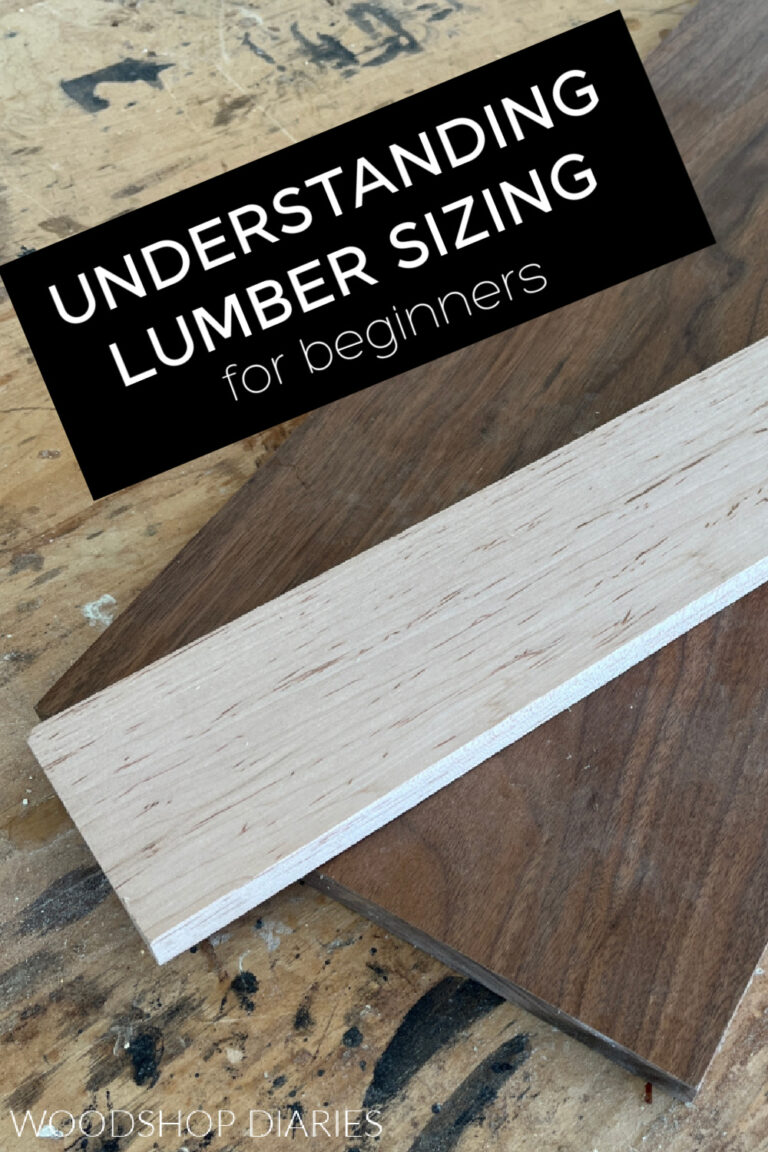
When delving into the world of woodworking and lumber, one might encounter the term “4/4” frequently. But what does 4/4 really mean? Is it a secret code whispered among carpenters, or is it simply a method of timber classification? Understanding lumber sizing can seem daunting at first, especially for novices stepping into the shop for the first time. So, what challenge does this acronym pose for the uninitiated? Let’s embark on a journey to demystify lumber sizing, particularly the intriguing world of 4/4 wood.
First, let’s break down the basics of lumber measurements. The term “4/4” refers specifically to the thickness of the wood. In the traditional lumber industry, measurements are often expressed in fractions of an inch. A common source of confusion arises from this—especially since lumber is typically referred to in quarters. In this instance, 4/4 translates to ‘four quarters,’ equating to a thickness of one inch. Thus, when you hear someone mention 4/4 lumber, they’re talking about material that is nominally one inch thick.
Now, that might seem uncomplicated, but this is where the plot thickens! Did you know that the actual thickness of 4/4 lumber often turns out to be less than one inch? This discrepancy is a widely accepted peculiarity in the industry, attributed to the process of milling. Typically, rough-cut lumber starts out thicker—often 1.5 inches for 4/4 lumber—only to be planed down to achieve the smooth finish that woodworking afficionados prefer. After planing, what you may end up with is a board that measures around ¾ of an inch. This realization can pose a challenge when planning projects, as what appears to be a straightforward measurement might not correlate directly to what you have in front of you.
Understanding lumber thickness goes beyond mere fractions; it extends into the realm of woodworking techniques. Different projects call for different material thicknesses. Would a cabinet require the same wood as a table? Absolutely not! When employing 4/4 lumber, one should consider its applications, strengths, and limitations. While it can serve countless purposes—like creating shelving, furniture, or decorative accents—its inherent thickness makes it versatile but not universally suitable.
So, if you find yourself asking, “What should I use 4/4 lumber for?” consider that while it’s great for furniture and cabinetry, its stiffness might not lend itself well to intricate designs or curved assemblies, where more flexibility is key. For those who wish to embark on more detailed, elaborate projects, thicker lumber like 5/4 (or one and a quarter inches) might be more beneficial. Understanding this differentiation can help avoid the frustration of discovering mid-project that the wood you selected simply won’t suffice for your intended use.
Moreover, it’s essential to remember how lumber grading works within the context of sizing. Each piece of lumber is graded based on its quality, appearance, and structural integrity, reflecting various characteristics like knots, splits, and warping. A well-graded 4/4 lumber piece might be perfect for fine woodworking, while a lower grade may be suitable for construction or less visible applications. That means one must pay close attention not just to the size, but also to the grade. Imagine making this oversight—thinking you’ve picked the perfect piece based solely on thickness, only to realize it is riddled with defects once you begin your project!
As the conversation around lumber sizing continues, it’s important to consider how moisture content plays into the equation. Wood is a natural material that responds to environmental conditions, and this response can greatly affect how it performs in a finished piece. For 4/4 lumber, which is commonly available air-dried or kiln-dried, the intended moisture content can influence not only the dimensional stability of your boards but also their strength and ability to hold finish. A potently high moisture content can lead to warping or cracking when the wood is worked on, potentially sabotaging an endeavor you painstakingly planned.
As we wrap up our exploration of 4/4 lumber, it becomes clear that understanding its meanings, measurements, and applications is crucial for anyone diving into the world of woodworking. This seemingly simple fraction is steeped in complexity, offering both challenges and opportunities. So next time you set foot in a lumberyard or peruse your local woodworking supply store, arm yourself with this knowledge. Whether creating a simple shelf or embarking on an intricate furniture project, know precisely what it means to choose 4/4 wood. Because, after all, in the vast universe of timber, knowledge isn’t just power—it’s the very foundation upon which your creations will stand.












