
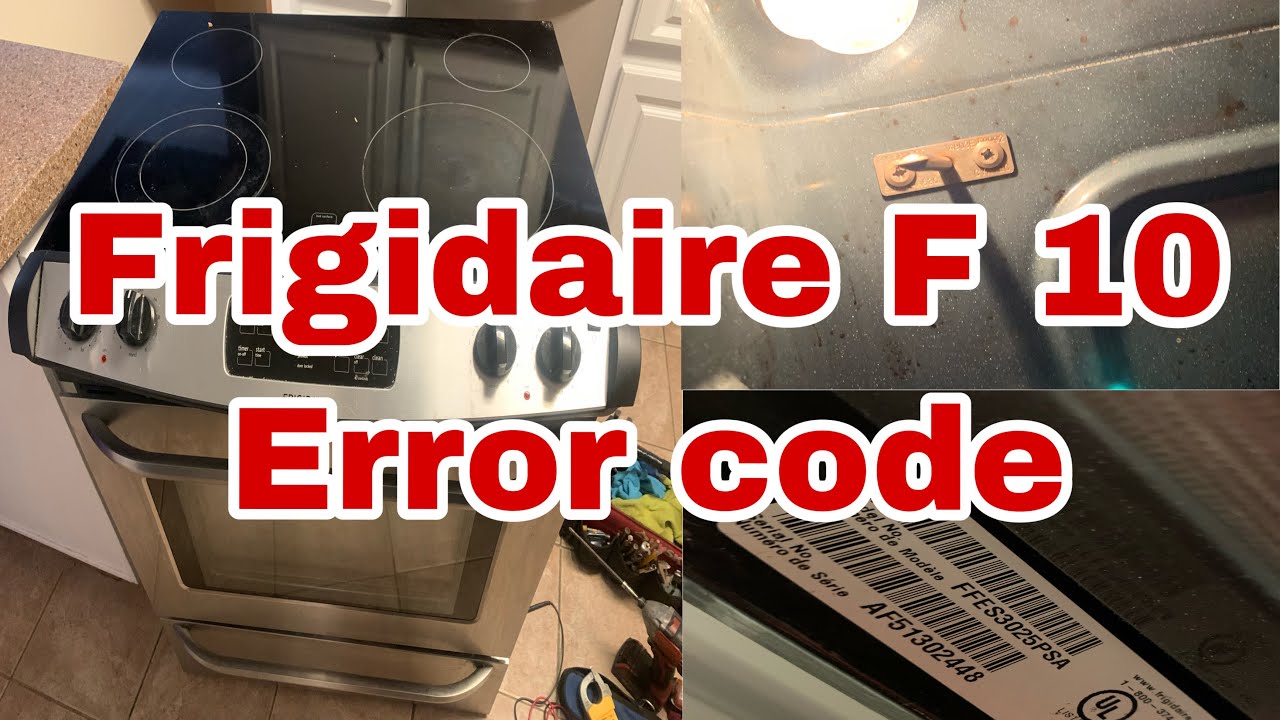
The F10 error code is a common issue encountered by users of Frigidaire stoves, and while it might induce a moment of panic, understanding its implications can empower you to troubleshoot effectively and restore functionality to your appliance. When this cryptic alphanumeric sequence appears on your stove’s display, it signifies a problem that requires immediate attention. However, it is essential to delve deeper into what this code truly means, its potential causes, and the steps you can take to remedy the situation. This guide unravels this mystery, equipping you with the knowledge to tackle the F10 error like a pro.
Understanding the F10 Error Code
The F10 error code typically indicates a malfunction in the oven’s temperature regulation system. Specifically, it provides an alert that there may be a problem with the temperature sensor or, in some instances, the control board. More often than not, this malfunction suggests that your stove’s internal temperature has exceeded the manufacturer’s specified limits, prompting the machinery to engage a safety protocol designed to prevent damage or hazards such as overheating.
Why does this concern matter? Simply put, modern cooking appliances are sophisticated systems that rely on precise temperature control to ensure culinary success. A fault in this system not only hampers your cooking efforts, but it can also pose potential safety risks if left unaddressed.
Common Symptoms Associated with F10
When the F10 error code manifests on your stove, you will likely notice some accompanying symptoms. Primarily, the stove may exhibit erratic temperature settings or fail to heat up accurately. In some cases, the oven may auto-shut down or refuse to operate altogether. Additionally, you may hear intermittent beeping or notice that the display screen flickers, with the F10 error code prominently displayed. Each of these symptoms serves as a vital clue to diagnosing the underlying issue.
Potential Causes of the F10 Code
Several potential culprits can trigger the F10 error code. Here’s a breakdown of the leading suspects:
- Faulty Temperature Sensor: The temperature sensor is a vital component that helps the oven gauge and maintain the desired cooking temperature. If the sensor is defective, it may relay inaccurate information to the control board, resulting in the F10 error.
- Malfunctioning Control Board: The control board acts as the brain of your stove, orchestrating various components to function in harmony. Any disturbance or failure in the control board can easily manifest as an error code.
- Wiring Issues: Loose, frayed, or corroded wires can cause intermittent signals to be sent to the control board, which may interpret such failures as an operational error, thereby triggering the F10 code.
- Power Surges: Sudden spikes in electricity can wreak havoc on electronic appliances. A power surge can affect the stove’s components, leading to erratic behavior and subsequent error codes.
- Overheating: If the oven’s internal temperature sensors fail to regulate heat properly, the oven may overheat, which in turn will trigger the F10 to alert you of the potential risk.
Addressing the F10 Error
Dealing with an F10 error can be daunting, but approaching the problem methodically can often be rewarding. Here are some steps you can take to diagnose and repair the issue:
- Reset the Appliance: Sometimes, a simple reset can clear minor glitches. Disconnect the stove from the power source for a few minutes, and then reconnect it. Check if the F10 error persists.
- Inspect the Temperature Sensor: Determine the location of the temperature sensor within your stove. Use a multimeter to test the sensor’s resistance; it should typically read between 1050 and 1100 ohms at room temperature. If the readings are outside this range, it’s time to replace the sensor.
- Examine Wiring Connections: Inspect the wiring harness leading to the temperature sensor and the control board. Look for any signs of wear, corrosion, or loose connections that may require attention.
- Assess the Control Board: If neither the sensor nor wiring seems faulty, the issue may lie within the control board itself. Inspect it for any visible signs of damage, like burnt components or broken solder joints.
- Consult a Professional Technician: If you feel overwhelmed or unable to diagnose the problem, seeking the help of a qualified appliance technician is wise. They can perform a comprehensive analysis and recommend suitable repairs.
Conclusion: Embracing Kitchen Confidence
The F10 error code on a Frigidaire stove can be a source of confusion and frustration. Nevertheless, understanding its significance empowers users to take definitive action to resolve the issue. By familiarizing yourself with the potential causes and remedies, you can navigate the terrain of appliance troubleshooting with confidence. Moreover, as you enhance your knowledge of your stove’s inner workings, you gain a deeper appreciation for the intricate mechanics that enable culinary creativity. Armed with this wisdom, you are better equipped to overcome any hurdles that may arise while preparing your favorite meals.












