
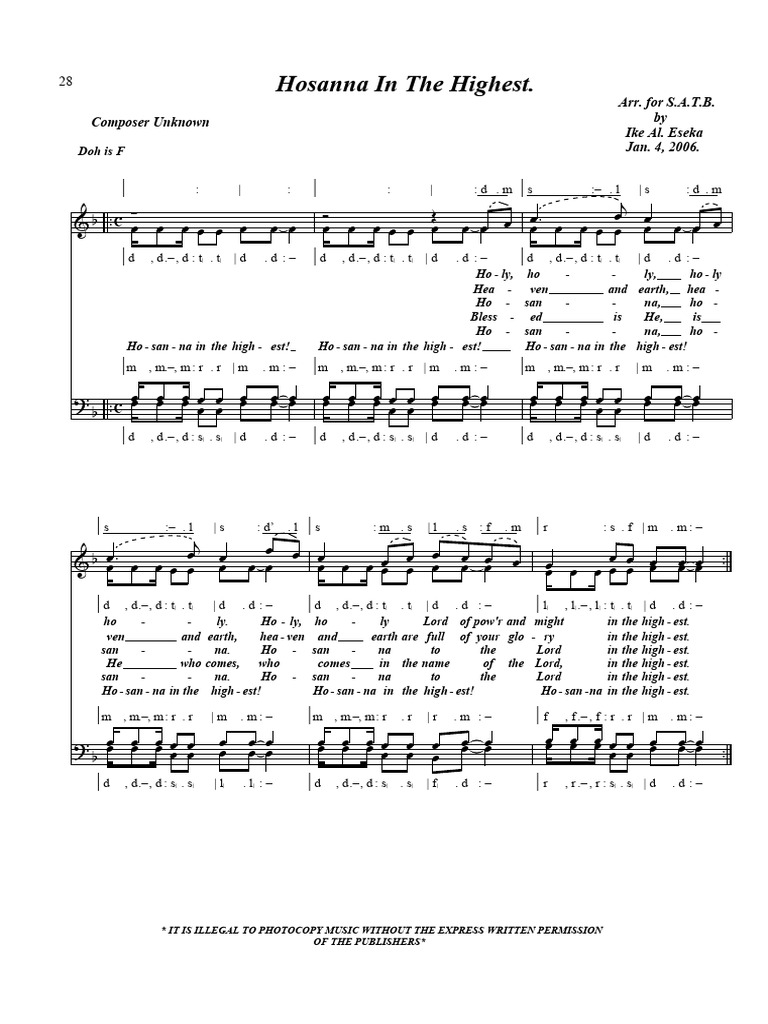
In the annals of biblical scripture, few phrases resonate with as much fervor and enthusiasm as “Hosanna in the highest.” But what does this jubilant declaration signify? Could it be merely an expression of adulation, or does it carry deeper implications, steeped in historical and theological relevance? Such questions provoke our curiosity, challenging us to embark on an exploration of its multifaceted meanings.
The term “Hosanna” originates from the Hebrew phrase “hoshi’ah na,” which translates to “save us, we pray.” Interestingly, this cry for help evolved over time. Initially, it functioned as a plea for divine intervention during moments of distress or calamity. As the religious and cultural landscape shifted, the term adopted a celebratory tone, reflecting a joyous acknowledgment of God’s enduring mercy and sovereign power. This transformation is critical to understanding its significance in contemporary worship.
The phrase “in the highest” adds another layer of profundity to the expression. It hints at the celestial realms, suggesting that praise is not merely limited to earthly realms but extends to the very presence of the Almighty. When uttered in conjunction with “Hosanna,” it encapsulates an exaltation that transcends human experience. The believers are, in essence, beckoning the highest heavens to reflect the glory and magnificence of God’s salvific actions.
Historically, the utterance of this phrase burgeons into life during the triumphant entry of Jesus into Jerusalem. Picture the scene: palm fronds rustling gently in the springtime breeze, the multitude gathered in fervent expectation, voices rising in unison to herald a new era of hope. As Jesus approached on a humble donkey, their proclamations of “Hosanna in the highest” communicated their recognition of Him as the Messiah, the long-awaited Savior. However, it simultaneously poses questions about the type of salvation they anticipated. Did they envision a political revolution, or were they open to the radical spiritual transformation He offered? This juxtaposition invites contemplation about how expectations can shape our perception of divine intervention.
As one delves deeper, the implications of praising God with such fervent phrases become intricately interwoven with the concept of divine sovereignty. Praising God “in the highest” is an acknowledgment of His omnipotence—a dare to humanity to recognize the divine ordination of events, both good and bad. This understanding challenges believers to trust in God’s plan, even when circumstances seem bleak. It prompts a self-reflective question: How often do we find it easy to praise God in moments of triumph while struggling to acknowledge His sovereignty in times of trial? In essence, the allure of this phrase acts as both inspiration and challenge, provoking a deeper engagement with the divine narrative.
The liturgical use of “Hosanna in the highest” extends beyond historical context; it has infiltrated worship practices across denominations. In many contemporary congregations, this phrase is enthusiastically recited during Palm Sunday, serving as a poignant reminder of the jubilation that characterized Jesus’ entrance into Jerusalem. Yet, the repetition of such an expression invites us to assess whether it has merely become a ritualistic chant, devoid of its original potency. Are congregants truly embracing the essence of what “Hosanna” embodies, or are they merely mimicking tradition? This reflection compels participants to reconsider the authenticity of their praise and seek a more profound, personal connection with the phrase’s deeply rooted significance.
Moreover, the phrase evokes the social dynamics of the time, shedding light on the diverse reactions to Jesus’ ministry. The echoes of “Hosanna” reverberated through the streets, merging celebration and anticipation with underlying tensions that permeated the socio-political landscape. Here, we confront the reality that praise often coexists with conflict. Hosanna signals not just a hope for redemption but an acknowledgment of the tumult that precedes it. It illustrates that while one may bask in moments of divine favor, the journey often traverses through valleys of despair and doubt. This duality prompts contemplation about how individuals can sustain their praise in adverse conditions—an invitation to cultivate an unwavering faith amidst life’s tumultuous storms.
As followers navigate their spiritual journeys, the phrase “Hosanna in the highest” serves as a powerful motif. It calls forth a radical humility—recognizing ourselves as supplicants in need of grace. This posture nurtures a community of believers who not only celebrate God’s grandeur but actively engage in the quest for justice, compassion, and service to others. This communal aspect transforms the act of praising from a solitary endeavor to a collective expression of shared faith. It invites individuals to consider how their praises can translate into actions that uplift and support those who are marginalized or in despair.
To embrace the rich implications of “Hosanna in the highest” is to embark on a transformative journey of faith. It encourages believers to adopt a proactive stance regarding their expressions of praise, turning them into calls for social change and communal support. This iteration of praise beckons the highest moral and ethical standards to shape individual lives and communities alike.
In conclusion, the phrase “Hosanna in the highest” extends far beyond mere words; it encapsulates a profound theological narrative intertwined with our understanding of salvation, divine sovereignty, and communal responsibility. It challenges individuals to reflect on their attitudes towards praise, ensuring that it retains its original vigor and transformative potential. As believers continue to explore this magnificent declaration, may they find themselves drawn not only to what it means to praise but to how they can actively live out the essence of “Hosanna” in their daily lives.












