
Understanding the term “unclean” as it is used in the Bible offers profound insights not only into ancient rituals but also into spiritual principles that continue to resonate today. Delving into the nuances of cleanliness, we unlock layers of meaning that transcend mere physical health, touching upon moral and spiritual dimensions of our lives.
The concept of cleanness and uncleanness in the Bible, particularly within the Book of Leviticus, is intricately woven into the fabric of ancient Israelite society. It encompasses a vast array of practices, from dietary restrictions to procedures for dealing with bodily fluids, leprosy, and even certain forms of contact with the dead. Understanding these practices requires us to explore the underlying spiritual laws that dictate what it means to be clean or unclean.
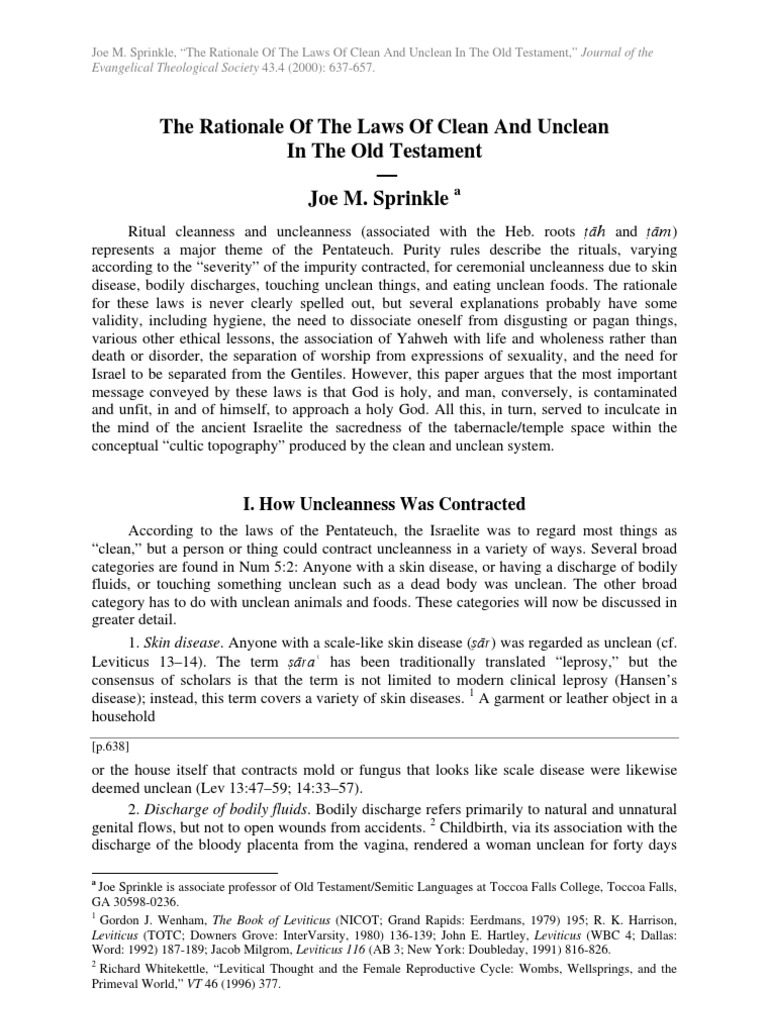
To begin, we must recognize that the notion of uncleanness primarily functions as a metaphor within spiritual contexts. In many passages throughout the scriptures, physical uncleanness serves as a reminder of the intrinsic separation between the sacred and the profane. Leviticus 11 is particularly illustrative, detailing dietary laws that distinguish between clean and unclean animals, not merely as a guide for ancient dietary practices but as a framework for understanding one’s relationship with God.
The ritualistic approach to cleanliness is revealing and instructive. For instance, certain animals like pigs and shellfish are deemed unclean, with the rationale often tied to symbolic representations of decadence or impurities. In this framework, avoiding unclean animals also symbolizes the moral high ground, as adhering to these laws was seen as a sign of faithfulness to divine commandments. Consequently, believers were invited to view what they consumed as reflective of their spiritual state—an idea that provokes much thought regarding modern dietary choices.
Furthermore, many practices surrounding cleansing rituals appear cumbersome by contemporary standards, but they serve a purpose beyond mere hygiene. The act of ceremonial washing or sacrificial offerings was intended to reaffirm one’s commitment to a holistic way of life—one that actively engages with the divine and aspires toward sanctity. The ritualistic nature of these laws facilitates a rhythm where every mundane act transforms into an opportunity for spiritual reflection, urging adherents to contemplate their standing before God.
It is essential to distinguish between different types of uncleanness: ceremonial uncleanness vs. moral uncleanness. The former refers to the physical conditions or behaviors that could render an individual temporarily unworthy of temple service. The latter, however, delves into the moral failures that create distance from the divine. Sin creates spiritual uncleanness, a concept echoing strongly in both the Old and New Testaments, prompting believers to pursue repentance and restoration.
In examining the New Testament, the conversation surrounding uncleanness takes on a more nuanced hue. Christ’s interactions with the unclean—such as healing lepers or associating with sinners—demonstrate a radical redefinition of what it means to be clean. His ministry fundamentally shifts the paradigm, upending the conventional thinking that associates spiritual worthiness strictly with outward observance. Instead, He emphasizes the heart’s condition, showcasing how true cleanness comes from an inner transformation rather than mere conformity to established laws.
This shift invites individuals into a dynamic relationship with the divine, highlighting forgiveness and grace as pivotal themes. The call is not merely to avoid physical or ceremonial impurities but to engage in genuine moral integrity. The emphasis on heart transformation reinforces the notion that spiritual health is fundamentally relational, marked by compassion and love.
As we delve deeper into why the biblical concept of uncleanness matters today, we find its implications profoundly relevant. It prompts an introspective analysis of our moral compass and ethical standards. Are the actions we take in our daily lives reflective of a spiritually clean heart? Are we honoring the sacredness of our relationships, fostering unity rather than division? In a society often fraught with moral ambiguity, the biblical call to cleanliness extends beyond personal piety; it calls for a radical rethinking of community relationships and societal engagements.
Moreover, exploring these themes offers a tantalizing glimpse into the transformative power of embracing spiritual laws within our lives. The message of uncleanness becomes an invitation—a call to journey toward a more authentic existence where one acknowledges vulnerabilities and strives toward divine alignment. It assures that while we may experience phases of spiritual barrenness, reconciliation and renewal are always within reach.
The exploration of what makes one unclean invites a broader contemplation of identity. It poses questions about how much of our worth we assign to external validation versus the intrinsic value bestowed upon us as creations of the divine. In a world that often screams for perfection, these teachings serve as a balm, reminding us that authenticity over ritualistic adherence is the true essence of spiritual living.
In conclusion, engaging with the biblical definition of unclean encourages debilitating fears of rejection to dissipate. Understanding spiritual laws through the lens of uncleanness illuminates pathways toward personal and communal wholeness. Whether through ancient practices or modern interpretations, the potential for transformation and healing remains a perennial promise—a shift in perspective that reaffirms the beauty of grace and the power of redemption.












