
The number 1, in biblical numerology, holds profound symbolism that reverberates throughout scripture, capturing the essence of unity, oneness, and the divine nature of Godhead. Unlike other numbers that might express multiplicity or duality, the number 1 distinctly conveys the concept of singularity. This theme is particularly significant when one considers the foundational assertions of the Christian faith, where God is not merely a being among many, but the singular source of existence and the epitome of unity.
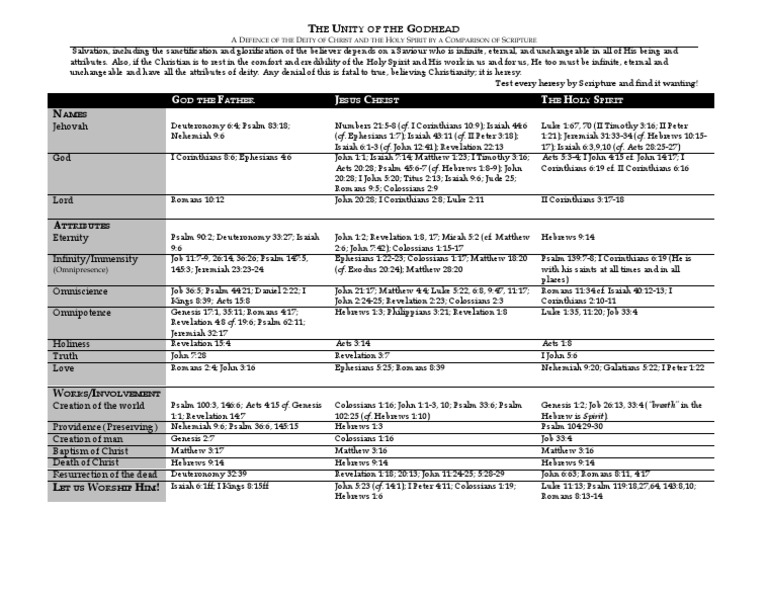
The Old Testament introduces the notion of God’s oneness succinctly in Deuteronomy 6:4, encapsulating the belief with the declaration, “Hear, O Israel: The Lord our God, the Lord is one.” This scripture not only emphasizes the monotheistic nature of God but also serves as a clarion call for Israel to recognize their unique covenantal relationship with Him. Such verses solidify the recognition that within the vast expanse of existence, there exists a singular divine entity who governs all creation.
The theme of unity tied to the number 1 extends beyond mere mathematical or numerical interpretations. In religious contexts, unity stands as a pillar of faith that defines the relationship between God and humanity as well as the relationship among believers. The singularity of God invites followers into a divine communion, urging a collective identity that transcends cultural, social, and personal differences.
Furthermore, within the New Testament, the significance of the number 1 emerges compellingly in the context of the Godhead, often articulated as the Trinity. Although the doctrine traditionally refers to God as three distinct persons—Father, Son, and Holy Spirit—the underlying truth emphasizes their inseparable essence. This doctrinal standpoint articulates that each person of the Trinity is fully and completely God, yet they exist in a perfect unity which mirrors the celestial harmony that characterizes divine reality.
In the Gospel of John, this concept finds expression in phrases emphasizing the oneness of Jesus Christ with the Father. For instance, in John 10:30, Jesus declares, “I and the Father are one,” articulating an identity that defies differentiation. This declaration evokes awe and stirs intellectual curiosity as it bears implications about the nature of God’s love and existence. Jesus’s oneness with the Father signifies not just a unity in purpose but embodies a metaphysical truth that calls humanity into deeper contemplation regarding the divine.
Moreover, the number 1 also assumes a symbolic dimension in the context of the interconnectedness of believers within the body of Christ. Paul’s epistles elucidate that a multitude of individuals, despite their diversity in gifts and backgrounds, operate as one cohesive body under Christ’s headship. In 1 Corinthians 12:12-13, the Apostle writes, “For just as the body is one and has many members, and all the members of the body, though many, are one body, so it is with Christ.” Here, the unity represented by the number 1 serves as a reminder that individuality does not detract from collective identity, but rather complements it; therein lies the beauty of divine design.
The fascination surrounding the number 1 may stem from its parallelism with universal concepts of wholeness and completeness. Many cultures and philosophical systems elevate the idea of oneness as foundational to understanding existence. In Buddhism, for instance, concepts of unity and non-duality echo similar sentiments about the interconnectedness of all life forms. In this respect, the biblical narrative stands out by articulating that this oneness is not merely an abstract idea but is personified in the character and essence of God Himself.
Some biblical scholars might delve deeper into interpretations of the number 1, linking it to the covenantal relationships depicted throughout the scriptures. The unbreakable covenant between God and His people can be seen as a manifestation of divine unity, where God takes on the role of both creator and sustainer. This relationship, flooded with grace and mercy, beckons individuals to take part in a journey back to the origin of existence and ultimately to Him, the singular point of truth and love.
As one reflects on the implications of the number 1 in the biblical context, it becomes evident that this symbol transcends mere numerical representation. It embodies the essence of divine unity that invites believers to experience God’s oneness, both in relationship with Him and with one another. The singularity represented in the number is not an abstract concept, but a dynamic reality that invites engagement in faith, a call to foster unity among humankind, and a challenge to reflect God’s character in a fragmented world.
In conclusion, the number 1 in the Bible stands as a powerful reminder of the essential unity that defines not only the nature of God but also the fabric of community and existence itself. This exploration elucidates the significance of understanding the sacred symbolism woven intricately throughout scripture, prompting believers to embrace the profound unity that forms the cornerstone of faith and spiritual journey. Through this lens, the number 1 emerges not merely as a mathematical entity but as a symbol of hope, continuity, and divine truth.












