
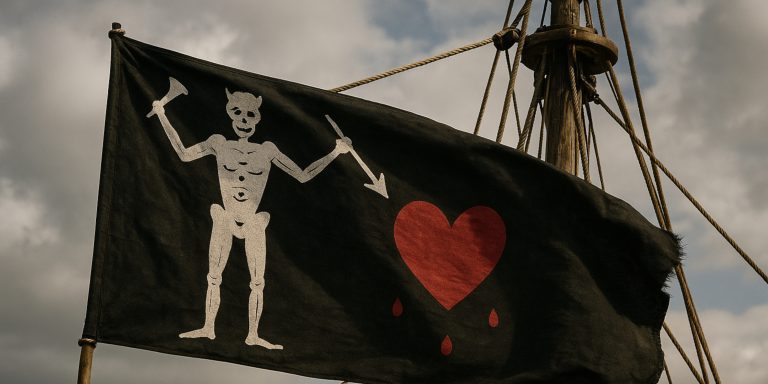
When you think of the infamous pirate flag, or the “Jolly Roger,” what images spring to mind? A swashbuckling captain steering a ship through treacherous waters? Perhaps a treasure chest hidden in the depths of an uncharted island? But have you ever pondered the intricate meanings behind these iconic symbols that fluttered menacingly from the masts of nefarious vessels? Just how much depth is concealed beneath the seemingly simple designs of pirate flags? Let’s embark on a captivating voyage through history and discover the hidden significance of these emblematic banners.
To fully appreciate the pirate flag’s significance, we must first delve into its origins. The term “Jolly Roger” is believed to derive from the French term “joli rouge,” which translates to “pretty red.” Initially, many pirates displayed red flags to signify their ruthless intentions, indicating that no mercy would be given to those who surrendered. However, over time, this evolved into the iconic black flag adorned with skulls and crossbones that we recognize today.
But what did these symbols truly represent? At its core, the Jolly Roger served multiple purposes: a means of intimidation, a call to arms, and a flag of defiance. When approaching a target ship, pirates would raise their flag to instill fear in the hearts of their adversaries. The sight of the skull and crossbones was an unequivocal reminder that surrendering would likely lead to a grim fate. In this way, the flag became an instrument of psychological warfare, sometimes sparing the pirates the trouble of engaging in battle.
Fascinatingly, not all Jolly Rogers looked the same. Pirates often personalized their flags to reflect their unique identities or distinguish their crews from others. An eye-catching variation might feature a grinning skull with exaggerated features or bones arranged in an intricate configuration. These variations not only served as a means of intimidation but also functioned as a means of establishing a pirate brand in a world rife with chaos.
No exploration of pirate flags would be complete without examining the colors and designs that were omnipresent in these historic emblems. Black became the predominant color for piracy, symbolizing death and the inevitability of fate awaiting those who crossed paths with these seafaring marauders. In contrast, red flags often indicated a more aggressive stance, signaling that the pirates were prepared to engage in a violent confrontation.
Among the plethora of symbols employed, the skull served as the central motif. It was not merely a morbid decoration but a potent symbol representing mortality and the fleeting nature of life. The crossbones, too, wielded significant weight; they reinforced the message that the pirates were prepared to confront death without fear.
Another captivating aspect of pirate flags lies in their connection to ritualistic practices aboard pirate ships. Many pirates infused elements of superstition into their daily lives, and their flags were often believed to have a mystical potency. Some crews performed ceremonies to bless their flags, elevating them from mere cloth to sacred objects imbued with the spirits of past seafarers. This elevation of the flag to a spiritual status illustrates the deep connections between identity, belief, and symbolism within pirate culture.
Interestingly, the use of such banners extended beyond mere piracy. In some instances, these flags served as a means of signaling alliances or displaying loyalty among piratical factions. Pirates often collaborated in loose confederations, and the flag served as a hallmark of shared identity. To fly a certain pirate’s flag was to adhere to a code and uphold the tenets of that pirate’s crew, illustrating the complex social structures that existed within the pirate community.
As we plumb the depths of pirate flag symbolism, we encounter the moral and ethical conundrums that piracy inherently embodies. The duality of the Jolly Roger evokes questions of heroism versus villainy. Were pirates noble rebels resisting oppressive naval powers, or were they simply anarchists dedicated to chaos and plunder? The flag—while a signal of danger—also serves as an emblem of freedom from societal constraints, encapsulating the philosophy of living outside the bounds of conventional society.
However, this romanticized notion is often underscored by the sobering reality of piracy. Behind the allure of the pirate flag lies a history steeped in violence, exploitation, and treachery. Tales of brutal encounters, forced labor, and betrayal remain etched in the annals of maritime history. Each flutter of the skull-and-crossbones banner brings with it the echo of a tumultuous past, reminding us that the romantic myths of piracy often stand in stark contrast to the grim realities faced by those affected by these marauding seafarers.
In contemporary society, the pirate flag has transcended its historical roots, evolving into a vibrant symbol within pop culture. It has permeated movies, literature, and even fashion, evoking the spirit of rebellion and adventure while often overshadowing the flag’s darker connotations. This transformation invites a reconsideration of what the Jolly Roger truly signifies in our modern age.
Challenging ourselves to confront the true meaning of the pirate flag compels us to reflect on broader themes—freedom, morality, and the complex narratives behind the images that captivate our imaginations. So, what does a pirate flag truly mean? Is it merely a relic of a bygone era, or does it still resonate today, beckoning us to question our understanding of identity, rebellion, and the human condition?
As we navigate through history’s turbulent waters, the skull and crossbones remain a beacon of intrigue and a reminder of the layers of meaning embedded within iconic symbols. The next time you gaze upon a pirate flag, consider not just its surface appeal, but the tales, struggles, and philosophies that it embodies. The challenge lies in unlocking these stories, peeling back the layers, and pondering the complexities of the human experience that sway, much like the sails of a ship upon the high seas.












