
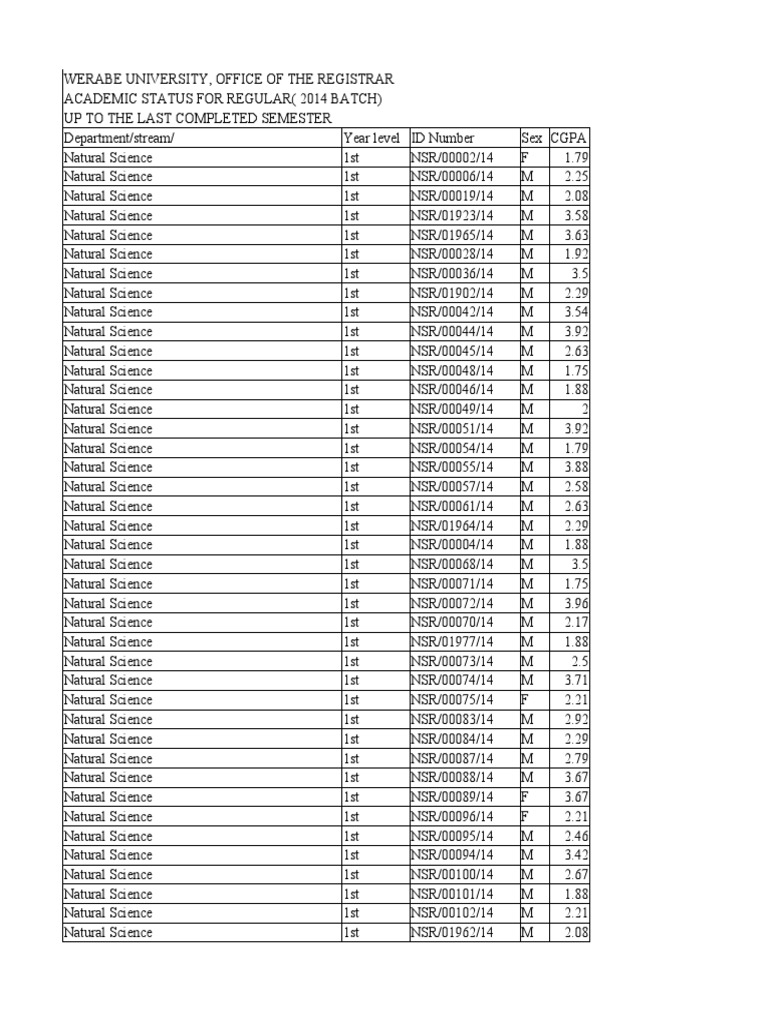
In the tapestry of collegiate life, there exists a lexicon that often baffles the uninitiated. One such term is ARR, or Academic Status Review. This phrase encapsulates a critical component of an academic journey, serving as both a compass and a mirror for students. But what does ARR truly signify in the higher education realm? Let’s unravel this enigma.
At its core, ARR is a formal evaluation of a student’s academic performance, crafted by academic institutions to assess eligibility for continued enrollment. Much like a weather report forecasting a storm, the ARR provides an insight into the potential challenges that may lie ahead for students who find themselves adrift in the sea of academia.
Understanding ARR requires a thorough examination of its components. It typically operates on a multi-tiered structure that encompasses various metrics to gauge the academic endeavor of students. Institutions utilize grading systems, credit accumulation, and course completion rates to formulate a comprehensive overview of a student’s scholarly progress.
Imagine each student as a ship navigating uncharted waters. The ARR process acts as both the lighthouse guiding these vessels and the coast guard ensuring mariners have the requisite skills to traverse tumultuous seas. Each metric serves to illuminate potential areas of concern, shedding light on topics like GPA, attendance, and course withdrawals. An ARR is not merely a number; it is an intricate narrative of a student’s academic journey, replete with peaks and troughs, triumphs and challenges.
One might wonder, what consequences may arise from an unfavorable ARR? Much like a passenger grounded due to inclement weather, students facing subpar academic ratings may encounter restrictions in course registration, eligibility for scholarships, or even a mandate to undergo remedial studies or advisement. Such measures underscore the institution’s vested interest in fostering an environment where students can flourish and achieve their full potential.
Nevertheless, the ARR is not solely punitive. Think of it as a personal trainer, scrutinizing your physical capabilities and devising a personalized workout plan. For students grappling with their academic performance, this process can serve as a catalyst for change. Institutions may offer workshops, tutoring sessions, or counseling services aimed at bolstering a student’s academic prowess. The ARR thus morphs into a valuable tool, guiding students toward resources that can facilitate their evolution.
Moreover, the process is typically iterative. Students are not relegated to a static status quo. After each evaluation, there exists an opportunity for redemption—an academic renaissance, if you will. With dedication and resilience, a student can rise from the ashes of an unfavorable assessment, much like a phoenix resurrected through the flames of adversity.
The nuances of ARR can vary substantially across different institutions. Some colleges may adopt a more stringent approach, while others display leniency, recognizing that life’s circumstances can sometimes impede scholarly pursuits. For instance, a perfect storm of personal challenges—family issues, financial woes, or health concerns—can propel a student’s academic status into a state of disarray. Consequently, many institutions have begun to embrace holistic assessments, acknowledging that numbers alone fail to encapsulate the myriad of human experiences that color a student’s academic journey.
In light of this, understanding and navigating the ARR process is paramount for students striving to achieve their academic aspirations. Here are some strategies for effectively engaging with the ARR:
- Self-Assessment: Before the official review, students should introspectively evaluate their academic performance. Identify strengths, weaknesses, and seek to understand underlying causes for any deficiencies. This reflection equips one with insights necessary for meaningful discussions with academic advisors.
- Utilize Available Resources: Colleges often provide an array of support services, from academic advising to mental health counseling. Engaging with these resources can provide clarity, strategies, and encouragement necessary for personal improvement.
- Establish Clear Goals: Setting specific, achievable, and measurable objectives can serve as a powerful motivator. Students should ascertain what success looks like for them and devise a focused plan to attain those milestones.
- Engage with Faculty: Building relationships with professors and academic staff is invaluable. Their insights and guidance can illuminate pathways to improvement and enrich a student’s understanding of course material.
- Participate in Study Groups: Collaborating with peers fosters a supportive academic community. This collective approach not only strengthens understanding of material but also provides emotional support and accountability.
As we demystify ARR, it becomes evident that this process encapsulates a journey rather than a destination. It is a reflection of growth, resilience, and the pursuit of excellence amidst adversity. The allure of collegiate life lies not solely in the quest for a degree but in the transformative experiences—both the setbacks and triumphs—that shape an individual into their best self.
In essence, ARR acts as both a guardian and a guide. It ensures that students are prepared to navigate the unpredictable waters of higher education, fostering a culture of accountability while simultaneously offering a second chance for those in need. Understanding ARR thus becomes an indispensable aspect of one’s collegiate experience, one that ultimately cultivates a foundation for lifelong learning and personal development.











