
Driving, perhaps one of modern life’s most ubiquitous skills, can be a labyrinth of technical maneuvers and practical applications. One such maneuver that encapsulates the intricacies of vehicle handling and spatial awareness is the two-point turn. This technique not only serves as a vital driving skill but also opens a window into the often-overlooked realm of driving behaviors and strategies. What is it about the two-point turn that captures the imagination and necessitates a deeper analysis of its mechanics and implications?
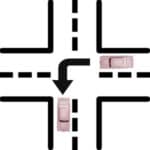
A two-point turn, as the name suggests, consists of making a turn in two distinct movements. Picture a narrow street or a parking lot where a driver finds themselves facing the wrong direction. Instead of executing a more complex three-point turn or employing a multi-point maneuver, the driver engages in an elegant, albeit practical, display of vehicular finesse. The first step involves steering the vehicle toward the side of the street, using the curb as a guide, before shifting into reverse and pivoting to steer the vehicle in the opposite direction. This seemingly simple tactic reveals layers of intricacies and nuances that warrant exploration.
One of the most common observations regarding the two-point turn is its prevalence in everyday driving situations. Whether navigating through crowded streets or positioning oneself in a parking lot, this maneuver is often performed with a level of grace that belies its logistical complexity. The driver must exhibit acute attentiveness to surrounding traffic, pedestrians, and environmental factors—an implicit dance of timing and space management. The dual practice of forward and reverse maneuvers bridges the gap between basic operation and advanced driving techniques.
However, the fascination with the two-point turn extends beyond mere observation. It highlights a deeper understanding of spatial awareness, an essential skill in the driving lexicon. Drivers engendering the two-point turn must possess a keen sense of their vehicle’s dimensions and how they interact with their environment. This skillset becomes particularly salient in tight urban quarters where space is at a premium. Successfully executing a two-point turn can evoke a sense of satisfaction and mastery rarely found in more straightforward driving tasks.
Delving further, the mechanics of the two-point turn reveal critical considerations that impact the driver’s experience. By positioning the vehicle strategically and utilizing mirrors for improved visibility, a driver is not only executing a turn but is also showcasing their proficiency in navigating complex situations. Moreover, the necessity to disengage from one direction and then seamlessly transition to another fosters a mindset of adaptability. This ability to pivot and reorient speaks to a larger theme in driving—a respect for unpredictability.
Curiously, the two-point turn is not merely a practical skill but also acts as a microcosm of broader behavioral observations. For many drivers, mastering this maneuver embodies a rite of passage, symbolizing a transition from novice to experienced driver. This psychological transformation, although subtle, underlines an individual’s development and progression within the purview of driving. The satisfaction derived from perfecting such a technique can lead to increased confidence behind the wheel, ultimately influencing overall driving behavior.
On a more profound level, the act of turning a vehicle, particularly in a two-point fashion, invokes an understanding of the spaces we inhabit. In the realm of urban planning and development, the necessity for such maneuvers speaks to the design of our environments. Is our infrastructure accommodating for these practical needs, or are we perpetually squeezing into spaces that don’t align with our transportation reality? Observing how drivers employ two-point turns reflects not just individual skill, but also collective behavior, revealing insights into how we navigate our urban landscapes.
In addition, the two-point turn has implications beyond merely facilitating navigation. It becomes emblematic of adaptability in a rapidly changing environment. A skilled driver utilizing this maneuver showcases not only their technical abilities but also their emotional intelligence, as they must continually assess their surroundings and anticipate the reactions of those around them. The intersection of vehicle control and environmental awareness in a simple turn elucidates the complex relationship we possess with our surroundings.
Furthermore, the two-point turn serves as a reminder of patience and prudence in driving. In a world increasingly characterized by urgency and speed, taking the time to execute a turn correctly is an act of mindfulness. It compels drivers to slow down, assess their circumstances, and proceed with caution. This returns to the core essence of driving—a testament to the need for measured responses in not just driving, but in life’s many other endeavors. Each successful execution of the two-point turn can be viewed as a win against the backdrop of a frenetic lifestyle.
In conclusion, the two-point turn transcends its practicality, evolving from a basic driving maneuver into a narrative rich with layers of observation, behavioral intricacies, and environmental commentary. It underscores the importance of skillful navigation, both within the confines of our vehicles and in the vast architectures of our urban settings. Whether viewed as a simple technique or a lifelong rite of passage, the two-point turn beckons an appreciation of the profound lessons that lie within the everyday experiences of driving. Therefore, the next time you find yourself executing this maneuver, take a moment to revel in its significance—recognizing that, even in a small turn, there resides a world of meaning.













