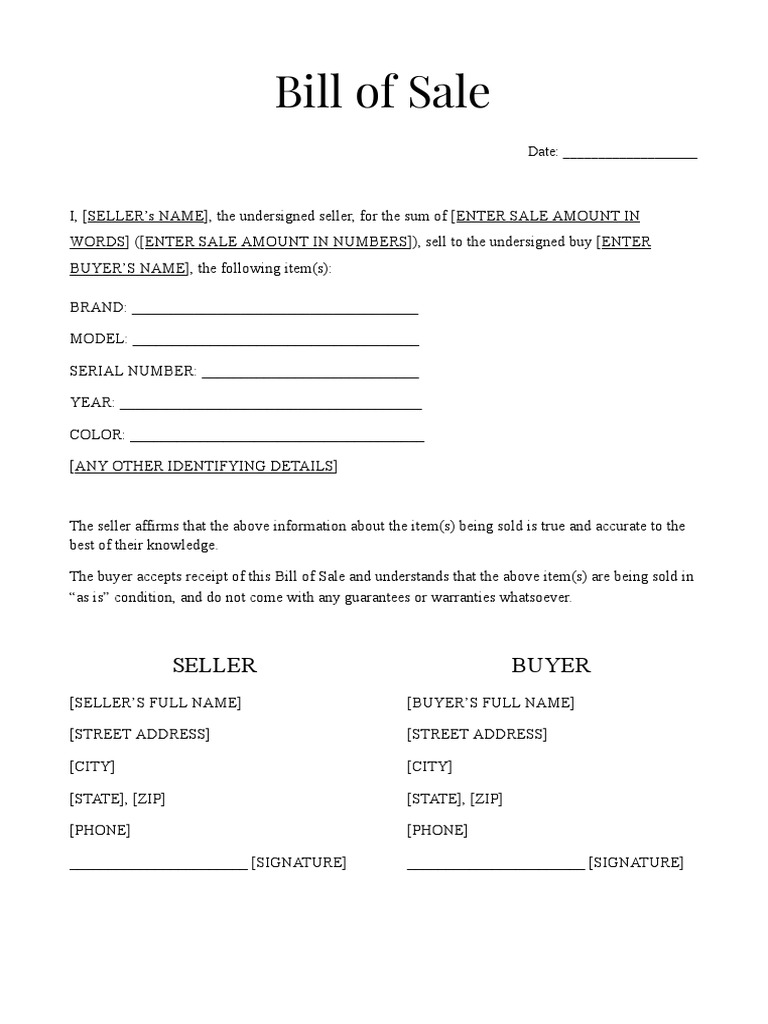
When it comes to the exchange of goods and services, one of the most essential documents in a sale transaction is the bill of sale. A bill of sale functions as a legally binding contract that meticulously outlines the particulars of the sale between a buyer and a seller. It is crucial for both parties, as it serves to protect their interests and to provide clarity in the transaction. This article delves into the various aspects and examples of a bill of sale, exploring different types and nuances that come into play in distinct situations.
1. Definition and Purpose of a Bill of Sale
A bill of sale is defined as a written document that conveys the transfer of ownership of an item from one party to another, detailing the associated terms and conditions. This document serves multiple purposes: it acts as proof of purchase, facilitates the registration of the buyer, and protects against potential disputes. In essence, it acts as a safeguard for both parties, ensuring that each understands the obligations they are entering into.
2. Essential Elements of a Bill of Sale
Regardless of the specific type of goods being sold, a comprehensive bill of sale usually includes the following fundamental components:
- Identification of the Seller: The full name and contact information of the seller are crucial for future correspondence.
- Identification of the Buyer: Similarly, the buyer’s details must be recorded to confirm their identity and facilitate communication.
- Description of the Item: A detailed description of the item, including make, model, year, VIN (for vehicles), and any distinguishing features, is vital. The more thorough the description, the less room there is for ambiguity.
- Purchase Price: This section should state the complete sum agreed upon by both parties, usually in numeric and written form.
- Payment Terms: Clarity around how the payment will be made—whether in full upfront, through installments, or a combination thereof—is necessary.
- Date of Transaction: Noting the date reinforces the timeline of the sale.
- Signatures of Both Parties: Signatures signify an agreement to the terms laid out within the document.
3. Different Types of Bills of Sale
Much like the transactions they govern, bills of sale can take on various forms, each suited for specific circumstances. Understanding the diversity in these documents enriches one’s appreciation of their utility:
- Automobile Bill of Sale: Typically required in vehicle transactions, this document details the vehicle’s make, model, VIN, and odometer reading. In many states, a notarized copy may be required for registration purposes.
- Boat Bill of Sale: Similar to vehicle sales, the transfer of boats necessitates a specialized bill of sale. This document should include the hull identification number and various specifications to confirm ownership
- Equipment Bill of Sale: Heavy machinery or business equipment often requires a dedicated form, encompassing not only the item’s description but also any warranties or guarantees.
- Personal Property Bill of Sale: This is a more generalized form used for the sale of items such as furniture, electronics, or collectibles. It functions primarily as proof of ownership transfer.
4. Special Considerations
When drafting or signing a bill of sale, several considerations may arise that require additional attention:
- As-Is Clause: In numerous transactions, particularly with used items, a seller may include an “as-is” clause. This indicates that the buyer accepts the item in its current condition, foregoing any claims against the seller for future defects.
- Warranty Terms: If the seller offers any guarantees or warranties, these must be explicitly stated. Buyers should be aware of what is covered under such warranties and the duration they remain valid.
- Notarization: Certain transactions may mandate a notarized bill of sale to ensure its validity, particularly for high-value items like vehicles or real estate.
5. Legal Implications and Importance
The implications of a bill of sale are substantial. For one, it serves as indispensable evidence in the event of a dispute. Courts often rely on this document to ascertain ownership and transaction details. Additionally, for tax purposes, it might be essential to keep a record of sales, particularly when it involves significant financial exchanges. Some states require bills of sale for vehicle registration, thus reinforcing their importance.
6. Template and Resources
For those looking to draft a bill of sale, numerous templates are readily available online. These resources can provide guidance in ensuring all necessary details are included. Each template typically adheres to the requirements of specific states or categories of items. Using a well-structured template can save time and reduce the likelihood of crucial information being overlooked.
Conclusion
In conclusion, the importance of a bill of sale cannot be understated. It encapsulates the essence of a transaction, assures both parties of their rights and obligations, and serves as a crucial safeguard against misunderstandings. Awareness of the various types of bills of sale, along with their specific requirements, ensures that each transaction is not only efficient but also legally sound. As such, anyone engaging in buying or selling goods, from automobiles to personal property, should prioritize the crafting and execution of an appropriate bill of sale.