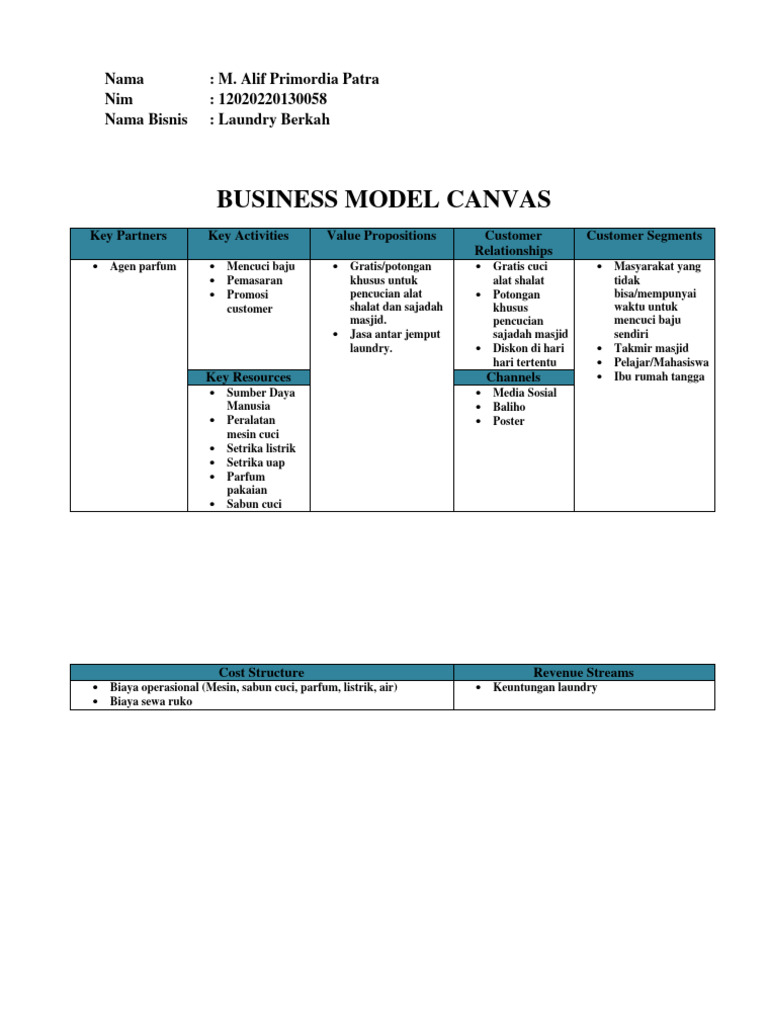
In the evolving landscape of entrepreneurial ventures, the Business Model Canvas has emerged as a transformative blueprint for both fledgling startups and established enterprises. This strategic tool transcends typical business planning methodologies by offering a holistic view of an organization’s value proposition, infrastructure, customers, and finances. Let us delve into what encapsulates a Business Model Canvas, explore its nuanced components, and unveil an illustrative example that promises to shift your perspective on business planning.
The essence of the Business Model Canvas lies in its simplicity and visual appeal, allowing users to distill complex ideas into a single page. Its structure is designed around nine fundamental building blocks, all interrelated and collectively underpinning the viability of a business. Each of these components serves as a puzzle piece in the larger picture of how a business operates and grows.
1. **Value Propositions**: At the heart of every business model is the value proposition. This is the cornerstone of what the business offers to its customers, addressed through clear promises of benefits, solutions to problems, or fulfilling needs. For instance, consider a local artisanal bakery that promises not just bread, but a sensory experience—freshly baked goods crafted from locally sourced ingredients, evoking nostalgia and community connection.
2. **Customer Segments**: Identifying the customer segments is paramount. This block delineates the specific groups of people or organizations that a business aims to serve. An artisan bakery might target health-conscious consumers, families looking for comfort food, and gourmets in pursuit of artisanal delicacies. Each segment bears distinct characteristics and preferences, informing the bakery’s branding and marketing strategies.
3. **Channels**: How does a business communicate and deliver its value proposition? Channels encompass the various avenues through which a company reaches its customers and delivers its offerings. The bakery might sell directly from its stores, use an online delivery service, or engage in local farmers’ markets. These channels form the arteries of interaction, enhancing customer engagement and satisfaction.
4. **Customer Relationships**: This block describes the type of relationship a company establishes with its customer segments. It could range from personalized customer service to self-service solutions. For instance, the bakery could implement a loyalty program, offering a discount on every 10th purchase to foster a sense of belonging and retention among its customer base.
5. **Revenue Streams**: The financial aspect of a business model is captured through revenue streams, denoting the cash generated from customer segments. In our bakery’s case, revenue streams might include direct sales of baked goods, catering services, and potentially, online classes teaching the art of bread-making. Exploring diverse revenue streams can be a catalyst for growth.
6. **Key Resources**: Every business necessitates key resources—assets integral to its operation. For a bakery, key resources would encompass ingredients, skilled bakers, ovens, and even intellectual property, such as unique recipes that give it a competitive edge. Understanding these resources helps in strategizing for sustainability and scalability.
7. **Key Activities**: Following closely are the key activities, which encapsulate the critical actions the company must undertake to deliver its value proposition. In the bakery domain, these activities might include baking, marketing, and managing customer orders. This component emphasizes the operational backbone of the business, laying groundwork for efficiency and quality control.
8. **Key Partnerships**: No business operates in isolation; thus, identifying key partnerships is essential. Collaborations with local farmers for fresh produce, partnerships with delivery services, and networking with food bloggers can propel the bakery’s visibility and operational capabilities. Leveraging partnerships fosters innovation and opens up new avenues for growth.
9. **Cost Structure**: Lastly, we come to the cost structure—what it costs to operate the business. The bakery needs to meticulously map out costs related to ingredients, labor, rentals, utilities, and marketing. Understanding these fixed and variable costs is crucial for pricing strategies and financial health.
To visualize these intertwined components, let’s encapsulate them within an illustrative example of our artisan bakery. With an evocative name like “The Hearth,” this establishment entices customers with its promise of warmth and connection. As the bakery’s value proposition, it emphasizes organic sourcing and traditional baking techniques, highlighting not just product offerings but the experience of community.
Its customer segments are multi-faceted: young professionals seeking healthy options, families desiring comforting treats, and food enthusiasts eager to explore unique flavors through seasonal offerings. The bakery’s channels range from a brick-and-mortar storefront buzzing with the aroma of fresh bread to an engaging online presence featuring delivery options and a subscription model for weekly bread selections.
Having nurtured personal relationships with customers through barista-style interactions, The Hearth launches a loyalty program aimed at forging deeper connections. Revenue streams diversify through corporate catering, baking classes on weekends, and partnerships with local cafés that showcase its goods, amplifying its reach.
Key resources entail a team of passionate bakers, high-quality flour sourced from regional mills, and a beautifully designed space that reflects the bakery’s ethos. The key activities concentrate on innovative menu development, effective marketing, and enhancing customer service. Key partnerships, like those with local farmers and craft beverage producers, enrich the overall offering. Finally, a careful analysis of the cost structure ensures optimized expenditures and balanced profitability.
In conclusion, the example of The Hearth encapsulates the essence of a business model canvas with clarity and creativity. By understanding the interconnectedness of each component, entrepreneurs can craft comprehensive, innovative, and adaptable business models. This framework not only promises clarity but also inspires a mindset shift—encouraging us to view business not merely as transactions, but as a vibrant ecosystem of relationships and value exchanges.