Chemical reactions are among the most fascinating phenomena observed in the natural world. They represent the alchemical dance of atoms and molecules, metamorphosing familiar substances into new forms, echoing the profound transformations found in nature. Just as a caterpillar emerges from its chrysalis as a butterfly, matter undergoes an often dramatic evolution through the intricate processes of chemical change.
To explore the mystique of chemical reactions, consider the very essence of their function. At the heart of a chemical reaction lies the concept of reactants—the initial substances that embark on a transformative journey. It is akin to a compelling story where characters, bound by their initial identities, encounter various catalysts of change, leading them to a denouement far removed from their origins.
One poignant example is the combustion of methane (CH₄), which can be visualized as a fierce conflagration that not only warms our homes but also stirs the atmosphere. When methane ignites in the presence of oxygen (O₂), a mesmerizing symphony of energy unfolds. The reactants—methane and oxygen—promiscuously engage, yielding carbon dioxide (CO₂) and water (H₂O) as products, alongside the radiant warmth and light. This reaction encapsulates the alluring duality of chemical processes: the consumption of earthly elements births energy, illuminating our existence.
Now, let us dive deeper into the mechanics. The bonds that tether the atoms of methane and oxygen are akin to the threads of a meticulously woven tapestry. Through the introduction of heat, these bonds are severed, unraveling the fabric of the original compounds. Reconstructed, new relationships form; this time, a bond of carbon and oxygen takes precedence. As energy is liberated in the form of heat and light, it mirrors the release of pent-up emotions in a tumultuous theatrical climax—both liberating and destructive.
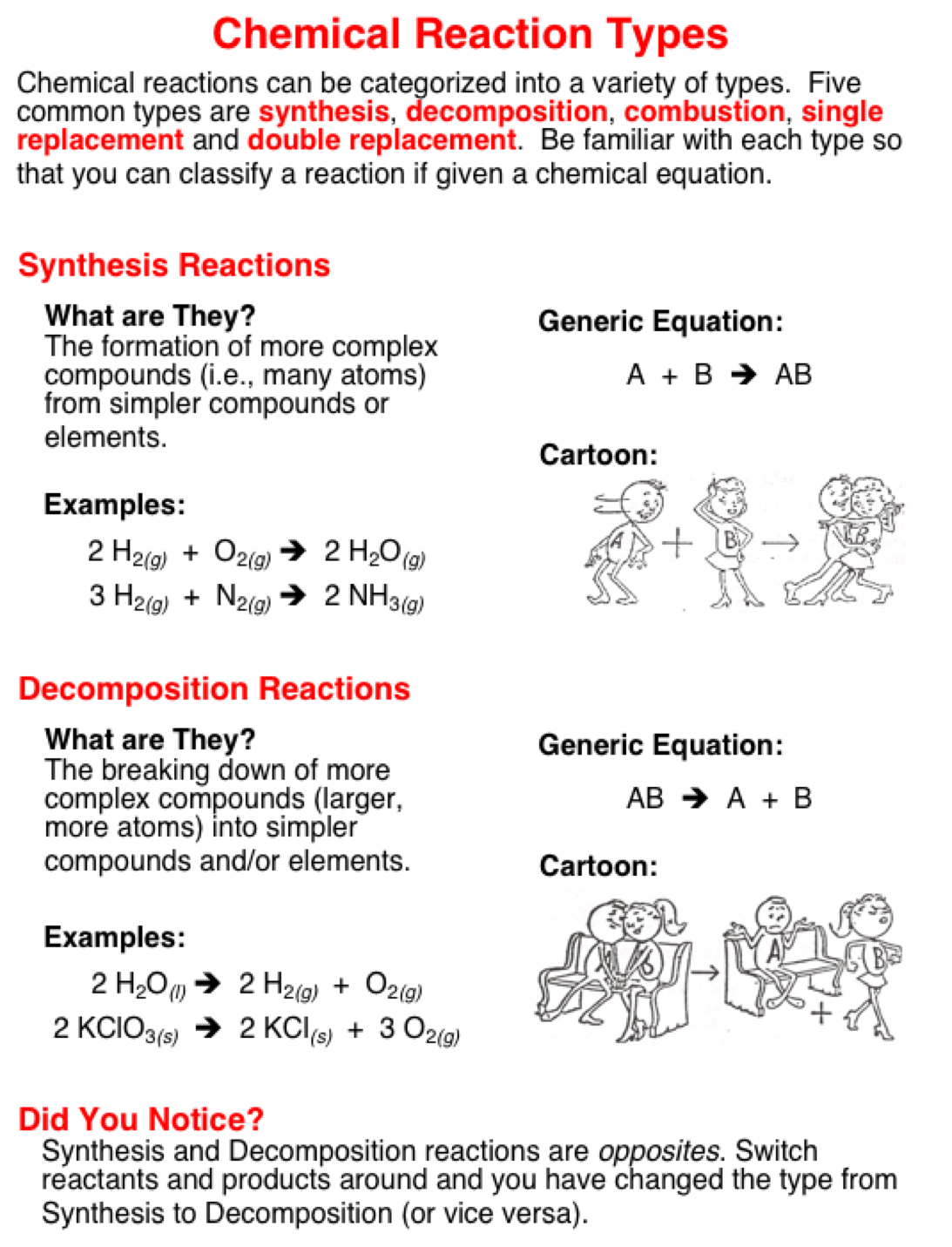
Beyond the sensational theater of combustion lies the delicate art of synthesis reactions, where new compounds emerge like artists experimenting with a palette of chemicals. A classic illustration is the formation of water from its elemental precursors, hydrogen (H₂) and oxygen (O₂). This process serves as an elegant reminder of the interconnectedness of the universe. Two diatomic gases, both distinct in their properties and behaviors, meet in a dance of electrifying intimacy, ultimately yielding the essence of life itself: H₂O. Here, we witness the poetic nature of chemistry, professing love in chemical equations.
As we venture further into this vivid realm, it is imperative to contrast synthesis with decomposition reactions, which break down compounds into simpler entities. This transformative process can be likened to a fading sunset, where the vibrant colors of painted skies succumb to the encroaching darkness—remnants of light dispersing into individual shades. An illustrative example is the breakdown of hydrogen peroxide (H₂O₂) into water and oxygen. Possibly reaching a threshold of instability, hydrogen peroxide, when left to its own means, decomposes, exposing its less stable nature, much like a star burning out. This reaction not only showcases the inherent fragility of compounds but also evokes awe at the relentless march of time as matter faces its destiny.
Moreover, chemical reactions can be categorized as redox (reduction-oxidation) reactions, which exemplify the constant exchange of electrons—akin to a grand relay race of energy transfer. In such a scenario, one participant in the reaction loses electrons while its counterpart gains, dramatically altering the chemical state of both entities involved. A vivid example of this intricate transfer occurs in the rusting of iron. The oxidation of iron when exposed to moisture and oxygen results in iron oxide (rust), which can be seen as nature’s relentless reclamation—an unceasing reminder of impermanence.
The unique allure of chemical reactions does not end here. Within their varied contexts, they echo life’s intricate weave. The physiological realm is brimming with chemical reactions, forever orchestrating the symphony of life. For instance, the process of cellular respiration encapsulates the metamorphosis of glucose (C₆H₁₂O₆) into carbon dioxide and water, releasing energy stored in the molecular bonds for the sustenance of life. This scenario conjures images of a currency system where energy is traded to fuel the elaborate tapestry of biological existence, nourishing growth, movement, and vitality.
Yet, beyond mere biological implications, the insights garnered from chemical reactions can bridge into the realms of art and philosophy. The colors of fireworks are no accident; they are a brilliant manifestation of exothermic reactions, dazzling the night sky as various metal salts ignite and release energy in a breathtaking explosion of color. Each hue paints not just visual spectacle, but also captures the exuberance of human curiosity—a celebration of transformation and elemental play.
In conclusion, the world of chemical reactions is an awe-inspiring theatre of metamorphosis, illuminating the delicate balance between creation and destruction, harmony and chaos. The ability of simple reactants to orchestrate elaborate transformations evokes a sense of wonder about the unseen processes that govern the universe. As we marvel at the tangible outcomes of these reactions, we recognize that their intrinsic beauty lies not merely in the products formed but in the ever-unfolding narrative of existence itself. Chemistry, much like the stories we live and tell, is about connection—the bonds forged and broken—and the intricate dance that continues to weave our world together.