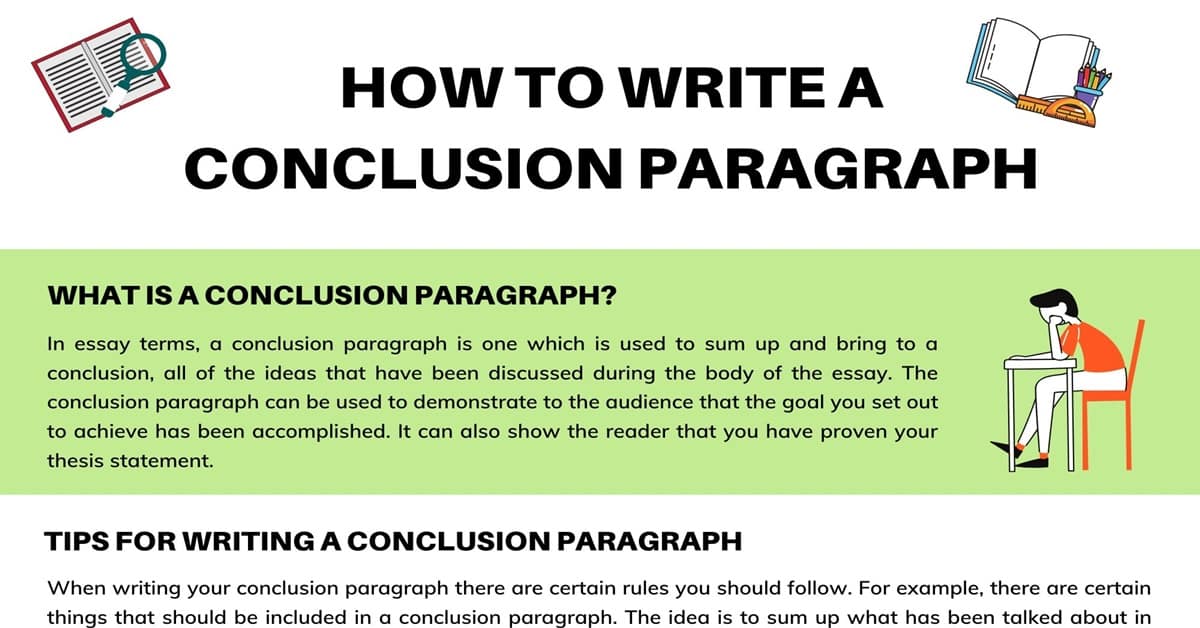
When crafting an essay, the conclusion serves as the proverbial exclamation point, encapsulating the crux of your argument and leaving a lasting impression on the reader. It is the final opportunity to reinforce your thesis and evoke emotional resonance, ensuring that your message lingers well after the last sentence has been read. This exploration will delve into the intricacies of a compelling conclusion, elucidating various types and providing illustrative examples to empower writers of all levels.
To begin with, it’s imperative to understand that a conclusion is not merely a regurgitation of the introduction or the body paragraphs. Rather, it is a synthesis of the primary arguments made throughout the essay, distilled into a few potent sentences. An effective conclusion should restate the main thesis while integrating insights acquired during the discourse, thereby showcasing the depth of understanding achieved through exploration.
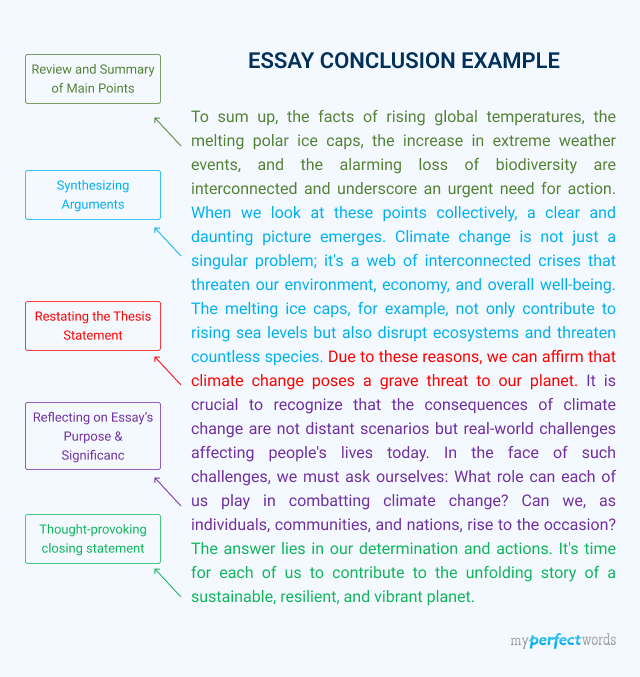
One effective approach to a conclusion is the summary conclusion. This format succinctly recaps the key arguments and findings of the essay. It serves not only as a wrap-up of the discussion but also as a reinforcement of the essay’s purpose. For instance:
“In summary, the exploration of renewable energy sources reveals their critical role in combating climate change. The juxtaposition of solar, wind, and hydroelectric power illustrates the viability of sustainable alternatives to fossil fuels, highlighting their advantages in terms of sustainability and environmental impact. As the world grapples with the impending consequences of climate change, embracing renewable energy is not just a choice; it is an imperative.”
This type of conclusion consolidates the essay’s themes, providing the reader with a clear understanding of the implications of the arguments presented.
Next, we have the reflective conclusion, which invites the reader to ponder the larger implications of the topic. This style encourages critical thinking and emotional engagement. Here’s an example:
“Reflecting on the pervasive issue of poverty reveals a societal challenge that transcends mere economic disparity. It compels us to reconsider our values and priorities as a civilization. The resilience of those living in such conditions illuminates the urgent necessity for collective action and empathetic understanding. It prompts us to ask ourselves: What role do we play in shaping a more equitable world?”
Such a conclusion does more than summarize; it provokes thought and encourages readers to connect with the broader societal narrative.
The call-to-action conclusion is another potent tool in a writer’s arsenal. This type of conclusion is characterized by its directive nature, urging readers to take specific action based on the arguments presented. It acts as a catalyst for engagement and change. For example:
“As we conclude our exploration of digital privacy, it is imperative that we recognize our agency in this increasingly interconnected world. Each of us has the power to advocate for stronger privacy rights, whether through supporting robust legislation or by adopting stringent privacy practices in our personal lives. Let us not remain passive bystanders; instead, it is time to reclaim our digital autonomy.”
This effective conclusion not only encapsulates the discussion but also mobilizes the audience toward tangible action, making it a powerful closing strategy.
Another sophisticated variation is the use of a visionary conclusion. This approach paints a picture of the future, exploring the potential developments or consequences stemming from the essay’s topic. An example might be:
“Envisioning a future where biodiversity flourishes, we can see the profound interconnectedness of all life on Earth. If we adopt sustainable practices today, generations to come will inherit a world brimming with vibrant ecosystems and thriving species. The steps we take now are crucial; they will dictate whether we nurture or extinguish the delicate balance of nature.”
This conclusion not only encapsulates the arguments but also inspires hope and fosters a vision for a better tomorrow.
In addition to the various types of conclusions, writers must remember the importance of a strong closing statement. The final sentence should resonate like a well-placed period—a grand crescendo that leaves the reader with a sense of closure and contemplation. Whether through a thought-provoking quote, a poignant question, or a memorable anecdote, the closing statement can significantly impact how the reader processes the entire essay.
Moreover, employing vivid language and stylistic choices that align with the essay’s overall tone can enhance the memorable quality of the conclusion. For example, an academic essay might conclude with a formal statement, while a personal narrative may employ a more conversational tone for intimacy and relatability.
Ultimately, the art of concluding an essay lies in its ability to meld form with function—a reminder that every component of writing serves a purpose. The conclusion must reflect the essence of what has been argued, pose reflective questions, invigorate the reader with calls to action, or ignite the imagination with visionary propositions.
In summary, the diversity of conclusion styles offers immense flexibility for writers, enabling them to tailor their endings to various audiences and purposes. Whether summarizing, reflecting, calling to action, or peering into the future, a well-crafted conclusion serves as the definitive closure of an essay, allowing readers to walk away not just informed, but also moved and inspired. Engaging with this crucial element of writing is, therefore, paramount for anyone aspiring to leave a significant mark on their readership.