
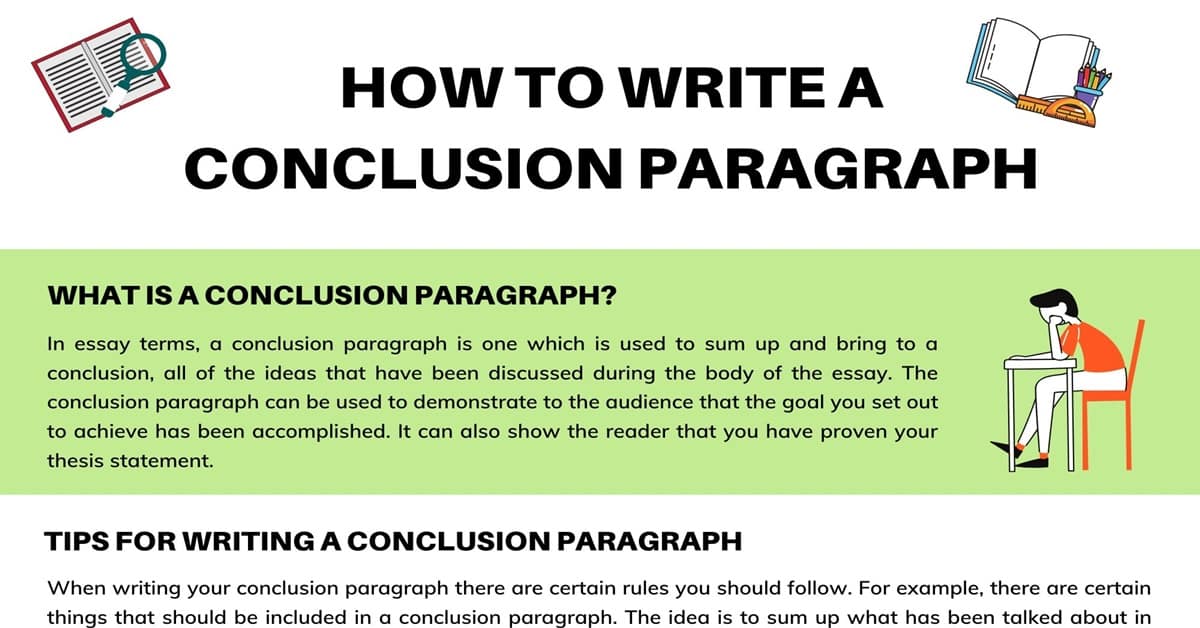
Writing a conclusion paragraph is an art that requires finesse and clarity. A well-crafted conclusion not only wraps up the discussion but also reinforces the main themes of the piece while providing a sense of closure. It serves as the reader’s final interaction with the text, making it crucial to leave them with lasting impressions. In this article, we explore various examples of conclusion paragraphs that cater to different types of content—academic essays, articles, stories, and persuasive pieces—demonstrating how each can effectively encapsulate its respective narrative.
The first example revolves around an academic essay. Typically, a conclusion in this context revisits the thesis statement and highlights the key arguments made throughout the paper. For instance:
“In summation, the exploration of climate change through the lens of scientific research, societal impact, and legislative responses reveals a complex interplay of factors. As demonstrated, the scientific community’s extensive work offers irrefutable evidence of climate change’s existence. However, societal reluctance often hinders actionable change. Legislative measures, while necessary, are often undermined by political agendas. Thus, it becomes imperative for global citizens to advocate for and contribute to sustainable practices, fostering an environment where both awareness and action can thrive.”
This conclusion not only synthesizes the main points but also calls the reader to action, emphasizing their role in addressing climate change.
Transitioning towards articles, which are often more informal yet still informative, conclusions will usually summarize the content while encouraging further reflection or action. For example:
“In summary, diving into the myriad ways that technology has transformed our daily lives gives us much to ponder. From enhanced communication tools to revolutionary healthcare solutions, the digital age continues to unveil advantages that were once inconceivable. As we stand on the precipice of further technological advancement, it is vital to remain vigilant about the implications these innovations may bring. Let us not solely embrace the convenience of technology but also consider our ethical obligations and responsibilities as active participants in this digital dialogue.”
This form of conclusion wraps up the insights while appealing to the reader’s sense of personal responsibility regarding technological adoption.
Stories, especially those meant to evoke emotions, require conclusions that resonate deeply with the reader. They must encapsulate the essence of the narrative and leave the audience pondering the transformation undergone by the characters. For instance:
“Ultimately, as she stepped into the golden light of the dawn, the weight of past sorrows lifted, replaced by a newfound resolve. The journey through despair had shaped her, carving resilience into her spirit. She understood now that every loss bears the seeds of renewal, and with each heartbeat, she was not merely surviving but thriving. As the sun ascended, casting warmth upon her path, she embraced the unknown, ready to forge ahead. Her story was one of rebirth, a reminder that endings often brim with the promise of new beginnings.”
This conclusion leaves the reader with a feeling of hope and reflection, a powerful element often sought in storytelling.
Finally, persuasive content demands a conclusion that not only summarizes the arguments but also galvanizes the audience toward a specific viewpoint or action. Consider the following example:
“In conclusion, the evidence presented underscores the urgent need for environmental reform. The reliance on fossil fuels, unsustainable agricultural practices, and negligence towards biodiversity cannot persist if we are to secure a thriving planet for future generations. Every individual has the power to influence change through education, advocacy, and conscientious consumption. Let us unite, championing sustainable practices and demanding accountability from our leaders. The time for action is now; the earth cannot afford our inaction any longer.”
This conclusion powerfully reinforces the central argument and calls the audience to immediate action, illustrating the essence of a persuasive piece.
While each conclusion serves a unique purpose, they share common elements: a recap of the discussed points, an echo of the thesis or core message, and an overarching call to action or reflection. Different contexts necessitate various tones and styles, yet mastery involves understanding the audience and the desired impact of the conclusion.
In crafting effective conclusions, consider the following strategies:
- Mirror the Introduction: Reflect on the opening statements, providing a sense of symmetry.
- Employ Strong Language: Use impactful words that resonate with the reader.
- Invite Reflection: Encourage the audience to ponder the implications of the content.
- Be Authentic: Ensure the tone aligns with the overall message and type of content.
In summation, crafting conclusion paragraphs requires not only a recapitulation of key elements but also a strategic approach that aligns with the content’s purpose and audience. Whether academic, narrative, or persuasive, each type serves the fundamental goal of echoing the most critical insights and prompting further thought or action. Thus, every conclusion is an opportunity to resonate with readers, marking the end of one journey while potentially sparking the inception of another.












