
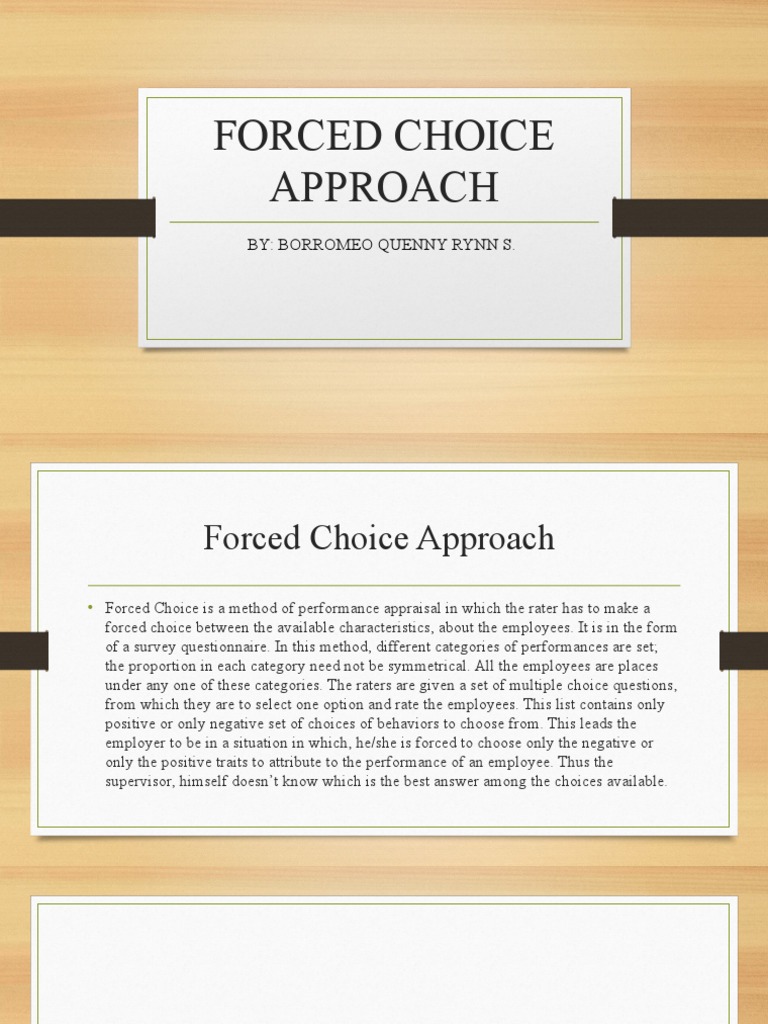
Forced choice questions, a distinctive assessment tool, have garnered considerable attention in various fields, particularly in psychology, education, and human resources. These questions present respondents with a limited set of options, compelling them to select one from the given alternatives, thereby yielding insight into their preferences, beliefs, or behaviors. This article delves into examples of forced choice questions, while also exploring various nuances and types crucial for understanding this inquisitive format.
At their core, forced choice questions can be categorized into several forms based on their structure and purpose. The foremost type includes personality assessments, widely utilized in psychological testing and organizational settings. For instance, consider a scenario where an individual must choose between:
A) I enjoy collaborating with others on projects.
B) I prefer working independently and completing tasks on my own.
Here, the respondent must choose one statement that resonates more profoundly with their personal tendencies. This type of forced choice question explicitly illuminates personality traits, offering evaluators a more accurate reflection than traditional Likert-scale inquiries.
Another crucial application of forced choice questions manifests in employee evaluations and performance appraisals. To ascertain an employee’s performance more substantively, an organization might pose the following question:
A) This employee demonstrates exceptional initiative and leadership qualities.
B) This employee consistently meets expectations without exceeding them.
This binary framework compels evaluators to give affirmative consideration to the employee’s performance, rather than opting for neutral responses that can obscure true assessments. Such frameworks foster candid evaluations essential for growth and development.
In educational disciplines, forced choice questions serve as an efficient means of gauging student comprehension and preferences. An instructor may utilize such questions during a feedback session, asking students to choose between:
A) I find the course material engaging and stimulating.
B) I struggle to stay focused and connected with the content.
This not only provides invaluable insight into the class’s overall engagement but also encourages students to confront their learning experiences honestly. The concatenation of feedback can assist educators in refining their teaching methodologies, thereby enhancing educational outcomes.
In the realm of marketing and consumer research, forced choice questions are indispensable. Market analysts employ these queries to extract consumer preferences regarding products or services. A typical inquiry might read:
A) I prefer environmentally friendly products even if they cost more.
B) I prioritize price over sustainability in my purchasing decisions.
By distilling consumer preferences into dualistic choices, marketers can identify target demographics more accurately, ultimately guiding product development and promotional strategies. Such insights reveal not only what consumers value but also where potential market opportunities lie.
Moreover, forced choice questions can reveal deeper cognitive and emotional underpinnings in behavioral sciences. For instance, a possible question might be:
A) I feel confident taking risks in my personal life.
B) I prefer to stay within my comfort zone and avoid potential failures.
This format prompts respondents to reflect introspectively, producing not just a choice but a deeper understanding of their risk tolerance and decision-making processes. This form of inquiry has resonated within therapeutic contexts, empowering clients to confront their fears and motivations.
Transitioning into the administrative sphere, forced choice questions can also play a significant role in shaping organizational culture. Consider asking employees to choose between:
A) I value transparency and open communication in my workplace.
B) I believe some information should be kept confidential for operational efficiency.
This inquiry sheds light on employees’ attitudes towards communication and transparency, fundamental elements in fostering a positive work atmosphere. Organizations benefit from understanding these dynamics, leading to better policy formulation and workforce cohesion.
In summary, forced choice questions are a versatile and incisive tool that can yield a wealth of insights across various domains. From personality assessments that elucidate individual traits to marketing inquiries that uncover consumer preferences, these questions offer an ideal approach for generating effective data while compelling respondents to engage thoughtfully with their choices. The versatility of forced choice formats serves as a conduit for meaningful dialogue, personal introspection, and informed decision-making.
As the comprehension of forced choice questions evolves, stakeholders must remain vigilant in their design and implementation. The nuances between the types and applications—ranging from psychological assessments to marketing strategies—are pivotal for maximizing the efficacy of this inquiry format. Judicious use of forced choice questions will continue to illuminate the intricacies of human behavior, providing clarity in both personal and professional contexts.













