
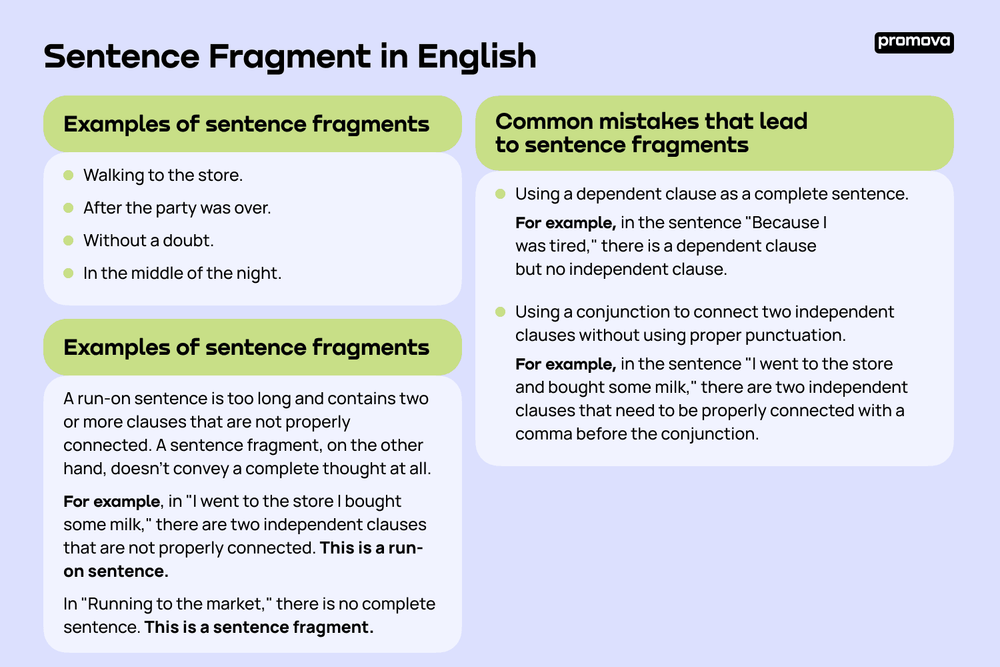
In the realm of writing, the art of constructing coherent and fluid sentences is paramount. However, among writers, whether novices or veterans, there exists an intriguing obsession with fragmented sentences. These sentence fragments, though often dismissed as errors, possess a peculiar charm that elicits fascination. They challenge traditional notions of grammar, compelling writers to reconsider the boundaries of composition and expression.
A fragmented sentence typically lacks a complete thought; it may consist of a subject and verb or simply a descriptive phrase. While their incomplete nature may evoke feelings of unease, the allure lies in their capacity to create impact, evoke emotions, and convey vivid imagery. Let us delve into the world of fragmented sentences, exploring the nuances that make them both engaging and provocative.
Consider the statement: “Running through the rain.” This phrase, devoid of a main clause, captivates the imagination. The reader immediately conjures images of a character dashing amidst raindrops, creating an atmosphere of urgency and liberation. The absence of a complete thought fosters ambiguity, allowing the reader to fill in the gaps. Herein flourishes the beauty of fragmented sentences—they invite personal interpretation, thereby enhancing the depth of the narrative.
Fragmented sentences often manifest in creative writing to evoke emotions more powerfully than their complete counterparts. The rawness of a fragment can capture a fleeting moment, a sudden thought, or an overwhelming feeling, often resonating more deeply than verbose explanations. Writers expertly wield fragments to interrupt the flow, mirroring the unpredictability of human thought. Consider the sentence: “Stunned by the news.” In mere three words, a rush of emotions unfolds—shock, disbelief, and perhaps even dread. It allows the reader to inhabit that moment, to feel the weight of an unexpected revelation.
Moreover, these fragments foster rhythm and pace within a narrative. In some cases, they propel the momentum forward with striking force. When used judiciously, they can heighten tension, enhance suspense, or create moments of reflection. A series of carefully placed fragments can punctuate a longer section of text, breaking it up and allowing for breaths in between. This interplay of structured and unstructured writing weaves complexity into the narrative, captivating the reader’s attention.
In addition to their emotional resonance and rhythmic function, sentence fragments often embody the essence of authenticity. They reflect the intricacies of human thought, often fragmented in its very nature. Just as our minds meander through various ideas, fragmented sentences capture this reality by providing snapshots of thoughts. This visceral depiction renders a piece of writing relatable and genuine. A fragment such as, “The last glimpse of sunlight,” invites readers to visualize and connect with their interpretations, enriching the overall experience.
Writers can utilize fragments to elucidate character and voice. A character’s unique perspective is often mirrored in their speech, which may be laced with brevity or abrupt shifts in thought. In this way, fragments become a vital tool in character building. For instance, a character expressing confusion may utter, “Wondering what went wrong.” This snippet not only conveys the character’s current state but also adds depth to their psychological landscape. Therefore, employing fragments becomes a deliberate act of enhancing character authenticity and showcasing their cognitive disarray.
While sentence fragments can undoubtedly serve as powerful devices in creative writing, they also present potential pitfalls when employed in different contexts. Academic writing or formal communication typically demands a higher level of precision and clarity. A fragmented sentence in these settings may result in misunderstandings, undermining the overall message. Writers must strike a balance, discerning when to embrace the fragmentation and when to adhere to traditional structures. The fluidity of language affords versatility—knowing when and how to deploy fragmented sentences is key to maintaining coherence while also harnessing the enchantment they offer.
Moreover, one must consider the audience when experimenting with fragmented sentences. Different readers possess varying thresholds for linguistic experimentation. A seasoned literary audience may delight in nuanced fragments, while less experienced readers may find them disorienting. Understanding the demographic dynamics allows writers to navigate the use of fragments skillfully, ensuring their intended effect resonates positively.
In summary, fragmented sentences engage with readers in a manner that transcends traditional grammatical boundaries. They spur emotional connection, inject rhythm into narratives, and provide glimpses into the varied tapestry of human thought. While caution is paramount in formal situations, the allure of fragments lies in their capacity to evoke and inspire. By harnessing the power of fragmented sentences, writers can create works that resonate on multiple levels, inviting readers to explore, interpret, and ultimately connect with the narrative in profound ways. The charm of fragmentation beckons writers to dwell in the depths of language, exploring the spaces between thoughts, where true magic resides.













