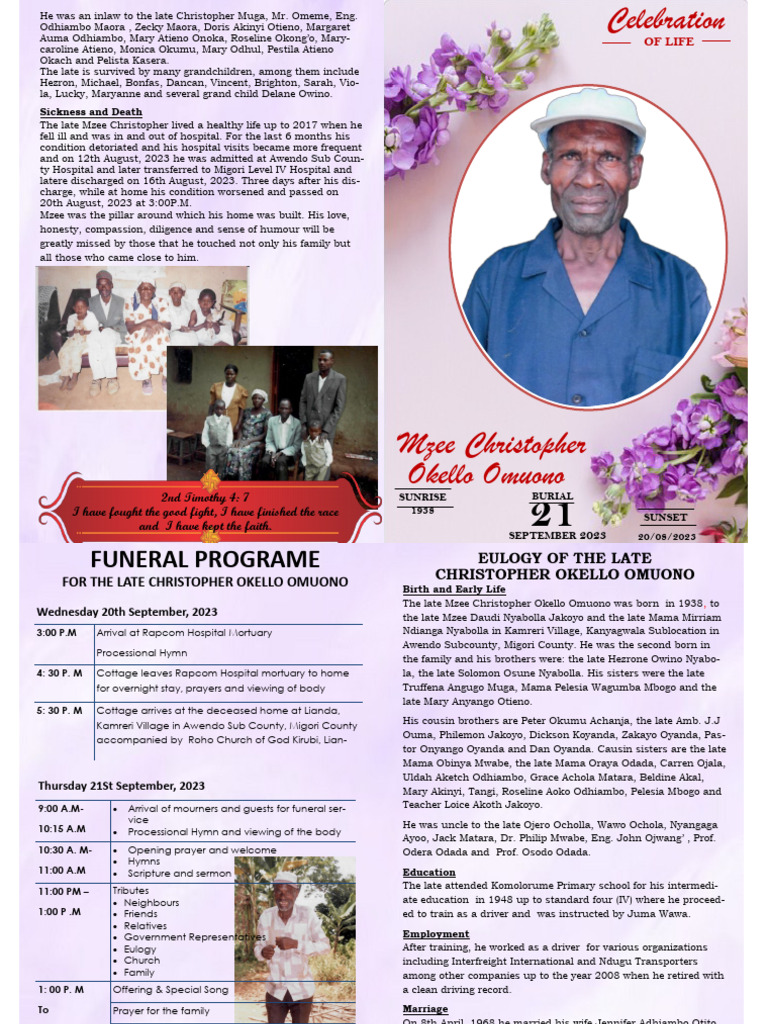
Have you ever found yourself at a loss for what to include in a funeral programme? Crafting a meaningful remembrance can seem daunting, especially amidst the whirl of emotions that accompany the loss of a loved one. A well-constructed funeral programme serves not only as a commemorative document but also as a heartfelt tribute to the individual’s life, preserving their legacy for family and friends. In this article, we delve into the essential components of an exemplary funeral programme, illustrating how each element contributes to the overall sentiment of the occasion.
Understanding the Purpose
At its core, a funeral programme acts as a navigational guide through the memorial service. It encapsulates the essence of who the deceased was, providing attendees with an understanding of the scheduled proceedings while celebrating their life story. While it may seem like a mere piece of paper, it holds profound significance as it helps to orchestrate the emotional journey both during and after the ceremony.
1. Cover Page Design
The cover page is your opportunity to make a striking first impression. Opt for a visually appealing design that resonates with the personality of the deceased. Incorporating a cherished photograph along with their name and dates of birth and death can create an intimate connection. Additionally, consider using a decorative border or relevant imagery—perhaps a serene landscape, blooming flowers, or symbols that reflect their passions or beliefs. The design should evoke a sense of remembrance while providing a frame for the emotional gathering that will unfold.
2. Order of Service
Organizing the order of service is akin to creating a roadmap for the attendees’ experience. This section lays out the sequence of events, including music, readings, eulogies, and other tributes. Each element should be carefully curated to ensure a respectful homage to the departed. For instance, starting with a calming musical interlude can set a reflective tone, followed by a welcome note that opens the floor to remembrance. Transparency about the proceedings fosters an environment where mourners feel included and engaged.
3. Biographical Sketch
Arguably one of the most poignant parts of the programme is the biographical sketch. This section tells the story of the deceased—detailing their accomplishments, passions, and the impact they had on the lives of others. It is an opportunity to showcase their character, values, and the relationships they cherished. Personal anecdotes, favorite quotes, or even poignant stories can illuminate the unique essence of the individual and offer a glimpse of the memories that made them unforgettable to those who knew them.
4. Special Tributes
In addition to the biographical sketch, special tributes can further enrich the programme. These may include heartfelt messages from family members, friends, or colleagues, expressing their love, admiration, and sorrow. Poetry or excerpts from literature that resonate with the life of the deceased can add emotional depth. Highlighting contributions to the community or mentioning key milestones in their life can also create a lasting tribute that honors their legacy.
5. Acknowledgments
Gratitude is a powerful sentiment, especially during times of grief. Including a section for acknowledgments allows the family to extend thanks to those who have supported them throughout the journey of losing a loved one. This may encompass hospital staff, caretakers, neighbors, or close friends who provided assistance during difficult times. Recognizing these individuals solidifies the bonds of community and friendship, symbolizing the love that surrounds the bereaved family.
6. Reception Information
Funeral services often conclude with a gathering of friends and family to share stories, laughter, and even tears. Including details about post-service receptions—such as location, time, and any special instructions—can help facilitate this communal experience. It acknowledges the importance of social connections in the healing process, providing solace through shared memories and collective mourning.
7. Personalization Elements
Incorporating personalized elements can elevate the emotional resonance of the funeral programme. Consider using a color scheme that reflects the favorite colors of the deceased, or integrating symbols that represent their hobbies or interests. Handwritten notes or doodles from family members can also add unique touches, making the programme a cherished keepsake. These thoughtful elements invite attendees to reflect on their own memories while honoring the individuality of the person being remembered.
8. Conclusion
In navigating the complexities of grief, crafting a funeral programme presents a unique challenge. Yet, when approached with care and creativity, it transforms into a powerful emblem of love and remembrance. Each element so thoughtfully considered contributes to a rich tapestry, woven from the threads of shared experiences, cherished memories, and heartfelt tributes. As you tailor your programme, think about what elements resonate most with your loved one’s life story. Ultimately, let it become a reflection of their journey—a beacon of light in a somber moment, guiding friends and family as they gather to honor a life well-lived.