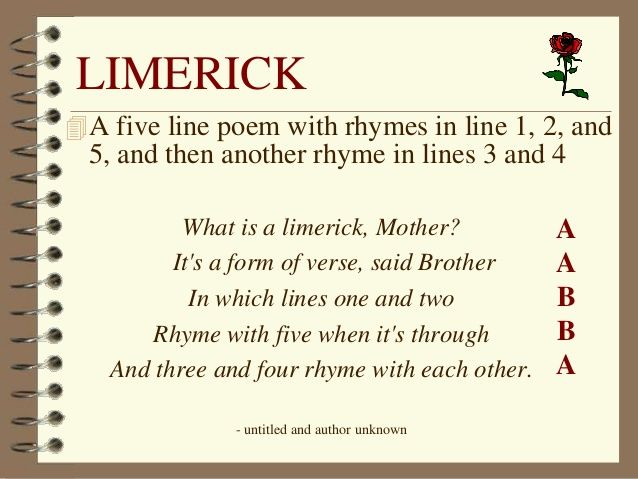
When it comes to the realm of poetry, few forms are as delightful and whimsical as the limerick. Characterized by its quintuple structure, this genre of verse is composed of five distinct lines, with a specific rhythm and a simplistic yet abstract charm. The syllabic pattern traditionally follows an AABBA rhyme scheme, wherein the first, second, and fifth lines rhyme with one another, while the third and fourth lines are shorter and share a different rhyme. Such a framework not only creates a melodic flow but also invites the poet to engage in clever wordplay, unique storytelling, and, often, a dollop of humor.
The allure of limericks lies in their ability to blend levity with poignancy. By harnessing intriguing metaphors, poets are able to explore complex themes, all while maintaining an engaging format that captivates both the ears and minds of readers and listeners alike. An illustrative example of a limerick will not only exemplify these features, but will also cast a spotlight on the unique appeal of this poetic form.
Here is a classic limerick to exemplify:
There once was a cat from Peru,
Who dreamt of a life rather blue.
She danced on a kite,
In the moon’s soft light,
And sang of her heart’s grand debut.
In this cheerful concoction, we encounter a feline protagonist, an unexpected choice as the focal point of poetry. The metaphor of a cat “dancing on a kite” serves as a vivid representation of the theme of aspiration and the pursuit of dreams. This colorful imagery juxtaposes the seemingly mundane life of a household pet with the adventurous and ethereal. Thus, the reader is invited to ponder the depths of desires contained within all beings, no matter how ordinary they may seem. In this case, the essence of the limerick encapsulates the intersection of the ordinary and the extraordinary.
At its core, the limerick is a narrative vessel—wherein a story unfolds, often through humor, absurdity, or a touch of irony. The rhythm and rhyme facilitate a buoyant tone, ideal for engaging audiences, whether recited at a gathering or inscribed in the pages of a collection. With each cleverly constructed line, a delightful cadence emerges, making it an apt choice for both young and mature audiences.
Noteworthy is the inherent playfulness that permeates through this form of poetry. This is particularly evident in the closing line of our featured limerick, where the metaphorical singing of the cat heralds a “heart’s grand debut.” This phrasing conjures visions of joyous self-expression and revelry, echoing the universal theme of yearning for freedom and self-fulfillment.
Furthermore, limericks frequently employ absurdity as a device, pushing the boundaries of reality to create unexpected laughter. The introduction of a cat that dreams of dancing amid a nighttime sky, coupled with the fantastical imagery of performing on a kite, exemplifies an innate surreal quality. This attributes to the distinctive humor often found within limericks, resulting in both entertainment and reflection about the human (or feline) condition.
While the playful nature of limericks often evokes smiles and laughter, they can also serve as potent vehicles for social commentary. Poets wield this format with dexterity, infusing their verses with shrewd observations about society, politics, or human behavior. A well-crafted limerick can pose a scathing critique adorned in humor; for instance:
There once was a king quite severe,
Whose subjects lived in constant fear.
In his court with a roar,
He wrote evermore,
But the people deemed him insincere.
This particular limerick exposes the juxtaposition between authority and the populace, weaving humor with sobering truths. The king’s characterization as “quite severe” juxtaposed with the frivolity of rhyming bold proclamations serves to magnify the tension between governance, power, and individual fears. Through intricate wordplay, the poet distills complex societal dynamics into a digestible narrative that resonates with audiences.
Innovation and creativity are essential to the charm of limericks. Each poet injects their personality into the verses they create—some choose to venture into the realms of fantasy, while others lean into reality’s most absurd moments. It is this versatility that allows limericks to flourish across various contexts, capturing thoughts, emotions, and experiences in a way that feels both personal and universal. In some cases, the use of alliteration, internal rhymes, or unexpected synonyms can elevate a simple limerick into a delightful concoction of language.
Engagement with limericks goes beyond simply reading or reciting; this art form invites participation. Gatherings, especially those around a festive ambiance, often feature limerick competitions or games, challenging attendees to conjure their own witty verses on demand. This interactive nature introduces elements of spontaneity and camaraderie, as individuals rally together to create laughter and joy through shared creativity.
In conclusion, limericks are not merely a quaint form of verse; they are a vivid testament to the innovation and playfulness within poetry as a whole. With their captivating structure, charming wit, and the ability to convey profound sentiments wrapped in humor, limericks invite both poets and audiences into a world where imagination knows no bounds. The unique metaphorical allure embedded within this poetic design not only entertains but also prompts a deeper contemplation of our shared experiences and desires. As we traverse the delightful landscape of limericks, we are reminded of the power of language and the universal quest for connection, joy, and understanding.