Personification is a literary device that breathes life into inanimate objects, endowing them with human-like qualities, emotions, and actions. This technique not only paints vivid imagery in the reader’s mind but also establishes a deeper connection between the audience and the subject being described. By inviting readers to engage with the text on an emotional level, personification can transform mundane elements of life into vibrant experiences, leading us to contemplate their significance and impact. But have you ever considered how this playful anthropomorphism can alter the narrative’s trajectory? Can you uncover the nuances in your surroundings by observing the elegantly crafted sentences that seamlessly merge the human experience with the stillness of the lifeless?
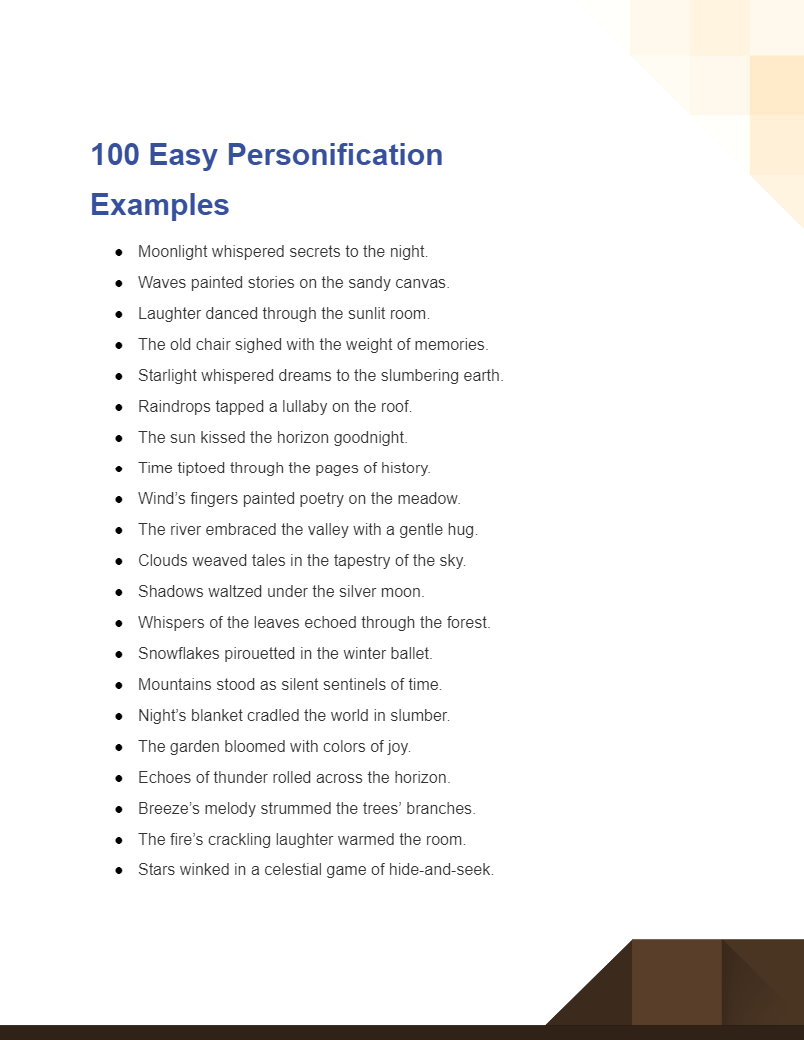
To illustrate the potency of personification, let’s delve into some compelling examples that showcase this literary technique in action. While many recognize the phrase “the wind whispered through the trees,” it serves as a mere entryway into the nuanced world of personification. This enchanting expression not only brings the wind to life but also compels the reader to envisage a serene scene where nature converses. It evokes an ambiance of tranquility—a quality that mere descriptions lack. As you read such sentences, ask yourself: what feelings does this imagery stir within you?
Moreover, personification can serve diverse purposes in storytelling, vividly enriching the narrative. For instance, consider the phrase “the ocean roared with fury.” Here, the ocean is bestowed with an intense emotion typically reserved for humans. Such a depiction might suggest a looming storm, capable of signifying danger or turmoil. The metaphorical embodiment of the ocean’s wrath accentuates the high stakes of the narrative, creating a palpable tension that grips the reader’s attention. In what ways do you think this can alter the reader’s perception of the impending events?
Let’s take a step further by analyzing how the context of the sentence might deepen the personification. Imagine a character standing at the water’s edge, contemplating their own tumultuous emotions in parallel with the violent waves crashing against the shore. The use of personification, therefore, extends beyond mere decoration; it encapsulates not only the physical setting but also the emotional landscape of the character’s psyche. This duality invites readers into a shared journey of introspection. How might this relational dynamic enhance your own experience as a reader or writer?
Personification finds its way into various literary forms, from poetry to prose. In poetry, for example, the beauty of brevity amplifies the nuances of personification. A line could read, “The flowers danced in the breeze.” Here, the act of dancing evokes a sense of joy and vitality. It transforms the static existence of flowers into a dynamic celebration of life. What might the flowers symbolize in broader literary terms? Are they not mere flora, but an embodiment of hope, resilience, or ephemeral beauty that evokes contemplation in the reader’s heart?
Taking note of classical literature, one can witness the effective use of personification in works such as Shakespeare’s “Sonnet 18,” where summer is described as “having a lease.” This particular choice of words personifies the season, implying that summer can possess something transient—a lease—suggesting impermanence. This sentiment echoes throughout the sonnet, ultimately amplifying the theme of beauty and mortality. With such powerful undertones, what challenges does this pose to our understanding of time and its inexorable passage?
As we traverse contemporary literature, the pattern of personification persists, enriching modern narratives with emotional depth. In children’s literature, for instance, anthropomorphized characters are prevalent, creating educational yet engaging content. When children read about a spirited rabbit outsmarting a cautious turtle, they not only engage with the storyline but also glean moral lessons through the vivid actions and emotions attributed to these animal characters. How does this playful representation inform their understanding of complex themes such as competition and perseverance?
Furthermore, in everyday language, personification can subtly permeate our speech. Phrases like “time flies when you’re having fun” or “the alarm clock screamed in protest” illustrate how commonplace elements can be imbued with personal experiences. By using such expressions, we navigate our emotions more readily and communicate shared sentiments in a relatable manner. How might this simple addition to our vocabulary influence the way we perceive and articulate our experiences?
In poetic expressions of sadness or longing, personification often deepens emotional resonance. Imagine a line stating, “The shadows lingered like forgotten memories.” Here, shadows become more than mere traces cast by light; they transform into symbols of nostalgia and loss. Such portrayals compel readers to confront their own recollections and the weight they carry. What feelings arise when you reflect on your past in the presence of such poignant metaphors?
Ultimately, the exploration of personification challenges us to see beyond the surface level of language and engage with the broader implications of our words. Whether in literary works, everyday conversations, or even internal dialogues, personification remains a powerful tool that can shape perceptions, evoke emotions, and invite contemplation. How might you harness this literary device in crafting your own narratives or analyses? Could the mere act of attributing human characteristics to the objects or elements around you yield transformative insights, evoking freshness in your perception and understanding of the world?
In conclusion, the application of personification within a sentence is not merely a stylistic choice; it embodies a profound capability to connect, evoke, and enlighten. As you venture into your exploration of language and expression, consider how personification could illuminate the narratives you wish to unfold. With every crafted sentence, may you uncover the vivacity hidden in the ordinary, transforming simple observations into extraordinary revelations.