
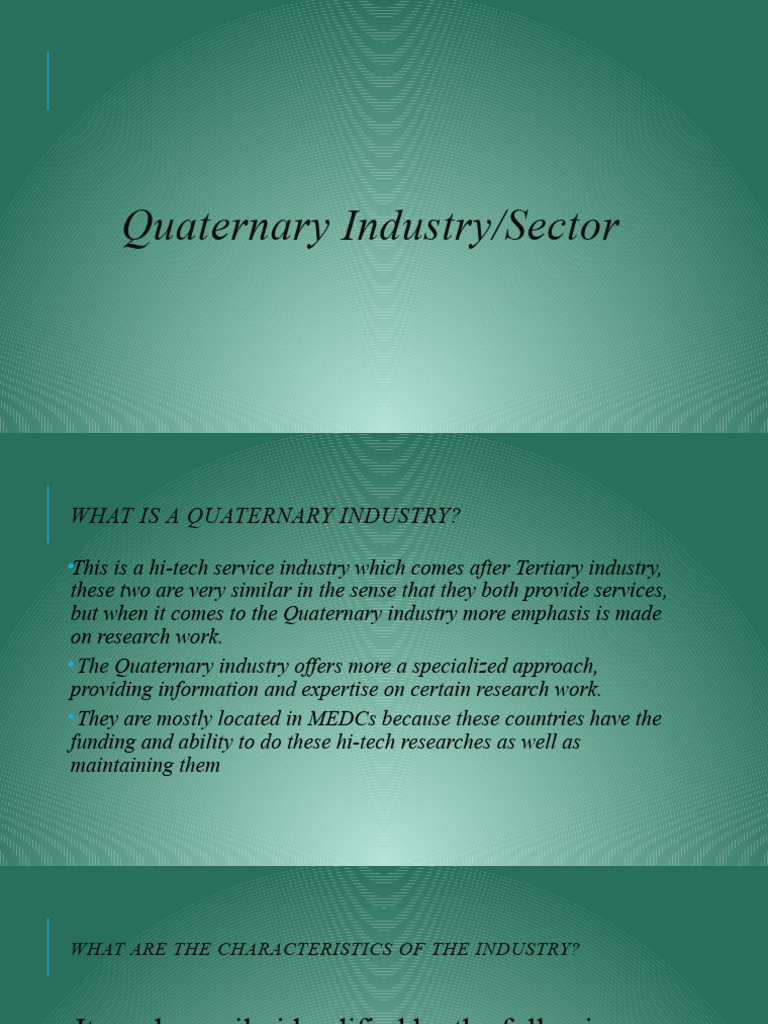
In the intricate tapestry of economic classification, the quaternary sector stands as a beacon of intellectual pursuit. Often described as the “knowledge economy,” this sector is emblematic of society’s increasingly sophisticated demands for information, research, and technological services. It veers away from the tangible products of earlier economic activities, focusing instead on the intangible assets of intellect and innovation. Within this framework, education, information technology, research and development, and financial services represent the cerebral gears that drive modern economies forward.
Let’s dive into an illuminating example of a quaternary economic activity: research and development (R&D) in the pharmaceutical industry. Picture this realm as a grand chessboard where each move could mean the difference between life and death—a veritable battle of wits where breakthroughs are not merely celebrated but cherished as lifelines for humanity.
Within the pharmaceutical landscape, R&D encompasses a myriad of processes and necessitates a cornucopia of expertise. It is where the alchemy of scientific inquiry transforms raw curiosity into life-saving medications. Researchers, akin to modern-day wizards, concoct compounds and meticulously analyze biochemical interactions, striving to unlock the mysteries of diseases that plague the human condition. They traverse uncharted territories, fueled by both the promise of discovery and the troubling shadows of uncertainty.
The heart of this quaternary activity beats in ultra-modern laboratories that hum with the energy of creativity and intellect. High-tech equipment stands sentinel, providing insights into genetic compositions and molecular structures. This environment is one of frenetic experimentation, where hypotheses are rigorously tested and data meticulously examined, yielding findings that can illuminate paths to potential cures. Each venerated discovery, from the first penicillin to the latest mRNA vaccine, represents a culmination of relentless dedication and intellectual fortitude.
Beyond mere laboratories, the realm of pharmaceutical R&D is a collaborative symphony. Universities, governmental research institutions, and private enterprises merge their expertise, creating a nexus of scholarly dialogue and innovation. This collaboration mirrors a constellation of stars, each contributing its unique radiance to the collective goal of advancing human health. In this unified pursuit, the value of interdisciplinary cooperation cannot be overstated; it is this confluence of knowledge that fuels the transformative power of quaternary economic activities.
Furthermore, the allure of R&D in the pharmaceutical sector extends well beyond the confines of the laboratory. It casts a wide net of economic benefits, creating robust jobs across various disciplines—biochemists, data analysts, regulatory affairs specialists, and clinical researchers, to name a few. This sector engenders a flourishing ecosystem where skilled professionals are not merely number-crunching automatons, but passionate individuals contributing to the greater social fabric. Their work echoes the age-old adage that knowledge is power, illuminating lives and invigorating communities.
Yet, the path through R&D is fraught with challenges. For every triumph in drug development, there exists a multitude of failed experiments and clinical trials that reiterate the complex nature of biological systems. Imagine a sculptor chiseling away at marble; each strike of the chisel represents an effort to reveal the artistic form from solid stone. Similarly, researchers must weather countless setbacks while remaining steadfastly focused on their ultimate goal: a breakthrough that could transform the therapeutic landscape. This journey, marked by perseverance, reflects a profound resilience characteristic of those engaged in this noble pursuit.
Regulatory hurdles present another layer of complexity in the quaternary economic sphere. The process of gaining approval from health authorities can be likened to navigating a labyrinth where every twist and turn demands meticulous attention. This regulatory landscape is designed to protect public health and safety—but it can slow the progress of vital medications entering the market. It compels researchers and pharmaceutical companies to adapt, strategize, and continuously innovate, often leading to enhanced transparency and patient safety measures in drug development.
Moreover, as research and development evolve, it finds itself intertwined with cutting-edge technologies such as artificial intelligence and big data analytics. These tools—analogous to modern-day oracles—offer predictive insights into potential drug efficacy and side effects, streamlining the painstaking research process. The embrace of such technologies transforms R&D, crafting a future where intelligent algorithms not only anticipate challenges but also suggest innovative solutions, rendering the economic activity remarkably agile and responsive to emerging health crises.
Beyond its niche appeal, the impact of pharmaceutical R&D as a quaternary economic activity resonates across all spectrums of society. The average individual, whether aware of it or not, reaps the benefits of this sector every day. From newly developed antibiotics to groundbreaking cancer therapies, the fruits of rigorous research ultimately contribute to enhanced quality of life, extending lifespans and promoting health across the globe.
In conclusion, the world of pharmaceutical research and development is a rich tapestry woven with threads of knowledge, innovation, and an indomitable spirit of inquiry. It encapsulates the quintessence of quaternary economic activities, showcasing a departure from mere production towards a sophisticated balance of intellect and application. The next time we marvel at medical advancements that have become the bedrock of modern health care, we should remind ourselves of the vast intellectual endeavors underlying these innovations. After all, in a world increasingly defined by complexity, the pursuit of knowledge remains our greatest asset— a quaternary treasure that promises to illuminate our path through the ever-evolving landscape of human history.













