When the moment arrives to bid farewell to a workplace that has shaped your professional journey, conveying your decision through a well-crafted resignation letter becomes paramount. A resignation letter isn’t merely an announcement of your departure; it’s a reflection of your professional ethos and a means to maintain cordial relations as you transition into new horizons. Below, we explore the essential components of a resignation letter, offering insights and an illustrative example that promises to shift your perspective on this often-overlooked document.
Understanding the Significance of a Resignation Letter
A resignation letter serves as a formal notification to your employer regarding your intent to leave the organization. It encapsulates your professional courtesy and fosters a respectful conclusion to your current role. In an era where networking and maintaining professional relationships are critical, a well-articulated letter can leave a lasting positive impression.
The Core Elements of a Resignation Letter
Crafting a resignation letter involves several key components:
- Addressing the Right Person: Start by identifying your immediate supervisor or the appropriate recipient. This consideration shows respect and due diligence.
- Clear Statement of Resignation: Articulate your intent succinctly. Begin with a direct statement—“I am writing to formally resign from my position as [Your Position].”
- Notice Period: Specify your final working day. Refer to your employment agreement for notice periods and align your timeline accordingly.
- Expression of Gratitude: Acknowledge the opportunities you’ve had and express appreciation for the experiences gained. This fosters goodwill and may benefit future references.
- Offer Assistance: Offer your help during the transition period. This gesture demonstrates your commitment to a smooth handover and ensures your colleagues are set up for success post-departure.
- Closing Statement: End on a positive note, wishing the company success moving forward. Sign off with your name and contact information.
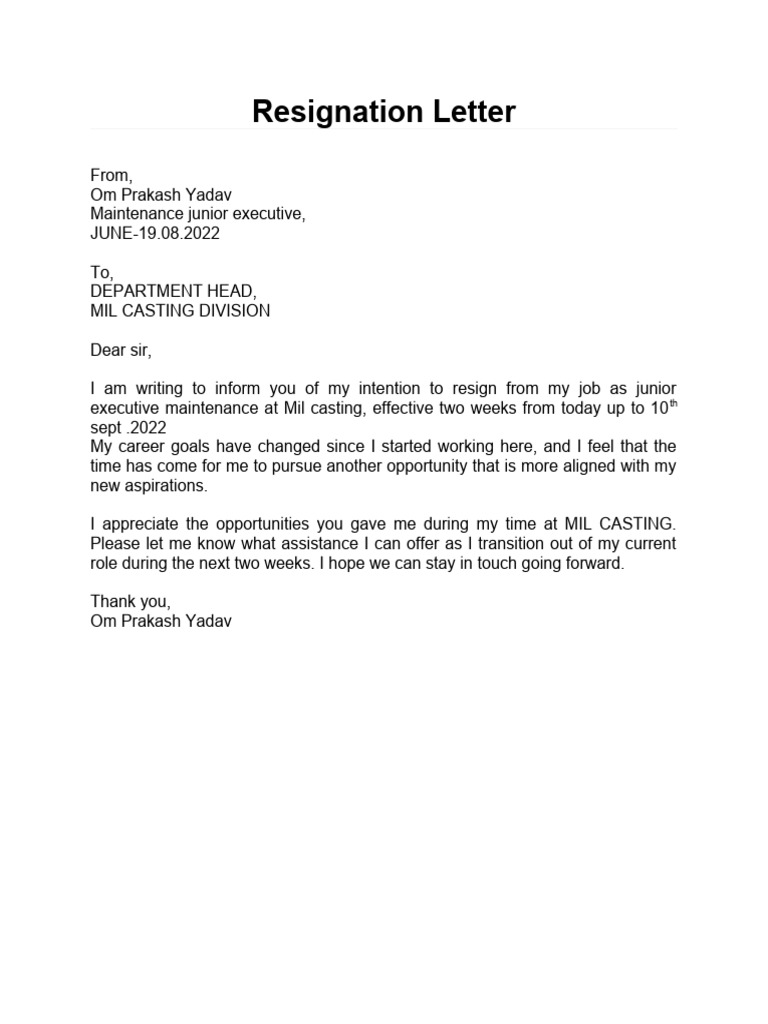
A Example of an Artfully Crafted Resignation Letter
To provide clarity, here’s an illustrative example of a resignation letter that encapsulates the aforementioned elements:
[Your Name]
[Your Address]
[City, State, Zip Code]
[Email Address]
[Phone Number]
[Date]

[Supervisor's Name]
[Company's Name]
[Company's Address]
[City, State, Zip Code]

Dear [Supervisor's Name],

I hope this letter finds you well. It is with a mix of emotions that I submit my formal resignation from my position as [Your Position] at [Company's Name], effective [Last Working Day, typically two weeks from the date above].

This decision did not come easily, as my tenure here has been incredibly enriching. I am truly grateful for the opportunities to develop my skills and collaborate with an extraordinarily talented team. The support and mentorship I’ve received during my time at [Company Name] have played a pivotal role in my professional growth.

I have made the decision to pursue a new challenge that I believe aligns with my long-term career aspirations. I assure you that my dedication to ensuring a seamless transition will remain my priority in the coming weeks. Please let me know how I can assist during this period, whether it be training a colleague or finalizing ongoing projects.

Thank you once again for the invaluable experiences and lessons that I will carry with me throughout my career. I look forward to staying in touch, and I wish you and the entire team continued success in future endeavors.

Warm regards,

[Your Name]
Reflections on the Example
This example not only serves its purpose but also encapsulates the profound sentiment of gratitude and professionalism. It showcases how to pivot the conversation around resignation into an opportunity for reflection and connection rather than mere departure. The tone remains respectful and optimistic, fundamental tenets in professional communications.
Common Pitfalls to Avoid
While writing a resignation letter, there are certain missteps you should consciously avoid:
- Vague Language: Steer clear of ambiguous phrases. Clarity ensures that your intentions are understood and leaves no room for speculation.
- Negativity: Regardless of your experience, refrain from disparaging comments or grievances. This letter is not the venue for airing frustration; maintain decorum.
- Lack of Personalization: A generic template can undermine the genuine nature of your departure. Tailor the letter to reflect your unique experiences and relationship with the company.
The Aftermath: Staying Connected
As you close this chapter of your career, contemplate the upcoming transition. Consider maintaining professional relationships with colleagues and supervisors. An intentional approach to networking post-resignation can yield unexpected benefits in your future career endeavors.
In conclusion, a resignation letter is far more than a mere formality. It is an opportunity to encapsulate your professional journey, express appreciation, and pave the way for future interactions. When crafted with thoughtfulness and intent, your resignation letter can leave a resounding impression, fostering bridges rather than burning them. In this era of interconnectedness, how we choose to communicate our departure can reverberate well beyond our immediate circumstances, opening doors to future possibilities.