In the grand tapestry of healthcare, the role of a Medical Assistant is akin to the vibrant threads that bind the intricate fabric together. Serving as the indispensable bridge between patients and practitioners, these professionals orchestrate the symphony of clinical operations, ensuring that the rhythm of healthcare flows seamlessly. Crafting an exemplary resume for a Medical Assistant is not merely about listing experiences and skills; rather, it is the art of presenting oneself as a unique composition, resonating with potential employers seeking a melodious fit for their medical ensemble.
1. The Prelude: Understanding the Core Components of a Medical Assistant Resume
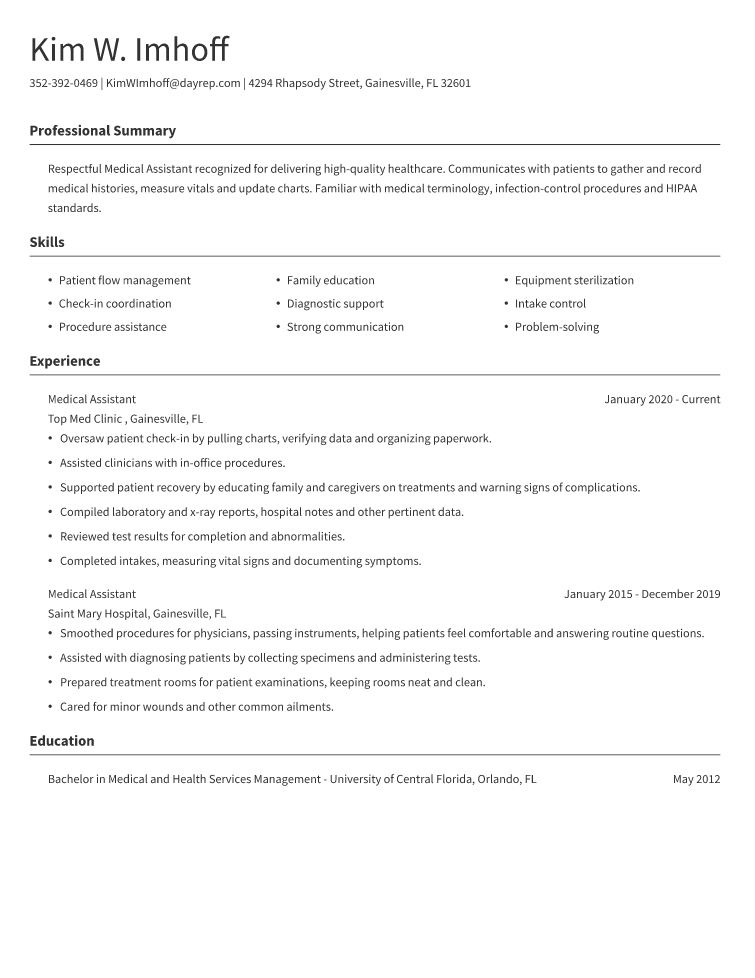
A well-structured resume should efficiently encapsulate essential elements. Think of this as the overture to your professional performance. It should include:
- Contact Information: Your name, phone number, and email address should be easily visible, akin to the title of a grand masterpiece.
- Professional Summary: A succinct overview that encapsulates your experience, skills, and career aspirations. This is your opening act, meant to grab attention immediately.
- Education: List your relevant academic achievements, including certifications, diplomas, and any ongoing training. This section validates your credentials, much like a composer’s credentials that enhance their authority.
- Experience: Your employment history should boast specific positions, responsibilities, and achievements, highlighted with numbers and outcomes where possible to showcase your impact.
- Skills: A detailed account of both hard and soft skills, including clinical competencies and interpersonal abilities, should serve as your arsenal of talents.
2. Crafting the Professional Summary: Your Opening Act
Consider the professional summary as your elevator pitch—a brief introduction that paints a vivid picture of your qualifications. Imagine standing on stage before an audience, and with each word, you pull them deeper into your narrative. For a Medical Assistant, this might read something like:
“Compassionate and detail-oriented Medical Assistant with over five years of multifaceted experience in fast-paced clinical environments. Proficient in patient care, administrative tasks, and leveraging healthcare technologies to enhance patient adherence and healthcare delivery. Driven by a commitment to upholding the highest standards of patient satisfaction and safety.”
This paragraph should serve as a catalyst—igniting curiosity in the reader and enticing them to delve deeper into your resume.
3. Showcasing Your Educational Qualifications: The Foundation of Your Craft
Education is the bedrock of your career journey. Just as a master artisan hones their craft through meticulous training, you must detail the educational institutions that have shaped your abilities. Include:
- Degree titles such as Associate of Applied Science in Medical Assisting.
- Relevant certifications, including Basic Life Support (BLS) and Certified Clinical Medical Assistant (CCMA).
- Additional coursework or special training that underscores your expertise.
Highlighting these elements will create a rich context for your skills and experiences.
4. Detailing Experience: The Chronicles of Your Professional Journey
This section unfolds like an epic saga—the tale of your professional evolution. Begin each entry with your job title, the institution’s name, and dates of employment. Then, employ bullet points to narrate your responsibilities and achievements, focusing on quantifiable impacts. For example:
- “Administered routine patient assessments, elevating patient satisfaction scores by 15% through improved communication techniques.”
- “Streamlined appointment scheduling processes, reducing patient wait times by an average of 20 minutes daily.”
Such narratives allow potential employers to visualize you not merely as a candidate but as a proactive contributor to their team.
5. Highlighting Skills: Crafting Your Arsenal of Talents
Your skillset acts as the ensemble that supports your narrative, each instrument playing an integral part in the harmony of your candidacy. Organize your skills into categories to enhance clarity:
- Technical Skills: Proficiency in Electronic Health Records (EHR), phlebotomy, and vital signs monitoring.
- Soft Skills: Exceptional communication abilities, empathy towards patients, and adept multitasking skills.
Using action verbs to describe your skills can create a vivid image of your capabilities, engaging the reader’s imagination.
6. The Finishing Touches: Formatting and Personalization
In a competition where many aspiring Medical Assistants seek the spotlight, presentation is paramount. A polished resume should embody professionalism and sophistication. Use a clean, readable font, consistent formatting, and ample white space to ensure visual appeal. Tailor your resume for each application, modifying keywords from the job description to align with the employer’s expectations, much like an actor adjusting their performance for diverse roles.
7. The Grand Finale: The Importance of a Cover Letter
While your resume presents the essential facts, a cover letter provides the emotional depth—an opportunity to connect with the employer. This is your chance to weave a personal narrative that underscores your passion for patient care and your motivation for applying to their specific healthcare facility.
In conclusion, a resume for a Medical Assistant is not merely a document—it is a captivating narrative of your professional journey, highlighting your pivotal role in the healthcare landscape. By meticulously crafting each section, you can transform your experiences and aspirations into a compelling story that resonates with potential employers, much like a symphony that enchants its audience.