
In the world of filmmaking, a screenplay acts as the backbone of any production. It conveys the story, dialogues, and character development, every aspect meticulously crafted to breathe life into the pages. The screenplay format may seem daunting at first glance, but understanding its intricacies is vital for aspiring screenwriters. In this exploration, we’ll delve into the nuances of screenplay format, ensuring you have a well-rounded grasp of its significance and structure.
Visualize an intricate tapestry; each thread represents a specific element woven together to create a coherent narrative. The screenplay is similar in its construction, comprising distinct sections that guide readers through the unfolding drama. As a new writer, grasping this format can shift your perspective on storytelling itself, opening doors to a realm where imagination flourishes within structured confines.
The Foundation of Format
At its core, a screenplay is formatted in a way that maximizes clarity and minimizes ambiguity. Standard industry formatting tools direct writers to use specific fonts, spacing, and margins. The accepted font is 12-point Courier, with a 1-inch margin on the left and a 1-inch margin on the right. Each page traditionally equates to one minute of screen time, making precision a critical aspect of screenplay writing. This principle enables producers and directors to gauge the work’s length and pacing before production begins.
To establish an engaging screenplay, understanding the myriad components is essential. In the following sections, we will dissect these components, like a scientist examining the minutiae of an ecosystem, each integral to the health of the whole narrative.
Components of a Screenplay
Starting with the Title Page, this first glimpse conveys the essence of the screenplay. It contains the title, the author’s name, and contact information—providing a neat introduction to the work. It’s the writer’s first chance to captivate interest, and hence, should exude professionalism and artistic flair.
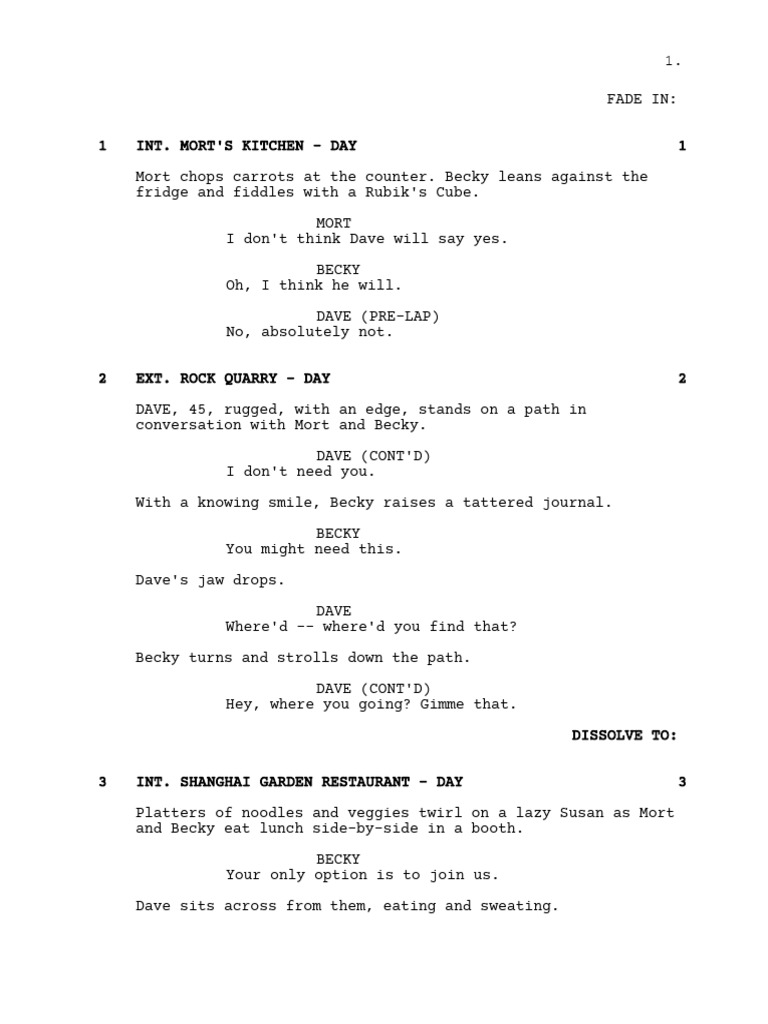
Next emerges the Fade In—the iconic phrase that heralds the beginning of the screenplay. This transition marks a pivotal moment, inviting readers into the visual and auditory landscape that is about to unfold. The subsequent pages may traverse various locations, necessitating a clear designation of Scene Headings. Each heading specifies the location and time of day, formatted in CAPS, allowing readers to instantly locate shifts in setting or time.
Once the scene is established, Action Lines capture the visual action, framing it with vivid descriptions. Unlike traditional prose, these lines require brevity and punch, utilizing active voice and specific details to enhance dynamism. For example, “A glimmering moon casts an ethereal glow over the deserted street,” is far more evocative than a bland statement of a nighttime setting.
Individuals in Motion
As characters leap into the frame, Character Introductions warrant particular attention. Each character’s name is capitalized upon their initial entrance, swiftly immersing the reader in their quirks and motivations. This brief introduction is not merely a formality; it can provide a fascinating glimpse into their persona, compelling readers to form immediate connections—or not. Shaping complex characters requires delineating their actions, expressions, and dialogues with care.
Pivotal to screenplay structure is the Dialogue. This element unfolds the character’s internal worlds, revealing desires and conflicts through their spoken words. Formatted as centered text beneath the character’s name, dialogue tends to convey nuances of emotion—what one chooses to express is often just as vital as what remains unsaid. For example, a simple “I don’t care” can resonate differently depending on the tone assumed by the character. Explore every avenue of expression.
Connecting scenes through Transitions serves to guide the viewer seamlessly from one moment to another. Transitions such as CUT TO: and DISSOLVE TO: invite a certain rhythm, creating choreography within the storytelling. These are not just instructions; they also sow the seeds of anticipation, helping direct the reader’s emotional journey.
The Importance of Formatting
In an industry driven by clarity and efficiency, mastering the intricacies of screenplay format significantly amplifies a writer’s chances of success. Correspondingly, improper formatting can lead to rejection—much like a symphony hindered by discordant notes. By adhering to screenplay conventions, writers present themselves as seasoned professionals who value the art form and aim to collaborate within the industry.
Moreover, proper formatting fosters readability; agents, directors, and producers often skim through numerous submissions. A neatly formatted screenplay shines amid a sea of chaos, piquing the curiosity of potential collaborators. With every action line and each carefully crafted dialogue, the screenplay evolves from mere words on a page to a tantalizing invitation into a world yet to be realized on screen.
Final Thoughts
Crafting a screenplay offers a compelling blend of structure and creativity, similar to sculpting a statue from a block of marble. With every meticulous detail, writers carve out a universe, full of life, conflict, and resolution. By mastering screenplay format, you not only enhance your craft but also prepare yourself to fully embody the role of storyteller, ushering audiences into the realms of your imagination.
Each screenplay is a vessel, carrying ideas that promise to entertain, inform, or provoke thought. Welcome the challenge of perfecting this art form, and your stories will resonate, echoing long after their tales are told. A well-crafted screenplay is not merely about what you write; it’s an exhilarating journey into the heart of creativity, inviting your audience to witness the extraordinary unfold.













