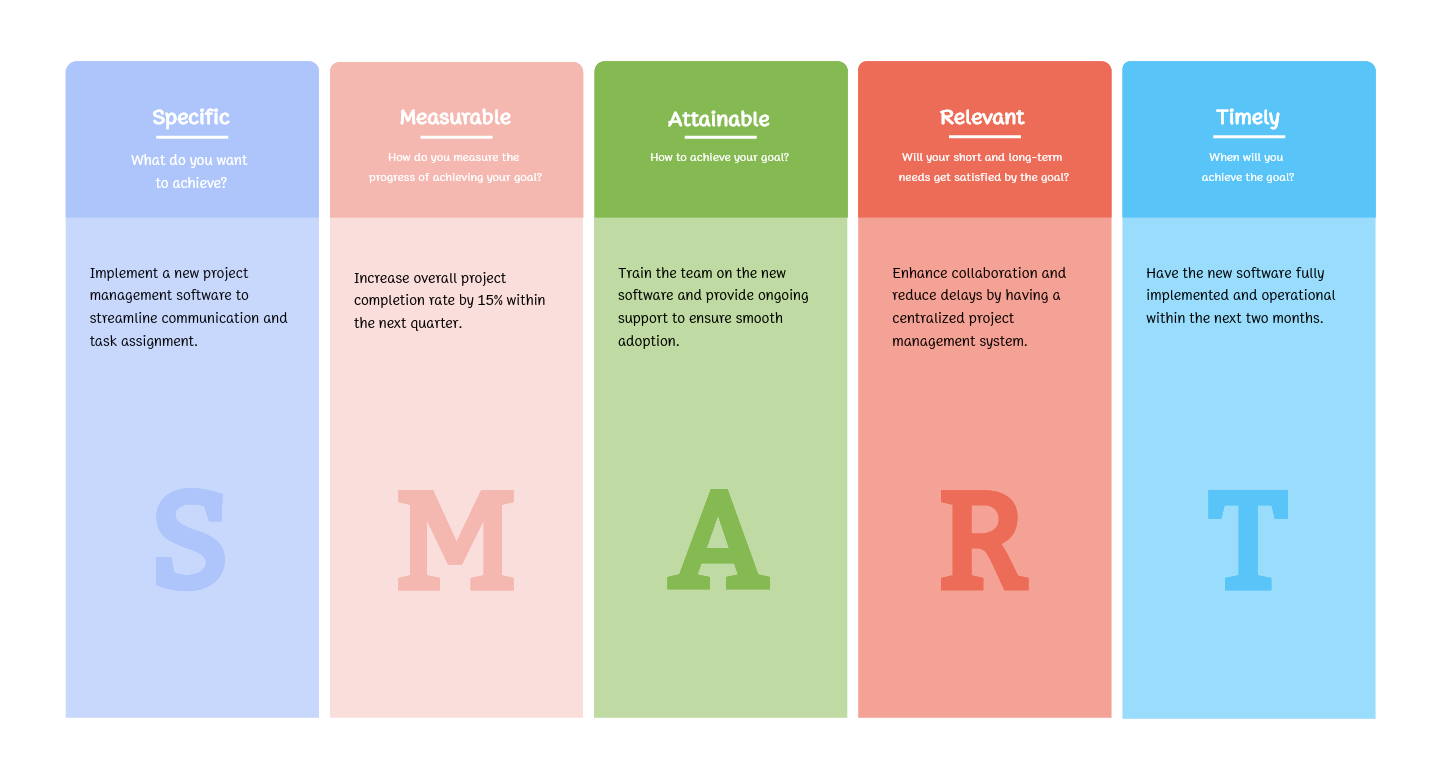
The concept of setting goals has long been a cornerstone of personal and professional development. Among the myriad methodologies available, the SMART goal framework stands out due to its structured approach. SMART is an acronym that represents Specific, Measurable, Achievable, Relevant, and Time-bound. This method does more than delineate vague aspirations; it transforms them into actionable objectives that can be meticulously tracked and evaluated. In this exploration, we shall delve into various concrete examples of SMART goals, bringing to light their inherent virtues and illustrating why they captivate the imagination.
Consider the professional landscape where individuals often grapple with the enormity of their responsibilities. A common observation among employees is the proclivity to favor ambition over practicality, often leading to elusive objectives. This gap between aspiration and execution unveils a deeper fascination with the potential of SMART goals. One compelling example: a marketing manager aiming to enhance brand visibility could set a SMART goal structured as follows: “Increase social media engagement by 25% over the next quarter by implementing weekly interactive posts and targeted ad campaigns.”
This goal encapsulates specificity through the defined target of engagement, sets a measurable benchmark of 25%, considers its achievability based on available resources, aligns with broader marketing strategies, and establishes a definitive time frame. By articulating the goal in this manner, the manager can focus efforts and motivate team members. The transformative nature of this goal exemplifies how specificity can inject clarity into the nebulous world of marketing ambitions.
Yet, it isn’t solely in professional contexts that SMART goals exhibit efficacy. Individual development also stands to gain substantially from this approach. Imagine a recent graduate aspiring to improve their physical fitness. A generic ambition, such as “I want to get fit,” lacks the impetus necessary for progression. However, a recalibrated version could be articulated as: “I will complete a 5K run within the next three months, following a training schedule that progressively increases my running distance by one mile each week.”
Herein lies the richness of the SMART framework. The goal is specific (completing a 5K run), measurable (by tracking distance), achievable (based on the individual’s current fitness level), relevant (contributing to a healthier lifestyle), and time-bound (three months). This formulation not only instills a sense of accountability but also fuels motivation through its clear benchmarks. The allure of such attainable yet challenging goals captivates those striving for personal transformation.
In corporate settings, managers often lament the disconnect between strategy formulation and execution. To bridge this chasm, consider the sales department aiming to enhance quarterly revenue. A SMART goal might manifest as: “Achieve a 15% increase in quarterly sales by negotiating partnerships with three new suppliers and conducting five networking events within the next six months.”
This objective shines through its specificity and the tangible actions proposed. Such clarity mitigates ambiguity and empowers team members to comprehend their roles within the greater organizational strategy. Without question, the interrelation of these actionable segments illuminates the utility of SMART goals in resolving the perennial challenge of executing strategy effectively.
Moreover, the realm of education can dramatically benefit from the implementation of SMART goals. For instance, a high school teacher intending to augment student performance might set a goal framed as: “Increase the average test scores of my class by 20% over the next semester by integrating bi-weekly review sessions and personalized study plans.”
The clarity embedded in this formulation is striking. Teachers can monitor progress through specific metrics, a feature that renders the academic journey more engaging and tangible for students. Herein lies the beauty of SMART goals; they embellish educational endeavors with purpose and direction, inspiring a sense of ownership among both educators and students alike.
However, the fascination with SMART goals transcends mere utility. Psychological research reveals that setting goals can trigger intrinsic motivation, leading to heightened satisfaction and well-being. The well-defined parameters of SMART goals not only clarify the path ahead but also furnish individuals and teams with a potent sense of agency. A person can derive joy from achievement—each milestone acts as a celebratory beacon, reinforcing their efforts and illuminating the journey of personal and professional growth.
The allure of SMART goals also emanates from their ability to instill a balance between ambition and realism. Setting goals that are excessively lofty can engender feelings of overwhelm and inadequacy, while mediocrity may result from vague ambitions lacking specificity. The SMART framework operates as a stabilizing force, fostering aspirations that are grounded in practicality yet still radiate ambition. This duality compels individuals to strive without succumbing to discouragement.
As we continue to navigate an age characterized by chaos and rapid change, the efficacy of SMART goals becomes increasingly prominent. They serve as a beacon, directing focus amid the noise of competing priorities. By marrying intention with meticulous planning, individuals and organizations can embark on a clearer, more rewarding path toward their aspirations. Ultimately, the journey of setting and achieving SMART goals resonates with the universal human desire for growth, fulfillment, and purpose. Setting such goals empowers not just individuals but entire teams and organizations, culminating in a cascade of success that is both profound and transformative.