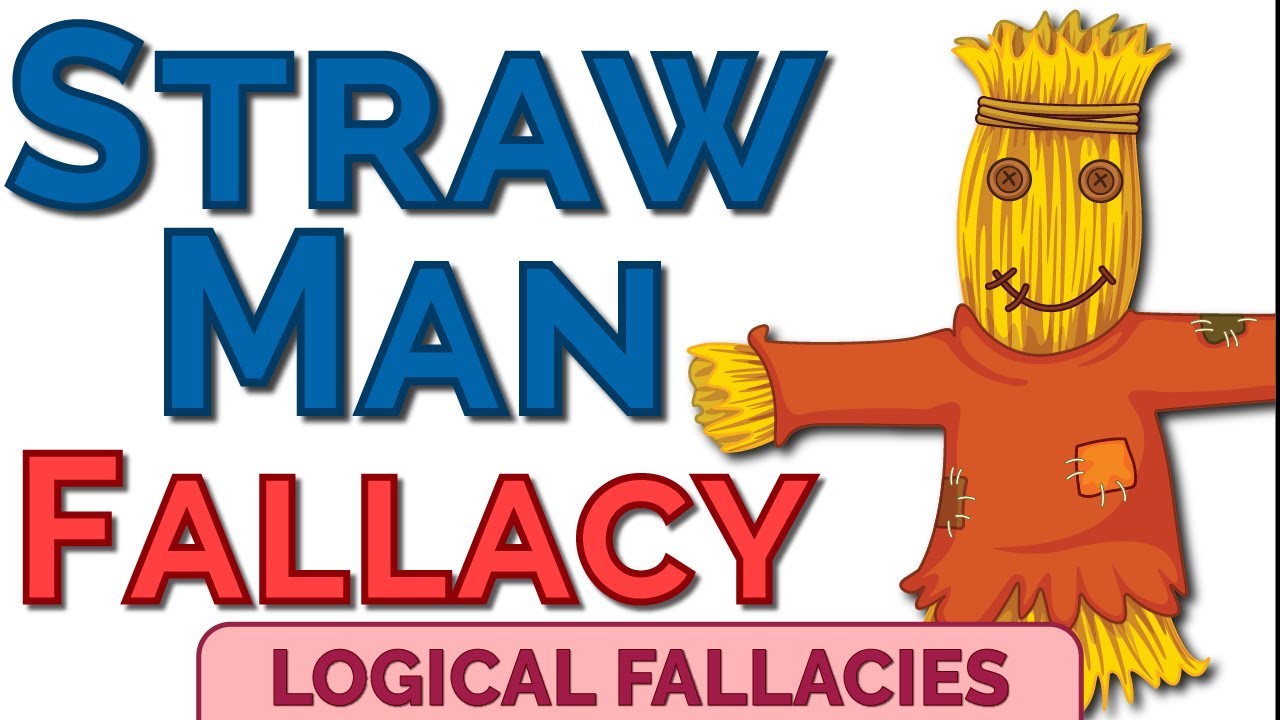
In the vast landscape of argumentation, the straw man fallacy emerges as one of the most deceptive yet prevalent tactics utilized in discourse. With its architecturally fragile structure, a straw man represents a distorted version of a rival’s position. This maneuver allows individuals to easily dismantle the misrepresented stance, offering the illusion of victory while sidestepping the actual issues at hand. As we delve into the intricacies of this rhetorical device, it becomes essential to unravel its mechanics, implications, and real-world applications.
Understanding the Straw Man Fallacy
The straw man fallacy is often surreptitiously woven into arguments, masquerading as a legitimate critique. To understand this phenomenon, let us first deconstruct its components. At its core, a straw man occurs when one party presents a caricature of another’s argument. This altered argument is not only easier to attack but also diverts attention away from the substantive issues.
For instance, imagine a debate surrounding climate change. One individual may advocate for stringent measures to curb carbon emissions. In response, an opponent might characterize this stance as an extremist view advocating for the complete dismantling of the economy to save the planet. By misrepresenting the original argument, the opponent successfully reframes the debate, rendering it easier to oppose.
Trappings of a Straw Man Argument
Not all arguments labeled as straw men are inherently fallacious. Often, they stem from miscommunication or misunderstanding. However, a true straw man is marked by specific characteristics:
- Oversimplification: The original argument is reduced to an overly simplistic version, ignoring its nuances.
- Exaggeration: The argument is exaggerated to the point of absurdity, making it easier to attack.
- Distracting Distraction: The straw man diverts attention from the crucial aspects of the original argument, leading to a tangential debate.
This deceptive tactic is not merely a trivial failure in logic; it has far-reaching implications in both public discourse and personal relationships. By resorting to this fallacy, individuals undermine genuine dialogue, fostering an environment rife with confusion and animosity.
The Allure of the Straw Man Tactic
Why do people resort to such a disingenuous argumentative strategy? The answer lies in the dual allure of ease and effectiveness. Striking down a straw man is significantly less laborious than grappling with the complexities of a well-articulated argument. In a fast-paced world where attention spans dwindle, this tactic provides a quick route to seeming decisiveness.
Moreover, the emotional resonance tied to straw man arguments can be extraordinarily potent. By exaggerating an opponent’s position, the speaker can ignite outrage among supporters, galvanizing them around a shared sense of purpose. This transformational power, however, comes at a cost: it stifles critical thinking and fosters divisive rhetoric.
Examples in Various Contexts
To appreciate the prevalence of straw man arguments, one need only observe them in various domains. Political debates, for instance, are often rife with this fallacy. Candidates frequently misrepresent each other’s policies, turning nuanced positions into absurd caricatures. In educational institutions, students may employ straw men to refute classmate’s arguments rather than engaging with them thoughtfully. Such instances serve not only as a testament to the fallacy’s ubiquity but also highlight the necessity of fostering a climate of respectful discourse.
Consider a debate on healthcare reform. Proponents of universal healthcare may argue that access to essential medical services is a basic human right. A detractor, however, might frame this position as advocating for a socialized medical system that would eliminate private healthcare entirely. This distortion allows the detractor to rally support against a position that few would advocate while ignoring the more pertinent issues of equitable healthcare access.
Combatting Raw Communication: Strategies for Clarity
To effectively navigate discussions while avoiding the pitfalls of straw man arguments, it becomes paramount to hone one’s ability to articulate ideas clearly and listen actively. Here are several strategies to bolster constructive dialogue:
- Clarification: Always seek clarification on the opposing viewpoint before opposing it. Paraphrasing what one has heard reinforces understanding and fosters mutual respect.
- Focus on the Crux: Attentively identify the core of the argument rather than succumbing to peripheral distractions.
- Encourage Dialogue: Strive to create a space where all participants feel heard. Open-ended questions can facilitate a more in-depth exploration of ideas.
By employing these strategies, individuals can not only enhance their argumentative aptitude but also contribute to a more civil and constructive discourse.
Conclusion
The straw man fallacy, though seemingly innocuous, possesses the potential to erode the foundation of productive dialogue. Understanding the dynamics of this rhetorical device and recognizing its manifestations in everyday discourse is imperative for anyone seeking to engage meaningfully with others. By fostering awareness and promoting clarity, we can transition from confrontational exchanges to insightful conversations, enriching our collective experience in the process.