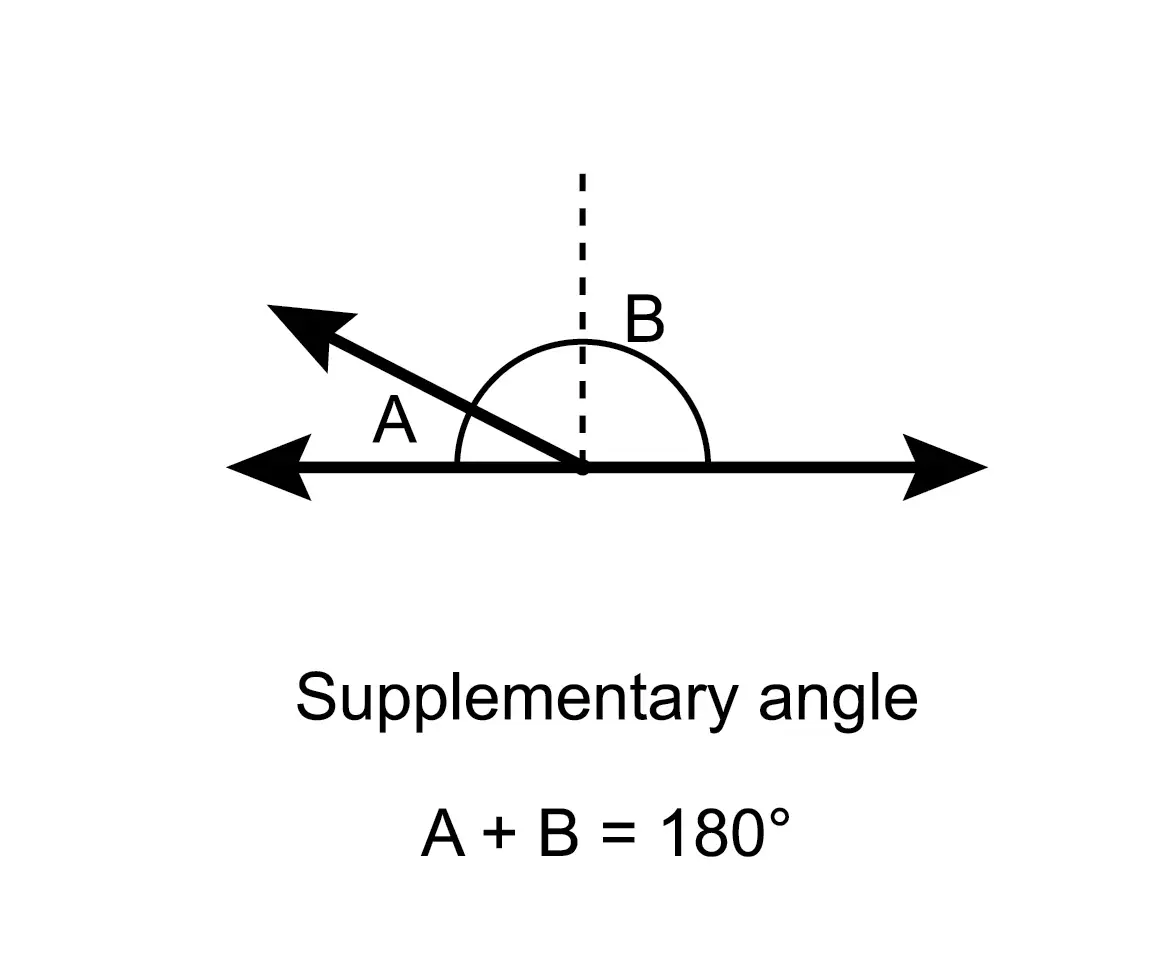
The world of geometry is filled with an array of angles, each serving specific purposes and holding unique characteristics. Among these, supplementary angles stand out due to their fascinating properties and significance in various geometric applications. To elucidate this concept, let us delve into what supplementary angles are and explore several compelling examples and scenarios that illustrate their functionality in both theoretical and real-world contexts.
Understanding Supplementary Angles
Supplementary angles are defined as two angles whose measures, when combined, total exactly 180 degrees. In essence, these angles complement one another, completing a straight line. This attribute leads to a plethora of interesting applications in practical situations, making the comprehension of supplementary angles vital for students and professionals alike.
1. The Classic Examples
One of the most straightforward instances of supplementary angles emerges in the context of a linear pair. Imagine two adjacent angles sharing a common vertex and one side that is common to both. If one angle measures 110 degrees, the supplementary angle must measure 70 degrees, since 110 + 70 = 180 degrees. Visualizing this setup reveals how supplementary angles can arise effortlessly in everyday settings.
2. The Angle Relationships in Triangles
Within the realm of triangle geometry, supplementary angles hold considerable significance, particularly when triangles are extended. Consider an isosceles triangle where angles A and B at the base measure 50 degrees each. The third angle, C, can be computed as follows: C = 180 – (50 + 50) = 80 degrees. Here, angle A and its corresponding external angle are supplementary. Understanding these relationships is crucial, especially as they serve as the foundation for many geometric proofs.
3. Real-World Applications
The utility of supplementary angles extends beyond mere academic exercises; they have practical applications in a variety of fields. For instance, architects and engineers are frequently required to calculate angles to ensure structural integrity. Consider the design of a roof that slopes at an angle. If one angle of the roof measures 40 degrees, the angle formed by the opposing side must supplement this to 180 degrees, hence it must be 140 degrees. Such calculations ensure that roofs are safely constructed while adhering to aesthetic design principles.
4. Supplementary Angles in Technology
In the realm of computer graphics, supplementary angles play an imperative role in rendering and animation. For example, when programming a 2D game, understanding the angle of rotation for game objects is crucial. Suppose a character needs to face a direction that is 60 degrees to the right of their current position; the angle behind them would then be 120 degrees, creating a complementary visual effect that adheres to the principles of supplementary angles. This application in technology demonstrates how geometric concepts permeate digital realms, further enhancing user experience.
5. Supplementary Angles and Art
Artists also utilize supplementary angles deliberately to create visual harmony and balance in their compositions. Take, for instance, the arrangement of elements in a painting. If two adjacent shapes are positioned such that one shape embodies a 30-degree angle, the next must align in complementary fashion at 150 degrees to maintain the flow throughout the artwork. This conscious manipulation of angles can evoke emotional responses, imparting dynamism and rhythm within the piece.
6. Indirect Applications of Supplementary Angles in Sports
In various sports, athletes must often align their bodies to achieve optimal performance. For instance, a basketball player demonstrating a jump shot must understand their position relative to the basket. If their arm creates an angle of 30 degrees with respect to their body while shooting, the arm’s position relative to the ground could be viewed as supplementary. Thus, understanding angular relationships can enhance technique, illustrating the broader applications of supplementary angles even in competitive environments.
7. Visualizing Supplementary Angles through Technology
Educational platforms and software often employ interactive tools to teach supplementary angles. These visual aids allow learners to manipulate angles dynamically, providing a tangible understanding of how two angles can combine to total 180 degrees. Through such interactive experiences, students discover the essence of supplementary angles, transcending traditional textbook learning.
Conclusion
Supplementary angles are not merely an elementary concept confined to classrooms; they embody a rigorous foundation for both theoretical exploration and practical application. Through engaging examples, such as those found in architecture, technology, art, and sports, we unveil the breadth of understanding that supplementary angles inspire. By acknowledging their significance, one can appreciate the geometric connections that permeate our environment. Thus, from fundamental mathematics to advanced applications across various disciplines, the world of supplementary angles remains a pivotal and enduring subject worth exploring.