Crafting a precise and engaging topic sentence is akin to laying the foundation of a well-structured edifice. A strong topic sentence not only encapsulates the essence of the paragraph but also invites the reader to journey further into the narrative. In this exploration, we delve into the intricacies of constructing exemplary topic sentences, their significance in writing, and various compelling examples to illustrate their potency.
Understanding the impact of a topic sentence is paramount for any writer. It serves as a compass, guiding the narrative and orienting the reader’s expectations. A well-crafted topic sentence functions as the thesis for its immediate context, presenting a clear viewpoint or argument that sets the tone. Moreover, it possesses the innate ability to pique curiosity, compelling readers to delve deeper into the text.
Consider the dual role of a topic sentence:
1. **Conveying Information**: On the surface, it must convey a specific idea or perspective.
2. **Engaging the Reader**: Beneath this layer of information, it must spark intrigue and foster a connection between the reader and the text.
To illustrate, let’s dissect the elements of an effective topic sentence:
- Clarity: It must be unambiguous, presenting an idea that is easy to understand.
- Succinctness: A concise statement is more powerful than one riddled with verbosity. The essence of the idea should be distilled to its purest form.
- Promise of Expansion: A great topic sentence promises the reader that the following content will deepen their understanding or reveal a new perspective on an intricate issue.
- Provocative Language: Using vivid or thought-provoking words can evoke emotional responses, further enticing the reader.
- Focus on Relevance: The topic sentence should align with the main idea of the paragraph, ensuring cohesiveness throughout the piece.
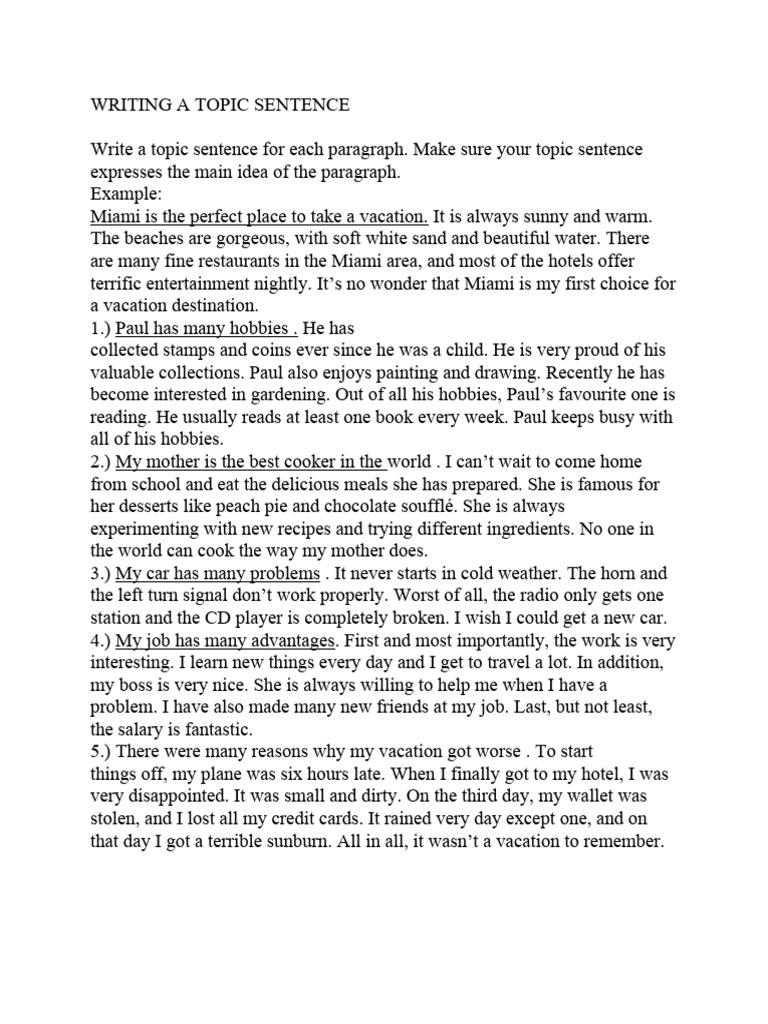
Now, let’s examine some examples of effective topic sentences that exemplify these qualities:
-
“The emergence of artificial intelligence in everyday life is not merely a technological advancement; it represents a profound paradigm shift in the nature of human existence.”
-
“While one might assume that urbanization leads solely to the proliferation of skyscrapers, it paradoxically creates spaces for rejuvenation and community bonds.”
-
“Beneath the surface of seemingly innocuous social media interactions lies a maelstrom of psychological effects that can shape personal identities.”
-
“Though the allure of fast fashion may tempt consumers with affordability, its harrowing environmental consequences demand a critical reevaluation of our purchasing choices.”
Each of these examples effectively illustrates the core tenets delineated earlier. They possess clarity, provoke curiosity, and set the stage for deeper exploration.
Shifting gears, let’s consider the importance of context when formulating topic sentences. The surrounding narrative informs how effectively a topic sentence will function. Consider the audience: what knowledge do they possess? What assumptions can be challenged? Tailoring the language and the complexity of the idea to suit the reader’s existing understanding can amplify engagement.
For instance, in a scholarly article, a topic sentence might explore complex theory; whereas a blog post might prioritize a more relatable approach, enticing casual readers to reflect on their experiences.
Moreover, the placement of a topic sentence is crucial. Generally found at the beginning of a paragraph, its positioning can enhance the reader’s experience. Nonetheless, occasionally placing it at the end can create a sense of revelation, enabling a crescendo that leaves the reader contemplating the implications of what they just read. Such a technique can profoundly affect how intensely a reader engages with the content.
Besides the traditional topic sentences, a writer may also experiment with variations that maintain reader interest. Consider how rhetorical questions can serve as topic sentences, ushering in critical thinking: “What if our understanding of success is fundamentally flawed?” This approach not only sets the stage for dialogue but also invites personal introspection.
As we navigate the labyrinth of sentence construction, one must acknowledge the influence of audience and purpose. Different genres demand distinctive approaches. In persuasive writing, for example, a topic sentence might assert a claim to stimulate agreement or consideration. Conversely, in narrative contexts, it may provide a glimpse of the unfolding tale, drawing readers into the storyline.
Ultimately, creating exemplary topic sentences is an art that requires practice and contemplation. Writers must constantly refine their ability to encapsulate complex ideas, engage readers’ curiosity, and promise rich content ahead. By studying successful models and honing your craft, you can transform mundane writing into captivating exploration, enriching the reader’s experience.
In conclusion, the topic sentence stands as a beacon in the world of writing, illuminating the path for both the author and the reader. It is a powerful tool that, when wielded skillfully, can entice and enthrall. Mastery of this art form ultimately enhances not just the clarity of expression but also the depth of connection forged between the writer and the audience. As you pen your thoughts, remember the underlying potential of a simple sentence; it may just herald a journey toward understanding and insight.