
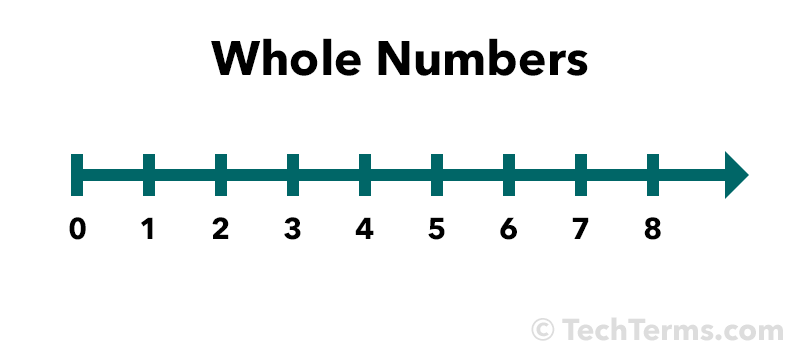
Whole numbers are an essential concept in mathematics, serving as the very foundation of our numerical system. They are defined as the set of non-negative integers that include zero and all positive integers (1, 2, 3, …). This seemingly simple definition holds remarkable significance across various domains—from basic arithmetic to advanced mathematical theories. This article explores the concept of whole numbers, diving into examples and implications that shape our understanding and application of them.
So, what constitutes a whole number? To elucidate this notion, consider the most rudimentary examples: 0, 1, 2, 3, and so forth. Each of these numbers embodies the characteristics inherent to whole numbers. They are distinct, indivisible units that can be manipulated through addition, subtraction, and multiplication. However, they stand apart from integers, which include negative counterparts like -1, -2, and -3. This differentiation raises thoughtful inquiries about the nature and role of numbers within our everyday lives.
Whole numbers are omnipresent in the world around us. Take, for instance, a simple scenario in which you may observe a group of apples arranged on a table. The total number of apples can be expressed as a whole number: 0 apples denotes an empty table, while 5 apples represent a cozy afternoon snack. This vivid visualization prompts the question: How do we utilize whole numbers in various real-life contexts? The answers abound.
In commerce, whole numbers often manifest in inventory management. Businesses track stock levels—such as 10 bags of flour or 25 assorted toys—utilizing whole numbers for precision and clarity. This numeric clarity facilitates effective decision-making, ensuring that supply meets demand. There’s no ambiguity when a store manager states that there are exactly 15 items on a shelf; it’s an unequivocal whole number, and that reliability fosters consumer trust.
Beyond commercial applications, whole numbers find relevance in the realm of sports. Each game operates on a score-based system, often beginning at zero. As teams compete, they accumulate points—a whole number reflecting the tally of their achievements. For instance, a basketball team might score 78 points while their opponent scores 86. The beauty of this score reveals more than just numbers; it reflects effort, skill, and the competitive spirit embedded in human nature.
Another intriguing facet of whole numbers lies in their employment in education. In a classroom setting, instructors utilize whole numbers to quantify student attendance, grades, and even assessments. Visual aids, such as charts and graphs, often depict data points as whole numbers to highlight trends clearly. For example, if a teacher notes that 30 out of 32 students participated in an exam, this information is more digestible and encourages an inclusive learning environment where progress can be measured with certainty.
Yet, the versatility of whole numbers extends far beyond the tangible. They serve as vital components in theoretical mathematics and computer science as well. For instance, whole numbers are indispensable in constructing algorithms and programming logic. Programmers may employ whole numbers to denote various data structures, leverage them in count-controlled loops, and manipulate numerical sequences. The elegance of mathematics can often be traced back to the simplicity of whole numbers; they are the building blocks upon which complex theories and applications are constructed.
Moreover, the significance of whole numbers permeates культурные and artistic expressions too. Consider music: time signatures often revolve around whole numbers, providing structure to rhythm and melody. A 4/4 time signature, for example, indicates four beats per measure, underscoring the harmony of numerical patterns in artistic creation. The interplay of whole numbers within this context exemplifies the profound interconnectedness of mathematics and the humanities.
While whole numbers are typically associated with basic counting and arithmetic, their implications are vast. Even in the digital age, where technology reigns supreme, whole numbers maintain their relevance. Data storage capacities—be it megabytes, gigabytes, or terabytes—are quantified in whole numbers. The very essence of binary code, which underpins digital technology, relies heavily on the principles of counting that whole numbers epitomize.
In contemplating the broader ramifications of whole numbers, one cannot help but recognize their role in shaping our understanding of the world. They illuminate patterns, foster communication, and provide frameworks for spiritual, economic, and scientific exploration. Whether one is examining the mundane or engaging with complexities, the reliance on whole numbers is unequivocal.
Thus, as we reflect on the myriad implications of whole numbers, it becomes clear that they promise a shift in perspective. This straightforward concept invites curiosity and exploration. What other intricate layers of understanding lie hidden within the folds of our numerical system? Perhaps the key lies in embracing these foundational elements, recognizing that within the seemingly simple world of whole numbers exists a spectrum of applications that extend far beyond the ordinary.
In conclusion, whole numbers delineate more than just numerals; they constitute an essential narrative of human understanding. They inform decisions, enhance creativity, and establish communication across diverse fields. By appreciating the diverse examples and implications of whole numbers, one can cultivate a richer appreciation for the very fabric of our lives. In a world so deeply intertwined with numbers, the story of whole numbers invites us all to delve deeper, to learn, and to grow.













