Energy is the invisible thread that weaves the fabric of our universe, manifesting itself in myriad forms. Just as a masterful artist transforms raw pigments into a vibrant painting, energy can metamorphose from one state to another, producing fascinating phenomena that drive the very dynamics of our existence. In this exploration, we shall delve into the intricate realm of energy transformations, illuminating the profound journey of energy as it traverses through different forms. Let us embark on this enlightening odyssey.
To grasp the concept of energy transformation, one must first become acquainted with the various types of energy. At the core, we have kinetic energy, the force that propels objects in motion. Imagine a rushing river, its waters churning and cascading over stones, embodying the very essence of kinetic energy in action. This fluid motion is complemented by potential energy, the stored energy waiting patiently, like a coiled spring or a poised archer, ready to unleash its force when the time is right.
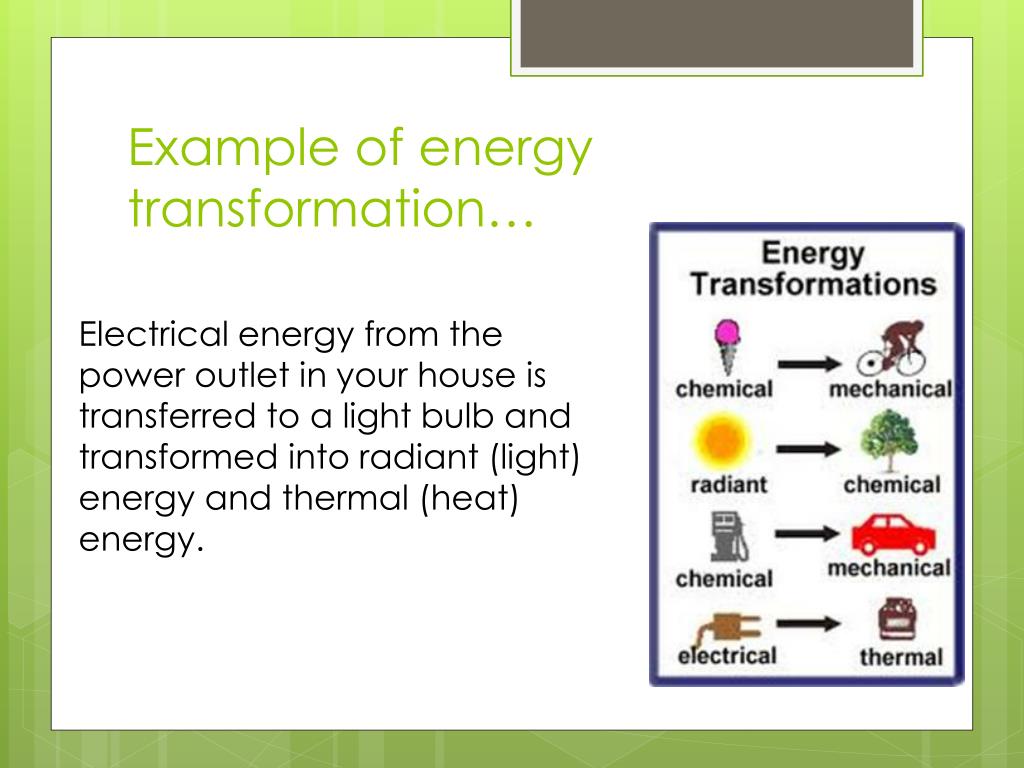
Energy transformations are akin to a grand symphony, where each instrument plays a vital role in creating a harmonic masterpiece. Consider the process of photosynthesis, a wondrous phenomenon orchestrated by plants. Through sunlight, carbon dioxide, and water, these green miracles convert solar energy into chemical energy, storing it in the form of glucose. Like a culinary artist, plants take raw ingredients to create sustenance that nourishes not only themselves but the entire biosphere.
As we transition from one example of energy transformation to another, it is crucial to acknowledge the masterpiece of human ingenuity: the modern power plant. Here, we witness the transformation of thermal energy into electrical energy, a journey as captivating as a phoenix rising from the ashes. Coal, oil, or natural gas combusts, releasing copious amounts of heat. This heat converts water into steam, which then propels turbines, ultimately generating the electricity that powers our lives. Each switch flipped in our homes is akin to turning the page in a gripping novel—a continuation of an ongoing narrative of energy flow.
The wonders of energy transformation do not cease at mechanical applications. Consider the enthralling phenomenon of a musical instrument. When a musician strikes a piano key, they unleash kinetic energy that reverberates through strings. This energy is transformed into sound waves, an auditory delight that can evoke emotions, memories, and imaginations. Each note played weaves a tapestry of experiences, illustrating the transformative power of energy from one sensory realm to another.
Additionally, energy transformation exists prominently in the realm of nature’s cycles. The water cycle is a quintessential example of energy in perpetual motion. Water evaporates from the surface of oceans and lakes into vapor, a transformation facilitated by solar energy. As vapor rises, it cools and condenses into clouds, eventually succumbing to gravitational forces as precipitation. Rain nourishes the earth, recharging rivers and lakes, creating a beautiful energy cycle that sustains ecosystems. Just as a circle returns to its starting point, so too does the energy of water complete its transformative journey, embodying the essentials of life.
In the context of human-powered endeavors, energy transformations are vividly illustrated in the dynamics of physical exercise. When a person engages in activities such as running or cycling, they convert the chemical energy stored in food into kinetic energy. This transformation is a prime example of how human beings embody the essence of energy through action. As muscles contract and expand, energy flows like a river coursing through the valleys of our bodies, propelling us toward our goals. The exhilaration felt during exercise transcends the physical; it is a manifestation of energy in harmonious transformation.
Moreover, the enchanting concept of energy transformation extends into the realm of technology and innovation. Take, for instance, the photovoltaic cells employed in solar panels. These modern marvels convert solar energy directly into electrical energy, harnessing the sun’s rays in a manner reminiscent of an alchemist turning lead into gold. The sustainability offered through this method underscores the potential for renewable energy transformations as we seek to balance our needs with the preservation of our planet.
Let us also divert our gaze toward the everyday appliances that inhabit our homes—microwave ovens, refrigerators, and more. These devices serve as conduits of energy transformation, converting electrical energy into thermal energy to cook our meals or keep our food fresh. A microwave’s operation mesmerizes, as it utilizes electromagnetic radiation to excite water molecules, generating heat. This phenomenon illustrates the remarkable versatility of energy and its ability to adapt across various functions in our quotidian lives.
In conclusion, energy transformation is a continuous cycle of change, akin to a river that swells and ebbs with the seasons. From the intricate processes found in nature to the ingenious inventions of humanity, energy takes on countless forms, each transition underscoring its significance in the grand scheme of existence. As we journey through life, it is vital to acknowledge and respect the energy around us—its transformations shape not only our surroundings but also the very essence of life itself. By comprehending these transformations, we can better appreciate the delicate balance of our world, acting as stewards who harness energy responsibly for generations to come.