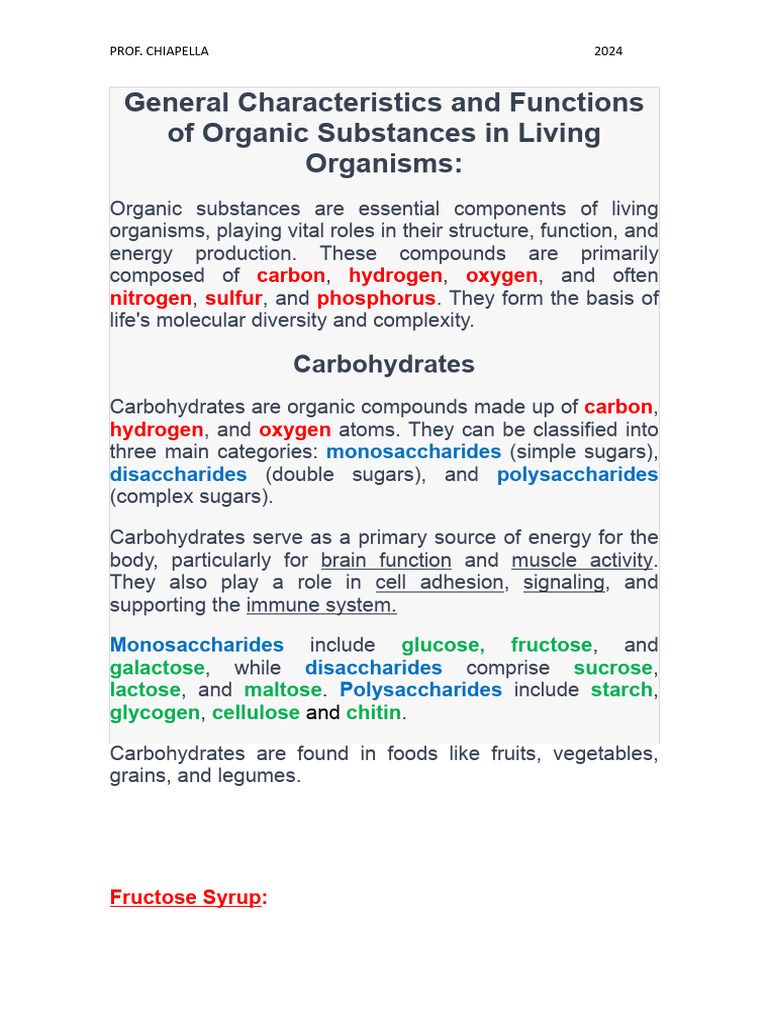
When we ponder the intricate tapestry of life on Earth, it becomes crucial to acknowledge a fundamental component that orchestrates a multitude of biological processes: organic substances. These remarkable compounds not only comprise the molecular architecture of living organisms but also allow us to appreciate the complexity and elegance of life itself. This exploration will delve into the world of organic substances, focusing on one particularly fascinating example: amino acids.
Amino acids serve as the building blocks of proteins, which are instrumental in virtually every biological function. To grasp their significance, it is essential first to understand their composition. Amino acids contain carbon, hydrogen, oxygen, nitrogen, and, in some cases, sulfur; their molecular structure includes a central carbon atom bonded to an amino group (–NH2), a carboxyl group (–COOH), a hydrogen atom, and a distinctive side chain known as the R group. This R group varies among amino acids, contributing to their diverse functions and properties.
Initially, there are twenty standard amino acids categorized into essential and non-essential variants. Essential amino acids cannot be synthesized by the human body and must be obtained from dietary sources. These include histidine, isoleucine, leucine, lysine, methionine, phenylalanine, threonine, tryptophan, and valine. Conversely, non-essential amino acids can be produced endogenously and include alanine, aspartic acid, glutamic acid, and serine, among others. This distinction is pivotal for understanding dietary requirements and their implications for health.
Amino acids are pivotal in various biological processes, acting as neurotransmitters, facilitating metabolic pathways, and supporting immune functions, to name a few. For instance, the amino acid tryptophan is a precursor to serotonin, a neurotransmitter that regulates mood, sleep, and appetite. In this light, the intricate relationship between amino acids and neurotransmitters illustrates the interconnectedness of organic substances and overall well-being. This interdependency perhaps invites us to reconsider our perspectives on nutrition and mental health, suggesting that what we consume can impact our mood and emotional stability.
Beyond their biochemical importance, amino acids exert significance in various industries. The field of biotechnology has harnessed the power of amino acids for drug development, creating more effective therapies for diseases ranging from cancer to autoimmune disorders. Similarly, amino acids are integral to agriculture, as they are employed in animal feed to enhance growth and productivity. These applications highlight the versatility and far-reaching implications of organic substances like amino acids, prompting curiosity about the potential future discoveries within this domain.
A fascinating aspect of amino acids is their role in the formation of peptides and proteins. Through peptide bonds, amino acids interlock to create polypeptide chains, ultimately folding into complex three-dimensional structures. This process, known as protein folding, is governed by the interactions among the amino acid side chains, shaping the protein’s function and specificity. Some proteins serve as enzymes, catalyzing biochemical reactions, while others function as structural components or signaling molecules. Therefore, the manner in which amino acids unite can lead to a plethora of outcomes, evoking a sense of wonder regarding the molecular choreography that sustains life.
Additionally, the concept of protein denaturation — the process by which proteins lose their structure, and subsequently their function, due to external stressors — exemplifies the fragility and resilience of organic substances. Factors such as temperature, pH, and chemical concentrations can alter the delicate equilibrium, resulting in profound physiological consequences. This phenomenon further prompts contemplation about the balance between stability and adaptability in living organisms, emphasizing the intricately woven relationship between environmental conditions and organic substances.
Exploring the broader implications of amino acids extends to the realm of personalized medicine. As research progresses on the human genome, understanding how individual genetic variations influence amino acid metabolism becomes imperative. This nexus between genetics and biochemistry may provide a glimpse into a future where tailored nutritional and therapeutic interventions are commonplace, promoting health and longevity in unprecedented ways. Such advancements not only enhance the medical landscape but also revolutionize our comprehension of organic substances, intellectually provoking us to consider how such innovations can be harnessed for the greater good.
The exploration of organic substances, particularly amino acids, challenges us to shift our understanding of life’s building blocks. The interconnectedness of these compounds with our health, industry, and the very fabric of biological existence beckons a sense of inquiry and admiration. As we continue to unravel the mysteries surrounding these organic marvels, we unveil new dimensions of knowledge that could redefine our approach to well-being and sustainability.
In conclusion, the significance of amino acids as examples of organic substances extends far beyond their biophysical characteristics. They embody a symbiosis of science and philosophy, compelling us to contemplate our role within the intricate web of life. Understanding amino acids is truly an invitation to explore the vast expanse of organic chemistry, presenting not only a shift in perspective but also a profound curiosity that drives scientific discovery forward.