
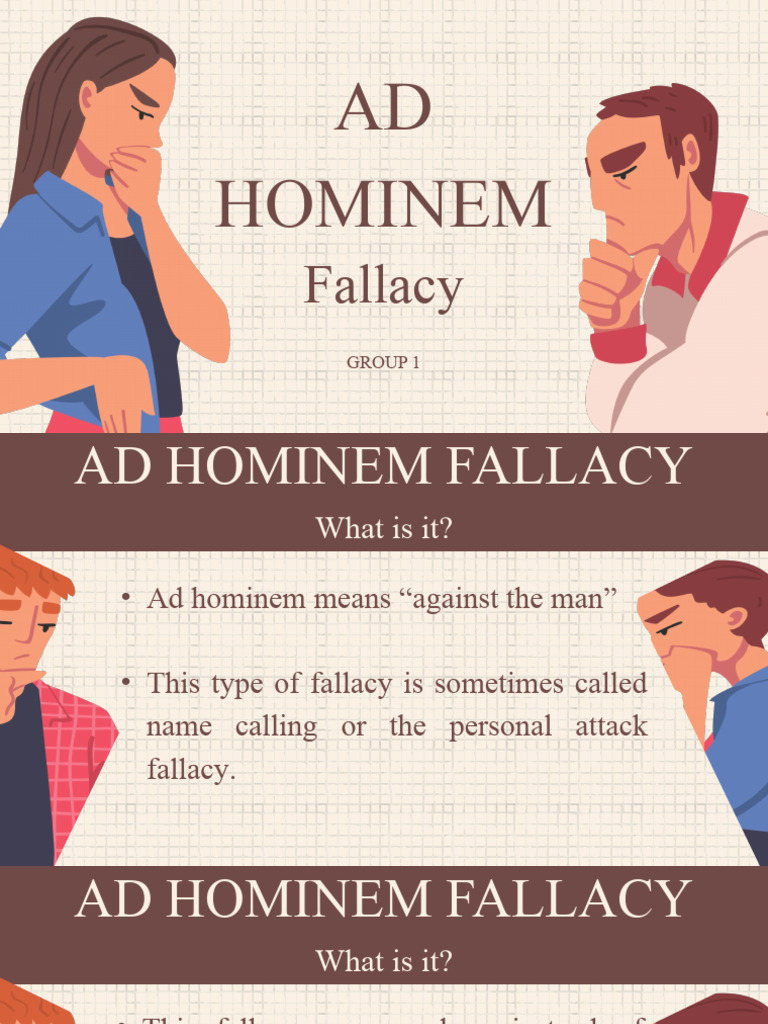
In the realm of argumentation, the subtleties of human interaction are often illuminated through various logical frameworks. One such framework, the Argumentum Ad Hominem fallacy, stands out for its particularity and prevalence in discourse. This fallacy occurs when an argument is rebutted by attacking the character, motive, or other attributes of the individual making the argument, rather than addressing the substance of the argument itself. It is a striking demonstration of how personal biases can corrode rational discussion, and understanding it can unveil fascinating dynamics underlying human communication.
To illustrate this point, consider an everyday scenario: two colleagues, Lisa and Mark, engage in a discussion about the necessity of implementing a new software system in their workplace. Lisa presents well-researched data supporting the adoption of the software, touting efficiency gains and cost-effectiveness. Instead of addressing her argument, Mark retorts, “Of course, you would say that – you’ve always been a technology addict!” Here, Mark resorts to an ad hominem attack; he shifts focus from the merits of Lisa’s argument to a personal jab at her character. This tactic not only sidesteps the discussion of the software but also diminishes the quality of their conversation, revealing deeper layers of interpersonal conflict and insecurity.
Observing such exchanges, one might wonder why individuals succumb to ad hominem attacks despite the presence of more rational tactics. The answer often lies in emotional investment. Ad hominem fallacies can serve as a defensive mechanism, protecting one’s ego from the discomfort of being challenged. By belittling the person instead of countering the argument, an individual can create a psychological barrier that mitigates feelings of inadequacy. This explains why such fallacies are surprisingly commonplace in high-stakes environments, such as political debates or heated discussions among friends.
As we delve deeper into the intricacies of the argumentum ad hominem fallacy, we encounter variations that complicate the discourse further. There are two primary subcategories: abusive ad hominem and circumstantial ad hominem. The former involves explicit derogatory remarks aimed at discrediting the opponent, while the latter suggests that the opponent’s circumstances or affiliations intrinsically taint their perspective. For instance, if Mark asserts that Lisa’s views are invalid because she benefits personally from the new software, he employs circumstantial ad hominem fallacy. This assertion, rather than engaging with the essence of her argument, seeks to undermine her credibility based on perceived biases, further entrenching division rather than fostering understanding.
The fascination with ad hominem attacks also sprouts from their playfulness in the fabric of language. Language is not merely a vessel for ideas but a weapon wielded in the theater of conversation. When individuals utilize ad hominem, they often do so in an attempt to captivate an audience or deflect a challenge in a way that seems clever or entertaining. Social media platforms, with their immediacy and culture of brevity, amplify ad hominem occurrences to an alarming degree. Tweets and comments, stripped of nuance, lend themselves to impulsive retorts that often devolve discourse into a playground for personal grievances rather than a battleground for ideas. This phenomenon has inadvertently transformed the public sphere into a less rational, more visceral arena.
It is imperative to recognize the psychological underpinnings of why ad hominem tactics allure individuals. Engaging critically with others’ opinions can be uncomfortable. By redirecting discourse to personal flaws, one might achieve a temporary sense of superiority. This adrenaline rush can be intoxicating, and it offers immediate gratification, even if it undermines the ultimate goal of constructive dialogue. However, such tactics do not foster true understanding or growth; instead, they propagate division and misunderstanding.
Moreover, the prevalence of ad hominem fallacies can erode the foundations of civil discourse. As individuals become accustomed to shortcutting rational debate with personal attacks, we risk cultivating an environment that rewards visceral, rather than intellectual, exchanges. Observing the dynamics in various forums, from academic discussions to corporate meetings, indicates the pressing need to combat this trend. Emphasizing virtues of respectful engagement and focusing on the substance over the individual is paramount in restoring the dignity of discourse.
To cultivate a culture that eschews ad hominem fallacies, individuals must actively practice critical listening and seek to understand the perspectives of others. It is essential to dismantle the impulse to launch personal attacks, instead honing the ability to address imperfections in the argument itself. Encouraging a mindset that values one’s own emotional growth as much as the integrity of intellectual exchanges can help mitigate illogical rebuttals.
In conclusion, the argumentum ad hominem fallacy serves as a stark reminder of the complex tapestry of human communication. While it may seem an effective means of dismissing uncomfortable ideas, it ultimately undermines rational discourse. By delving into its roots and recognizing the psychological and social elements that contribute to its prevalence, one can navigate discourse more thoughtfully. Investing in robust, respectful dialogue will pave the way for more productive exchanges that can transcend the trivialities of personal attacks, fostering mutual understanding and respect in an increasingly divided world.













