
The world of commerce is rife with transactions that hinge on trust and documentation, one of which is the bill of sale. This document may appear mundane at first glance, yet it serves a pivotal role in the realm of buying and selling goods, particularly when large sums of money are involved, or when legalities come into play. Understanding a bill of sale in its various forms adds depth to our comprehension of modern transactions and highlights its significance in safeguarding the interests of both buyers and sellers.
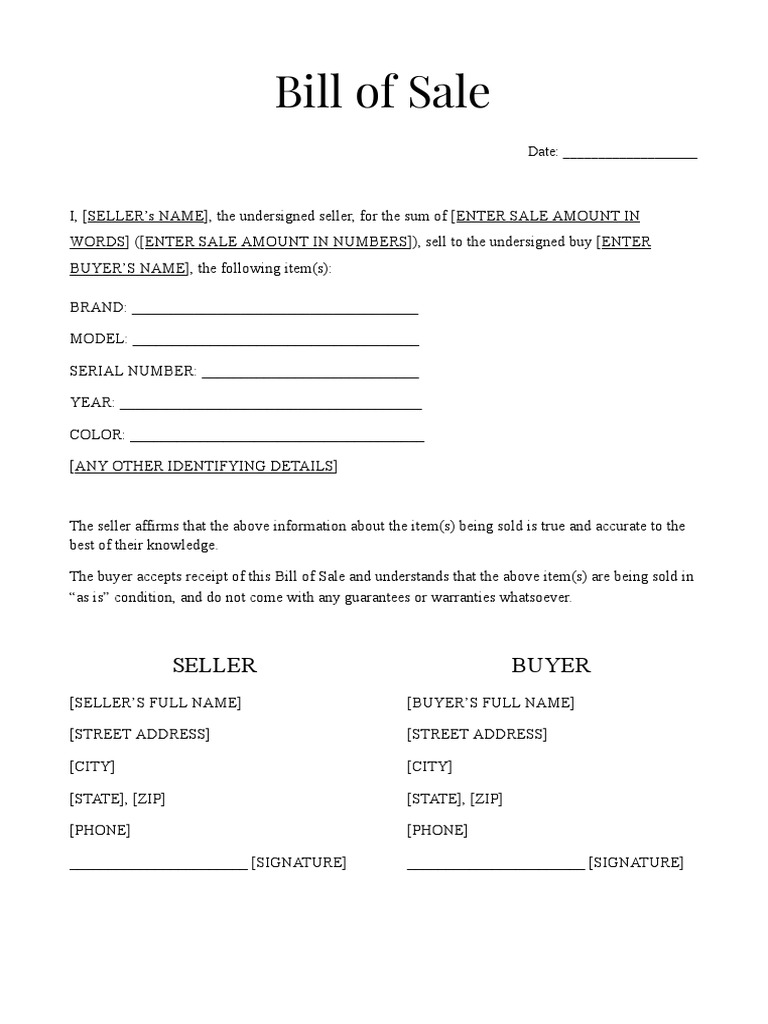
A bill of sale is essentially a legal document that provides proof of the transfer of ownership of an item or property from one party to another. This document is prevalent in the sale of various items, ranging from vehicles, real estate, to personal goods. It encapsulates important details, such as the date of sale, description of the item, sale price, and the identities and addresses of the buyer and seller. As straightforward as this might seem, it is the nuances and implications embedded within the bill of sale that elevate its importance beyond mere formality.
Firstly, let’s dissect the structure of a typical bill of sale. A well-crafted bill of sale encompasses margins for essential data, ensuring that everything is conspicuously outlined, thereby serving as a comprehensive record. To illustrate, vital information should include:
- Date of Sale: The exact date when the transaction occurs is fundamental for both parties to establish timelines and enforceability.
- Buyer and Seller Details: Full names, addresses, and contact information of both parties create a clear identity framework that aids in future communications and accountability.
- Description of the Item: This should be a meticulous account, including serial numbers or VINs (Vehicle Identification Numbers) if applicable. The more detailed the description, the easier it is to avoid disputes.
- Purchase Price: Clearly stating the price eliminates ambiguities and establishes the financial framework of the transaction.
- Signatures: The bill must include the signatures of both parties to authenticate the agreement and formalize the transaction.
Now, while the pragmatic elements of a bill of sale are abundantly clear, one must ponder the psychological elements at play. There is an innate human fascination with possession and ownership, and a bill of sale formalizes this bond. The act of signing a bill can evoke feelings of accomplishment, particularly for the buyer, or a sense of closure for the seller. This written acknowledgment of transfer reflects a pivotal moment in each party’s lifecycle, embodying a commitment that transcends the simple exchange of goods. In many cases, the items sold carry personal significance. A car could symbolize freedom, a piece of art might reflect the conclusion of an era, or an antique could embody familial tradition.
Moreover, the geographical context cannot be overlooked. In regions where informal markets thrive without stringent enforcement of regulations, a bill of sale can increase the perceived legitimacy of a transaction. Small business owners can leverage it to bolster consumer confidence and attract a clientele wary of scams or fraud. While trust is fundamental, the presence of a bill transforms an abstract notion into something tangible, an artifact that roots the transaction in legal and social legitimacy.
Furthermore, when discussing a bill of sale, it is the intersection with laws and regulations that adds layers of complexity. Different jurisdictions may have specific requirements for what constitutes a valid bill of sale, particularly in transactions involving motor vehicles or real estate. Failing to adhere to these regulations can render the document ineffective, potentially leading to costly legal disputes. This emphasizes the necessity of understanding local laws, as ignorance may not shield one from liability.
As technology continues to evolve, the dynamics surrounding bills of sale are also changing. Digital platforms now offer templates and electronic signatures, making it easier and faster for individuals to complete transactions. While this progression toward digitization can enhance convenience, it also raises questions about the security and authenticity of electronic documents. The emergence of blockchain technology provides tantalizing possibilities for the future, potentially offering unassailable proof of transactions and ownership, which could render traditional bills of sale obsolete. However, such shifts necessitate a comprehensive understanding and adaptation to new challenges in safeguarding one’s interests.
Equally noteworthy is the emotional aspect of finalizing a sale through a bill of sale. This document can serve as a memento, not merely a transaction record but a signifier of an epoch in one’s life. For instance, selling a beloved car may elicit a sense of nostalgia, while purchasing a first home can ignite aspirations and dreams. These monumental transactions often encapsulate more than just financial exchanges; they embody life’s transitions and personal growth.
Additionally, more specialized variants of bills of sale exist, tailored for unique transactions. For instance, a conditional bill of sale may stipulate specific terms under which the sale is contingent. Such clauses add a layer of security for both parties, ensuring that expectations are aligned and obligations are clear. There are also instances wherein bills of sale may accompany warranties or contingencies that further secure buyer confidence. These intricate elements point to a wider landscape of negotiation and compromise, wherein contracts can become a canvas upon which both parties imprint their agreements.
In conclusion, the bill of sale transcends its functional purpose to encapsulate deep-seated notions of ownership, trust, and transitional moments in our lives. As seemingly innocuous as it may appear, it is a potent testament to the intricate dance of commerce, interwoven with the threads of legality and personal significance. As the landscape of transactions continues to evolve, embracing both innovative technology and preserving the essence of trust will be paramount to the enduring relevance of this humble document.













