When embarking on a job search, a well-crafted cover letter can be your golden ticket to securing an interview. Unlike a résumé, which lists your qualifications and experiences, a cover letter offers a personal touch, providing insight into your personality, motivation, and career aspirations. In this article, we will explore various components of an exemplary brief cover letter, along with different types that cater to specific situations, thereby equipping you with the knowledge needed to create an impactful letter that stands out.
Understanding the Essentials of a Brief Cover Letter
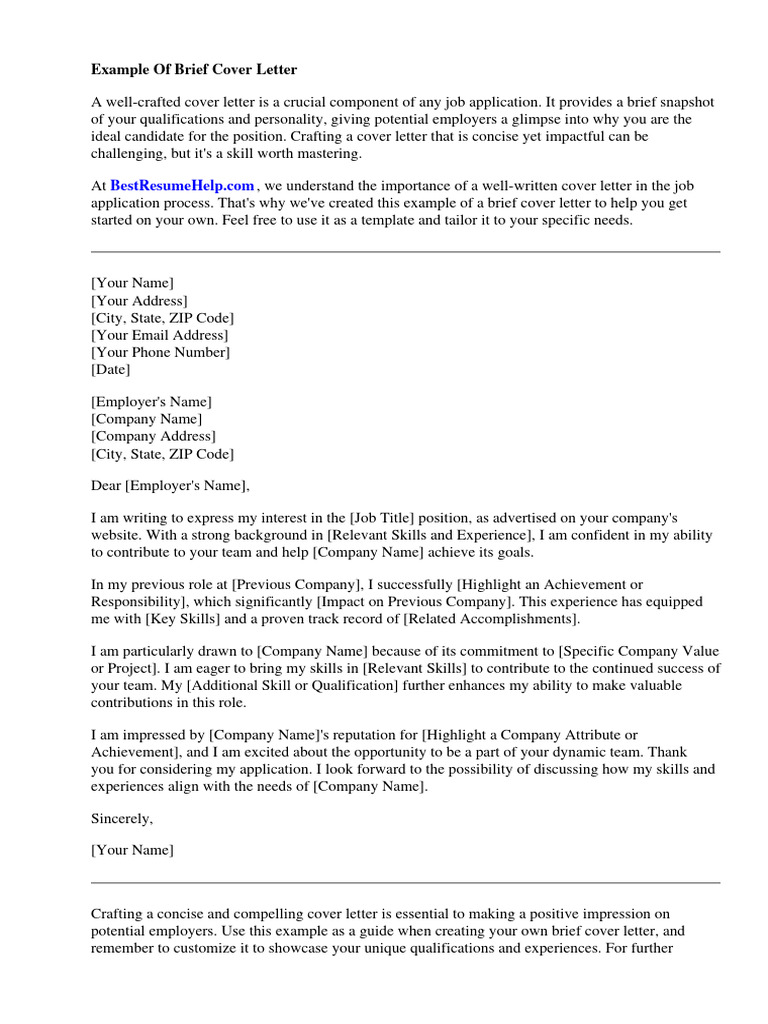
A brief cover letter typically consists of three main sections: the introduction, the body, and the conclusion. Each section serves a distinct purpose while collectively aiming to capture the attention of hiring managers.
1. The Introduction
The introduction is where you set the tone for your letter. Start with a captivating opening sentence to grab the reader’s interest. You might mention how you learned about the job or a referral’s name, if applicable. Establish your enthusiasm for the position right off the bat. For instance, stating “I am thrilled to apply for the Marketing Coordinator position at XYZ Company, as I have long admired your innovative campaigns” can establish a positive rapport.
2. The Body
This section is crucial for conveying your qualifications. Rather than reiterating your résumé, focus on a few key experiences that align closely with the job requirements. Use succinct anecdotes that illustrate your skills and achievements. These examples should not only pertain to your professional history but should also demonstrate your understanding of the company’s needs and values.
- Tailored Experiences: Craft your experiences to reflect the job description. For instance, if a position emphasizes teamwork, discuss a project where you collaborated effectively with colleagues.
- Skills Spotlight: Highlight specific skills that make you an excellent fit for the role. Incorporate relevant industry terminology to position yourself as a knowledgeable candidate.
- Values Alignment: Relate your professional principles to the company’s mission. This connection can differentiate you from other candidates. For example, if the company values sustainability, discuss your commitment to environmental practices within your work.
3. The Conclusion
Conclude your letter with a strong closing statement that reiterates your enthusiasm for the role. Express your desire for further discussion and provide your contact information for ease of follow-up. A statement like “I look forward to the possibility of discussing how my background, skills, and enthusiasms align with the needs of your team” leaves the door open for further communication while maintaining professionalism.
Types of Brief Cover Letters
While the structure of a brief cover letter may remain consistent, the context often dictates the tone and content. Below, we will explore varied formats to tailor your letter according to specific scenarios.
1. The Application Cover Letter
This is the most commonly encountered type, typically submitted alongside your résumé. Its primary goal is to introduce you as a candidate while underlining your relevant attributes. Personalization is key; referencing the job title and company demonstrates genuine interest.
2. The Referral Cover Letter
When someone within the company recommends you, a referral cover letter can be particularly powerful. When you mention the referrer in your introduction, it establishes credibility and connection. The body might include a few lines about your relationship with the referrer, reinforcing the recommendation.
3. The Networking Cover Letter
In scenarios where you are not directly applying for a job, a networking cover letter helps you to express your interest in a company even in the absence of open positions. This type serves as an inquiry about potential opportunities and can be a great way to build connections. Clearly state your interest in the organization and suggest a call or coffee meeting to discuss potential careers.
4. The Follow-Up Cover Letter
If you’ve previously applied for a position but haven’t received a response, a follow-up cover letter can display your persistent interest. Keep it brief, referencing your earlier application and expressing enthusiasm about the possibility of discussing your fit for the team.
Tips for Writing an Effective Brief Cover Letter
To ensure your cover letter makes a compelling impact, adhere to the following tips:
- Keep It Concise: Aim for one page with a clear format, making it easy for hiring managers to read.
- Personalize: Customize each cover letter to reflect the specific role and company, avoiding generic templates.
- Proofread: Spelling and grammatical errors can tarnish your professional image; review your letter meticulously before submission.
- Use Professional Language: Maintain a balance between professionalism and authenticity; avoid overly casual language.
In summary, a brief cover letter should act as a compelling narrative that introduces you, highlights your qualifications, and articulates your enthusiasm for a position. By recognizing the nuances among different types of cover letters and incorporating best practices into your writing, you enhance your chances of captivating potential employers and making a memorable impression.