An essay is like a tapestry woven from threads of thought, each strand contributing to a larger narrative that invites the reader into a realm of ideas and insights. Within this intricate design, the conclusion emerges as the final flourish—like the last brushstroke of a master painter. It is a critical element that not only encapsulates the essence of the essay but also leaves a lasting impression. Understanding how to craft a powerful conclusion can elevate your writing, transforming a simple paper into a memorable experience. In this exploration, we will delve into the art of constructing a compelling conclusion, examining its components, purpose, and various approaches that can captivate your audience.
The conclusion serves multiple functions, chief among them being the provision of closure. It signals to the reader that the journey through ideas is coming to an end. But closure does not equate to finality; rather, it should offer a sense of resolution while inviting further reflection. The conclusion is akin to the closing chapter of a novel, where loose ends are tied up but new questions linger like the echoes of a distant melody. This paradox is what makes the conclusion enticing. It allows the reader to ponder the implications of the argument long after they have left the text.
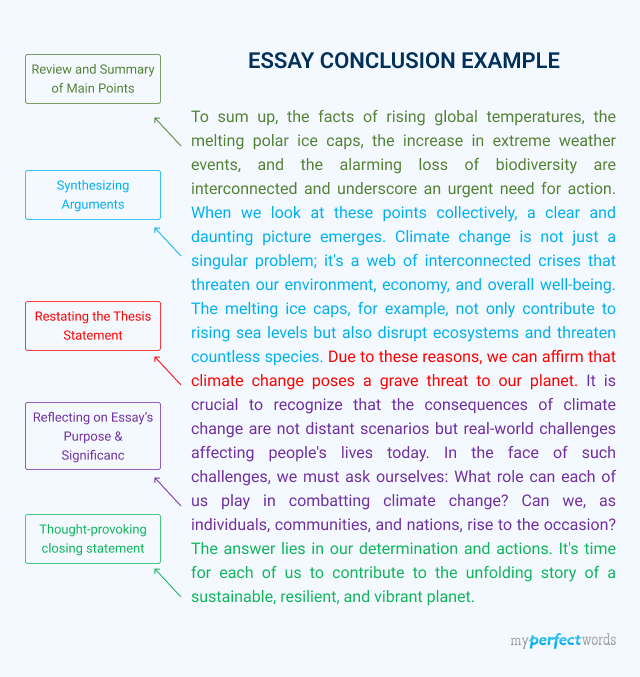
To craft an effective conclusion, one must first revisit the thesis statement. This central claim is the anchor of the essay—a lighthouse guiding readers through the turbulent waters of information. In the conclusion, restating the thesis in a fresh light signals to the reader that the essay has successfully navigated its course. However, this should not be a mere rehashing of previous content. Instead, employ synonyms or alter the sentence structure to create a nuanced reflection that ties back to the core argument.
The next step in this process involves synthesizing the main points. The body of an essay may be rich with intricate details, yet the conclusion should distill these ideas into digestible morsels. A well-crafted conclusion summarizes the key arguments without diminishing their richness. By presenting a highlights reel of the most compelling evidence and insights, the reader is offered a comprehensive lens through which to view the essay’s contributions. Think of it as curating a gallery of art; each piece represents a significant aspect of the overall theme, contributing to an enriching final experience.
Moreover, the inclusion of a call to action can be a powerful mechanism in your conclusion. This prompts the reader not just to reflect but also to act. Calls to action often evoke a sense of urgency, demanding engagement with the topic beyond the confines of the essay. Whether it is encouraging further research, advocating for a particular stance, or inviting the reader to participate in a discourse, this layer adds an interactive dynamic to the conclusion. It transforms passive reading into an active level of involvement, fostering a sense of shared responsibility and urgent participation.
Equally important is the emotional resonance of a conclusion. To achieve this, a compelling narrative or metaphor can be employed. Metaphors have the innate ability to illuminate complex ideas, turning abstract thoughts into tangible imagery. For instance, one might conclude by likening the essay’s journey to climbing a mountain. The ascent represents the exploration of ideas, while the summit—the conclusion—offers panoramic views of the implications below. This vivid illustration not only leaves a lasting imprint but also reinforces the essay’s main message in a manner that is both relatable and profound.
As the conclusion approaches its final notes, it is also beneficial to reflect upon the broader context. This invites the reader to consider the implications of the argument within a larger framework. How does this discussion relate to current events, societal norms, or philosophical inquiries? This bridge extends the relevance of the essay beyond its immediate confines, allowing your thoughts to resonate in a wider expanse. By establishing this connection, the conclusion encourages the reader to weave the essay’s insights into their own understanding of the world.
Additionally, a strong conclusion often incorporates a concluding thought or quote that encapsulates the essay’s essence. This last morsel leaves the reader with a sense of satisfaction, like a delightful tidbit at a fine dining experience. It invites contemplation, serving as a final anchor upon which the entire essay rests. Quotes can particularly amplify this effect; they resonate with authority and elicit deeper reflection, often stirring personal connections within the reader.
Ultimately, the art of crafting a memorable conclusion is a multifaceted endeavor. It is not merely a summary; it is an intricate dance that engages the reader’s intellect and emotions alike. By restating the thesis creatively, synthesizing main points, invoking a call to action, utilizing vivid metaphors, situating the discussion in a broader context, and leaving the reader with a striking final thought, your conclusion will not only encapsulate but also elevate your essay. As your readers set aside your work, they will carry the resonance of your concluding ideas, much like a melody that lingers long after the final note has been played.