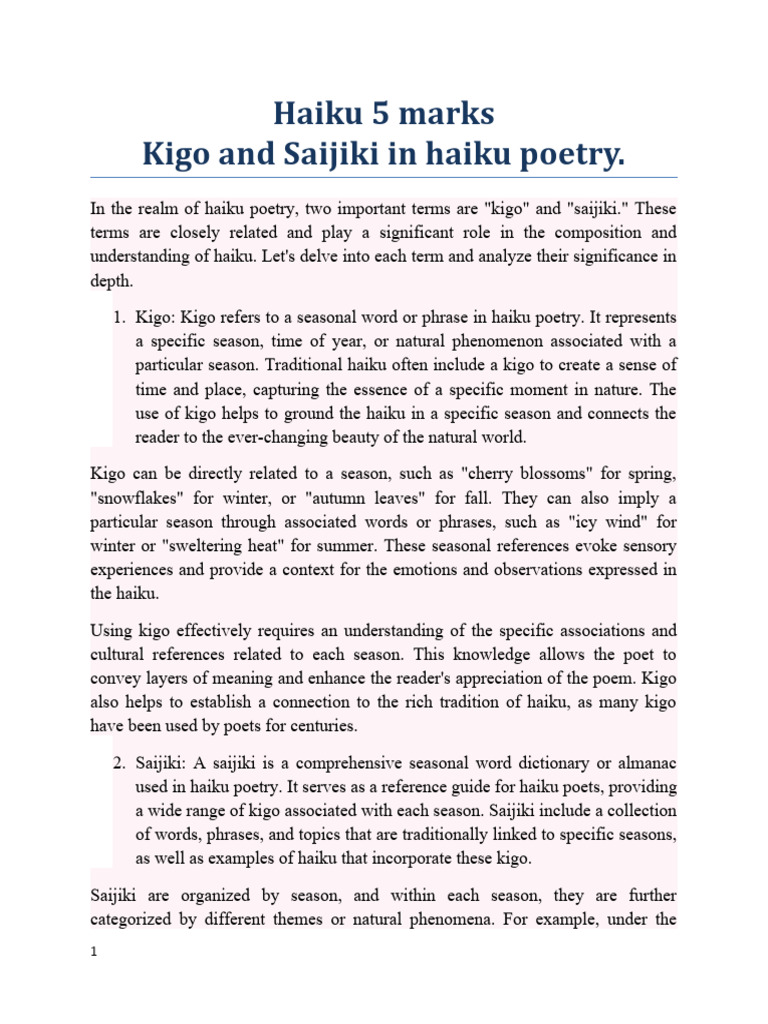
Haiku poetry, a revered form of Japanese verse, exudes simplicity and profundity in its succinct structure. Comprised of three lines with a syllable pattern of 5-7-5, haikus capture fleeting moments in nature and everyday life, often evoking a deep emotional response. The intrigue of this ancient art form lies in its ability to encapsulate vast themes within a mere handful of syllables. In this exploration, we will journey through prominent haiku examples that reflect on common observations, revealing their underlying significance and the allure they possess.
The Nature of Transience
One of the most compelling aspects of haiku poetry is its focus on transience—the ephemeral beauty of life. A traditional haiku often centers around nature, using vivid imagery to highlight moments that may otherwise go unnoticed. For instance:
Winter’s breath whispers,
Softly touching barren trees,
Silence speaks in white.
In this example, the poet employs the imagery of winter, evoking feelings of stillness and quiet contemplation. The stark contrast between the vibrant life of spring and the desolate beauty of winter invites readers to reflect on the inexorable passage of time. The color white, symbolizing purity and emptiness, speaks volumes about the cycles of life. The haiku serves both as an observation and a meditative comment on the transient nature of existence.
Nature and Human Connection
Haiku often reveals the interconnection between humanity and the natural world. This interplay between environment and emotions fosters a sense of unity. Consider this haiku:
Cherry blossoms fall,
Like lost whispers on the breeze,
Memories fading.
In the idea of falling cherry blossoms, there is an intrinsic reminder of both beauty and inevitability. The delicate flowers, cherished in their brief brilliance, evoke nostalgia. This poem mirrors human experiences of losing moments that were once cherished. Here, the imagery of falling blossoms parallels ephemeral memories, creating a poignant link between the transient beauty of nature and human sentiment. The subtle sorrow in the poem hints at a broader universal truth—life, like these flowers, is fleeting and fragile.
Seasons and Change
Another recurring theme in haiku poetry is the passage of seasons, each evoking unique emotions and transformations. A simple observation may yield deeper insights into the human condition. For example:
Autumn leaves descend,
Golden tapestries of change,
Nature’s grand farewell.
Here, the author captures the majestic display of autumn, yet beneath the surface, lies an elegiac tone. As leaves transform and fall, they echo the inevitable cycle of change in our lives. The gilded leaves serve as a metaphor for life’s stages, where each transition carries its own beauty and pain. This haiku encapsulates an appreciation of the present mixed with an acknowledgment of loss, imbuing the natural observation with rich, layered meanings.
The Art of Simplicity
At the heart of haiku is its remarkable capacity to convey complexity through simplicity. This artful brevity compels writers to distill their thoughts to the essence. For instance:
A lone bird takes flight,
Skyward on delicate wings,
Freedom in the breeze.
This haiku encapsulates the liberating sensation of seeing a bird soar. On the surface, a solitary bird embodies the idea of freedom, yet it also prompts deeper reflections on individuality and the pursuit of liberation amid societal constraints. The elegance of the craft lies in its restraint—the haiku invites the reader to ponder what freedom means to them, inspiring a moment of introspection.
Everyday Observations
Haiku poetry is not limited to grand events; it excels in celebrating the ordinary. The beauty of daily life provides rich material for observation. Consider:
Morning coffee steam,
Wakes the soul with warmth and light,
Comfort’s gentle hug.
In this piece, the simple act of enjoying a morning coffee transcends its mundanity. The steam rising from the cup becomes a metaphor for rejuvenation and connection. The haiku emphasizes the small yet profound joys of life, demonstrating how such fleeting moments can anchor our day and prompt a sense of gratitude. This exploration encourages a mindfulness that can sometimes elude our fast-paced lives.
Conclusion
Haiku poetry’s brevity and depth create an enchanting blend that captivates both the heart and mind. Through the precise structure of 5-7-5 syllables, poets articulate a tapestry of reflections, making the mundane resonate with emotional significance. By taking the ordinary and transforming it into evocative verse, haikus invite readers to pause and appreciate the intricacies of life. They compel us to observe closely, to find beauty in the ephemeral, and to appreciate the interconnectedness of all things. Ultimately, haiku stands as a testament to the power of observation, inviting a reverent contemplation of the world around us.