Minutes of Meeting (MoM) serve as the cornerstone of effective communication within any organization. They summarize the key discussions, decisions made, and action items assigned during meetings, providing a record that enhances accountability and clarity. Have you ever pondered, what if crucial details from a meeting slip through the cracks? The challenge lies in ensuring that the minutes encapsulate the essence of the dialogue while remaining concise and actionable.
To explore this concept further, let’s delve into the various components and importance of well-drafted minutes of meetings. Understanding these components can transform the way an organization operates, fostering transparency, efficient tracking of resources, and boosting collaboration. Here’s a detailed exploration.
The Importance of Recording Minutes of Meeting
Why are minutes of a meeting so pivotal? Firstly, they act as a historical document. This record stands witness to the evolution of discussions and the trajectory of decisions over time. Furthermore, they solidify accountability by assigning tasks to specific individuals, thus ensuring that all participants are aware of their responsibilities. The essence of collaboration hinges on clarity, which is precisely what well-structured minutes provide.
Core Components of Minutes of Meeting
To forge an impeccable minute-taking process, one must recognize the fundamental components that make up effective meeting minutes. These include:
- Date and Time: Clearly memorializing when the meeting transpired is foundational.
- Attendees: Recording who was present (and absent) forms a critical context for the discussions.
- Agenda Items: A note of each topic discussed creates a logical flow for readers.
- Discussion Points: Rather than capturing every word verbatim, summarizing main ideas and notable contributions captures the essence.
- Decisions Made: Documenting agreements achieved during the meeting is vital for follow-up.
- Action Items: These are specific tasks assigned to individuals, including deadlines for completion, ensuring proactive engagement.
Each element plays a distinctive role in painting a complete picture of the meeting dynamics, thereby leading to superior planning and execution.
Structuring Effective Minutes
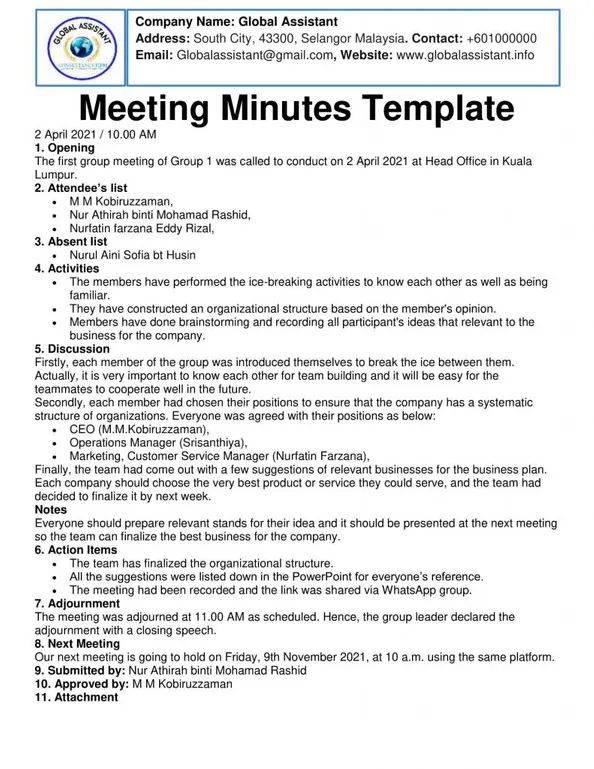
How does one structure these components into an accessible format? A professional approach to minute-taking can significantly elevate their utility. Start with an introductory paragraph that encapsulates the meeting’s purpose. Following this, a straightforward list of attendees sets the stage for what follows. Organizing the content by agenda items aids readability and emphasizes the flow of discussion. After each topic, a concise summary captures key takeaways and decisions, while a dedicated section lists action items, specifying responsible parties.
For example, an effective minute entry might look like this:
      **Agenda Item:** Marketing Strategy Review
      **Discussion Points:**
         - Review of Q1 performance metrics led by John Doe
         - Proposal for campaign adjustments discussed.
      **Decision Made:**
         - Approval of new budget allocation for campaigns.
      **Action Items:**
         - Jenny Smith to provide detailed campaign plans by next week.
Utilizing a consistent structure ensures that readers can locate information effortlessly and enhances comprehension among team members.
Tools and Techniques for Effective Minute-Taking
With time evolving, minute-taking has transcended mere handwritten notes. Embracing technology can significantly amplify efficiency. Employing digital tools such as Google Docs enhances collaboration, allowing attendees to access and edit minutes in real-time. Specialized software applications designed for meeting management can streamline recording, tidying up the process, and enhancing accessibility.
Moreover, utilizing templates can save valuable time. Each meeting might follow a slightly varied format, but a consistent template will help ensure all necessary information is captured while minimizing oversight. So, what happens when these tools are not utilized effectively? Missed nuances, unclear assignments, and the onset of confusion can ensue, creating a ripple effect throughout the workspace. Thus, choosing the right technique is paramount.
Best Practices for Ensuring Quality Minutes
To enhance the quality of meeting minutes further, several best practices should be considered:
- Listen Actively: Engaging with the conversation allows minute-takers to capture critical points accurately.
- Be Objective: Maintain neutrality in summarizing discussions, ensuring fairness.
- Review and Revise: A thorough review post-meeting helps in capturing any missed details before circulation.
- Timely Distribution: Sharing the minutes promptly ensures that the details remain fresh in participants’ minds.
Implementing these practices empowers an organization to truly leverage the invaluable resource that effective minutes represent.
Conclusion
In conclusion, minutes of meetings are indispensable for organizational coherence. They encapsulate the crux of discussions while guiding future actions. However, ensuring their accuracy and effectiveness requires diligence and a structured approach. Are you prepared to challenge the traditional methods of recording to elevate your organization’s communication strategy? Reflect on how incorporating these insights can transform your approach to meetings, ensuring that every discussion is captured with purpose and intention.