In the labyrinthine corridors of corporate governance and organizational dynamics, the minutes of a meeting wield a power reminiscent of ancient scrolls, holding within their inked confines the very decisions that shape the trajectory of entire enterprises. Picture these minutes not merely as dry documents, but as the parchment of progress, where every word is a brushstroke contributing to the vibrant mural of an organization’s journey. This exploration delves into the intricacies of meeting minutes, complete with examples that elucidate the art and science of effective documentation.
Understanding the Anatomy of Meeting Minutes
At its core, the minutes of a meeting serve as the official record of what transpires during gatherings, a compass guiding the ship of decision-making. However, they are not mere transcripts; they are distilled summaries that capture essential elements. Think of them as the highlights reel of a sports game—full of pivotal moments and decisive plays.
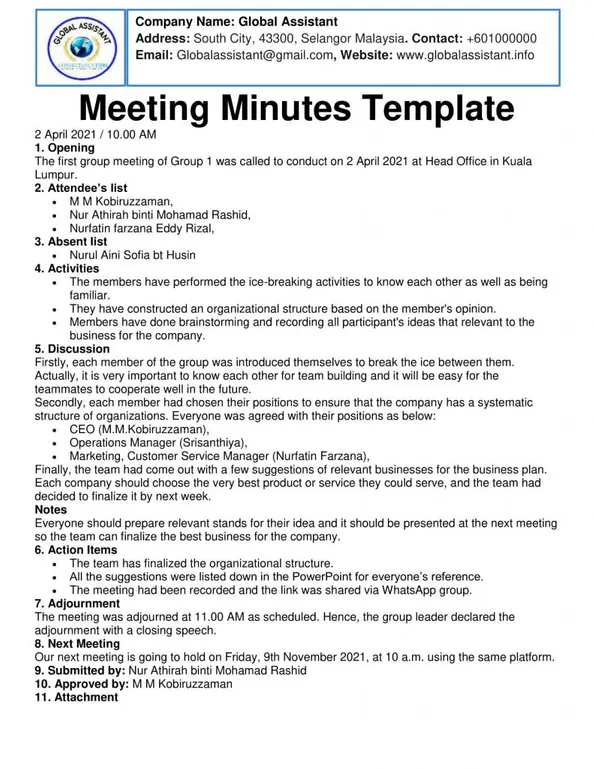
The fundamental components of meeting minutes include:
- Date and Time: The timestamp that anchors the meeting in the annals of history.
- Attendees: A roll call of participants, illustrating the diversity of voices contributing to the discourse.
- Agenda Items: A roadmap of topics discussed, signposting the journey of conversation.
- Decisions Made: The crux of the minutes; a succinct statement of resolutions that emerged from deliberation.
- Action Items: Concrete tasks assigned, like seeds sown for future growth.
- Next Meeting Details: A hint of continuity, ensuring that the dialogue remains a living entity.
A Sample of Minutes: The Blueprint
To conjure the essence of effective minutes, consider the following meticulously crafted sample:
Minutes of Meeting

Date: October 10, 2023

Time: 10:00 AM - 11:30 AM

Location: Conference Room B, Headquarters

Attendees: John Doe, Jane Smith, Emily Johnson, Michael Brown

Absent: Sarah Wilson, Tom White


Agenda:

1. Opening Remarks

2. Financial Report Review

3. Project Updates

4. Action Item Discussions


1. Opening Remarks:
John welcomed attendees and emphasized the need for transparent communication moving forward. He metaphorically described the meeting as a "ship setting sail into uncharted waters," highlighting the importance of collaboration.

2. Financial Report Review:
Emily presented the quarterly financial report, revealing a 15% increase in revenue. Discussions ensued about potential investment strategies to capitalize on this growth.

3. Project Updates:
- Michael provided an update on the new marketing campaign, noting its successful launch and positive reception.
- Jane reported on the development timeline for the new product, expressing concerns about upcoming deadlines.

4. Action Item Discussions:
- Sarah to finalize budget allocations by October 20.
- Tom to prepare a detailed report on customer feedback by October 30.
- Scheduled a follow-up meeting for project status on October 24 at 10 AM.

Next Meeting: October 24, 2023, at 10:00 AM, Conference Room B.
The Art of Drafting Minutes
Creating effective minutes requires finesse, akin to composing a sonnet where every syllable communicates profound meaning. Herein lies a strategic approach to drafting minutes:
- Active Listening: Engage fully in the discussion, allowing nuances and sentiments to inform the minutes.
- Conciseness is Key: Distill discussions into digestible pieces, ensuring clarity without sacrificing substance.
- Impartial Tone: The voice of the minutes should echo neutrality, refraining from infusing personal opinions or biases.
- Structure is Crucial: Employ headers and bullet points to create a navigable document, guiding readers through the narrative.
The Unique Appeal of Meeting Minutes
What elevates meeting minutes to something extraordinary is their ability to transcend time. They are not merely administrative tools; they are acts of preservation, akin to a time capsule storing pivotal moments of organizational history. Just as artists immortalize their visions on canvas, those who craft meeting minutes memorialize collective thought and action.
Furthermore, these documents foster accountability—like a mirror reflecting commitments made—and serve as a reminder of the paths chosen. They can act as a springboard for innovation, illustrating past decisions while illuminating the path forward.
Conclusion: The Legacy of Effective Minutes
In closing, the minute-taking practice serves as both an art and a discipline. The soft rustle of pages turning, the clicking of pens, and the echoes of deliberation contribute to a symphony that culminates in a powerful record of culture and decision. By approaching the craft of minutes with intention and clarity, organizations not only document their journey but also lay the groundwork for futures yet to be discovered, ensuring that no voice goes unheard in the grand tapestry of endeavor. Each meeting is a chapter; its minutes are the ink that captures the essence, urging the organization to turn the page and continue its voyage through the dynamic seas of achievement.