In today’s fast-paced world, the importance of a well-articulated mission and vision statement cannot be overstated. These statements serve as the cornerstone of an organization’s identity, guiding decisions and fostering a unified sense of purpose among employees and stakeholders. They encapsulate an organization’s core values, goals, and aspirations, resonating deeply with internal and external audiences alike. In this exploration, we will delve into examples of mission and vision statements, dissecting their intricacies and elucidating their significance.
Understanding Mission Statements
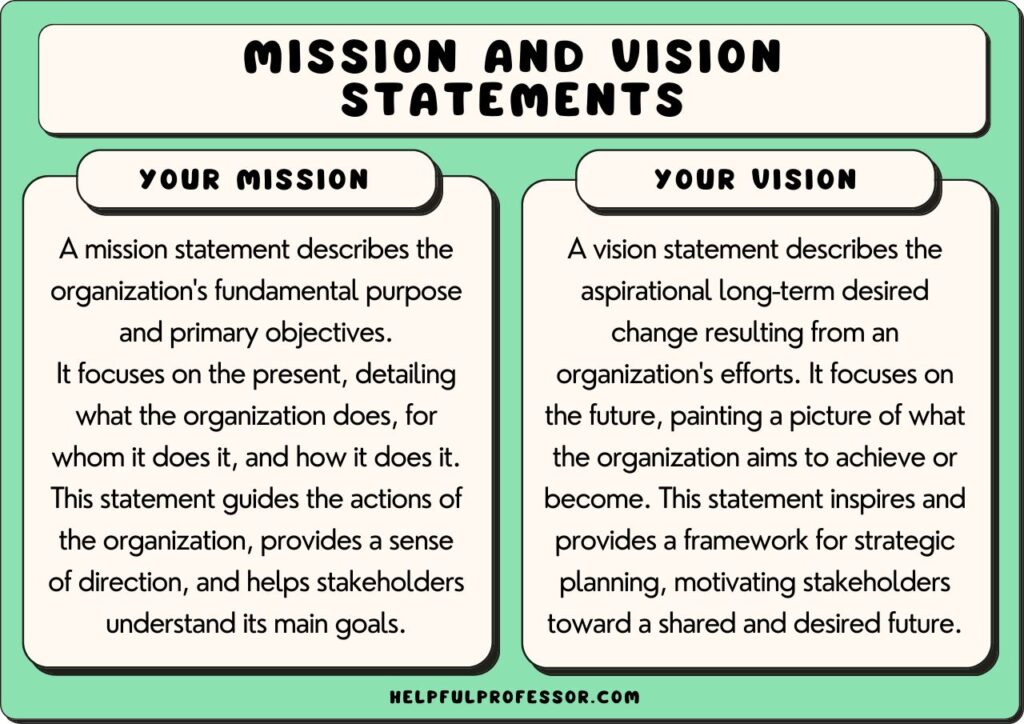
A mission statement is a succinct declaration of an organization’s fundamental purpose and focus that remains unchanged over time. It answers critical questions: What do we do? Who do we serve? And what value do we provide? For instance, consider a hypothetical technology company, TechX, that aims to revolutionize communication. Its mission statement might read: “To innovate and simplify communication technology, empowering individuals and organizations to connect seamlessly across the globe.” This statement captures its essence, target audience, and the intrinsic value it provides, reflecting a commitment to innovation and empowerment.
When crafting an effective mission statement, clarity and brevity are paramount. A well-conceived mission should be easily comprehensible, avoiding corporate jargon that can cloud its meaning. It is essential for an organization to be introspective, contemplating its core values and the unique contributions it aspires to make. The resonance of a mission statement can foster loyalty among employees. When team members understand the mission, they are more likely to feel connected to it, cultivating a culture of engagement and productivity.
The Role of Vision Statements
While mission statements focus on the present, vision statements cast a gaze into the future. They articulate what an organization aspires to become, acting as a source of inspiration that propels the company forward. A robust vision statement embodies ambition and offers a vivid picture of success. For instance, TechX could have a vision statement like: “To be the world’s leading provider of cutting-edge communication technologies, transforming the way people interact.” This vision conveys lofty goals, setting the stage for growth and progress.
It is critical for the vision statement to be aspirational yet attainable. It should unite the workforce, creating shared aspirations among all members of the organization. A compelling vision can serve as a beacon, guiding employees through tumultuous times and fostering resilience amid challenges. It seeds motivation, encouraging individuals to align their efforts with the broader organizational goals.
Distinguishing Between Mission and Vision
Though mission and vision statements mutually complement one another, understanding their distinctions is crucial. The mission is a reflection of the current operational landscape, while the vision points toward a desired future. The two should interlock seamlessly:**the mission provides the framework within which the vision is pursued. The synergy between the two enhances clarity and coherence regarding the organization’s path.
For example, a non-profit organization dedicated to environmental conservation may have a mission statement like: “To protect and preserve natural habitats for future generations,” coupled with a vision statement that states: “To create a world where all ecosystems thrive in harmony with human development.” In this scenario, the mission focuses on direct actions taken today, while the vision propels the organization toward an ideal future.
Common Characteristics of Effective Statements
Despite varying across different organizations, effective mission and vision statements share common attributes. Firstly, they are concise. In an age of information overload, brevity enables easier communication and memorability. Secondly, specificity is vital; generalized statements tend to lose impact. The use of evocative language can evoke emotional connections, enhancing commitment from stakeholders.
Moreover, authenticity is imperative. The statements should mirror the organization’s core values and principles, resonating with both its operational ethos and its strategic ambitions. Finally, inclusivity ensure that the mission and vision resonate with all stakeholders—from employees to customers to the broader community, promoting a shared sense of belonging and commitment.
Examples of Inspiring Statements
To illustrate the theory behind mission and vision statements, we can look at renowned organizations renowned for their compelling statements. For instance, consider the mission statement of Tesla: “To accelerate the world’s transition to sustainable energy.” This mission highlights a commitment to sustainability, appealing to environmentally conscious consumers while also contributing to global ecological stability.
On the vision side, Nike’s powerful vision statement reads: “To bring inspiration and innovation to every athlete in the world. If you have a body, you are an athlete.” This encapsulates an inclusive approach, redefining the concept of an athlete and thereby broadening its market appeal.
Final Thoughts
In sum, mission and vision statements are indispensable tools that provide a framework for organizational identity and strategic direction. Crafted with thoughtfulness and intent, they resonate deeply with stakeholders, fostering alignment and commitment. Organizations that invest time and effort into developing and refining these statements will likely experience enhanced engagement and cohesion, propelling them toward achieving their overarching goals. In a constantly evolving landscape, a cohesive mission and vision illuminate the path for not only the organization but also the communities they serve.