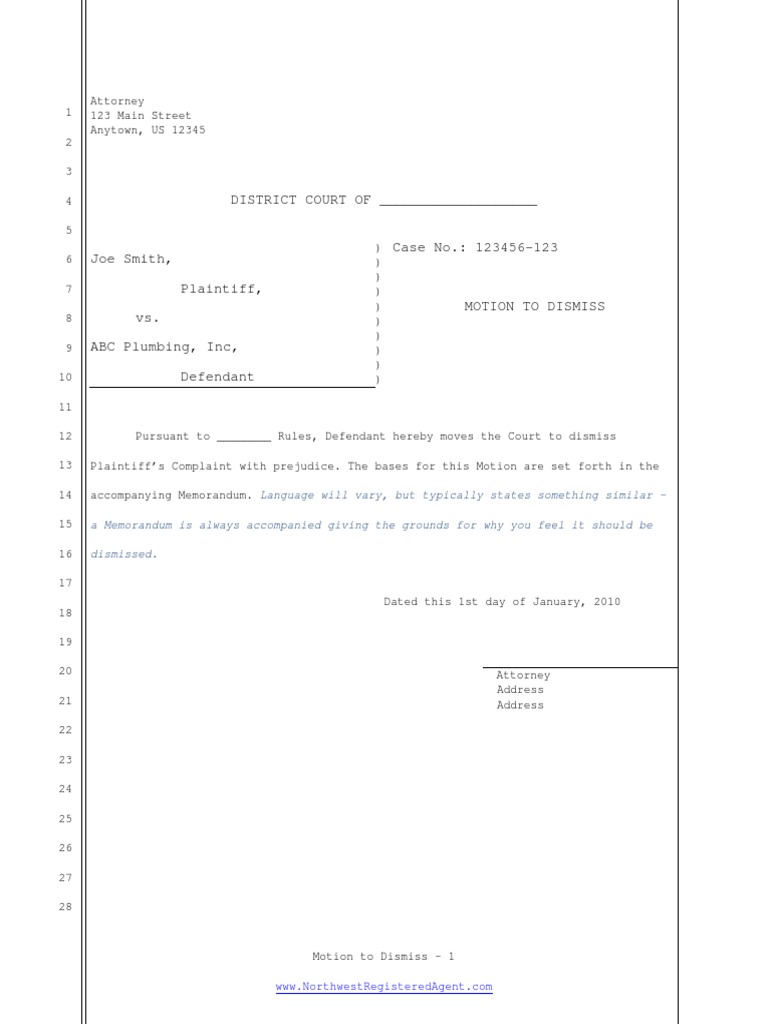
In the labyrinthine world of legal proceedings, few documents are as pivotal yet inconspicuous as the motion to dismiss. Often the unsung hero in legal discourse, this motion serves a multifaceted purpose, challenging the very foundation of a plaintiff’s claim. Whether you’re a seasoned litigator or an inquisitive observer, understanding this motion is essential to navigating the complexities of litigation. So, what exactly is a motion to dismiss, and how does it promise a shift in perspective for both plaintiffs and defendants alike?
Before diving into specifics, it is essential to delineate the concept of a motion to dismiss. Typically filed early in the proceedings, this legal instrument requests that the court dismiss the case on the grounds that, even if all allegations posed by the plaintiff are true, there is no legal basis for a lawsuit. Thus, it is not just a matter of ‘who’ is right, but rather ‘what’ legal reasoning underpins the claims. The very act of filing this motion can alter the trajectory of a case, making it imperative to grasp its implications.
One of the principal grounds for filing a motion to dismiss involves a lack of jurisdiction. Jurisdiction speaks to the authority of a court to hear a case; if a court lacks jurisdiction, it simply cannot adjudicate the matter. This can occur for various reasons, such as when the defendant resides outside the boundaries of the court’s reach or when the subject matter does not pertain to the court’s jurisdiction. By successfully arguing this point, defendants can extricate themselves from a case before the burden of litigation weighs heavily upon them.
Another compelling reason for a motion to dismiss rests on the premise of failure to state a claim upon which relief can be granted. In legal parlance, this condition means that the plaintiff’s complaint lacks necessary elements of a recognizable legal claim. By scrutinizing the sufficiency of the complaint, the defendant can assert that even if every allegation holds merit, it does not warrant judicial remedy. This aspect not only conserves judicial resources but also cultivates a more streamlined approach to litigation.
Equally enthralling is the invocation of various affirmative defenses through a motion to dismiss. These are specific legal arguments that, if proven true, effectively nullify the plaintiff’s case. Such defenses include statute of limitations—an argument asserting that the time period to file the lawsuit has expired—and res judicata—arguing that the issue has already been adjudicated and cannot be relitigated. The introduction of these defenses through a motion to dismiss not only shapes the case’s outcome but also compels the plaintiff to rethink their approach entirely.
Now, let’s delve into the mechanics of how a motion to dismiss is crafted and presented. Clarity is paramount. The legal argument must be articulated with precision, delineating the specific grounds for dismissal. Employing cogent references to statutes, precedents, and procedural rules lends credibility to the motion. This detailed exposition creates an intricate tapestry that weaves the nuances of law with the factual matrix of the case. Additionally, it is prudent to include affidavits or documents that substantiate the motion, offering the court a wealth of information from which to render a decision.
Upon filing the motion, a response from the opposing party is inevitable. The plaintiff, in their counter-argument, has the opportunity to fortify their claims and demonstrate that the case merits judicial scrutiny. This dialogic exchange often cultivates an invigorating atmosphere where ideas and interpretations collide, ultimately enriching the legal discourse. The judge, acting as the arbiter of this exchange, exercises discretion and arrives at a ruling either granting or denying the motion.
Should the court grant the motion to dismiss, the implications extend far beyond the immediate dismissal of the case. It can set a precedent for future litigants, altering the legal landscape concerning similar claims. Conversely, if the motion is denied, it often emboldens the plaintiff, reinforcing the viability of their claims. This outcome frequently leads to settlement negotiations or the further pursuit of litigation, illuminating a trail of opportunities and confrontations along the path of legal resolution.
The strategic deployment of a motion to dismiss becomes increasingly important in high-stakes litigation. For corporate defendants—particularly large entities facing class-action lawsuits—this motion serves as a sounding board. It allows corporations to assess the strength and viability of mass claims with an efficient legal maneuver. Fundamentally, it provides the court with the ability to weed out frivolous claims, fostering an environment where only the most robust cases survive judicial scrutiny.
The motion to dismiss also invites speculation about the future of litigation. As legal doctrines evolve and societal norms shift, new grounds for dismissal may emerge. Imminent discussions around technology’s role in the legal realm prompt potential revisions to how courts interpret jurisdiction as it pertains to online activities. With the ever-changing legal landscape, remaining astute and adaptable is crucial for litigators on both sides of the aisle.
Ultimately, the motion to dismiss is more than just a procedural tool; it is a vehicle of transformation. It possesses the power to dismantle claims before they gain momentum and can influence the tone and direction of litigation. By understanding its intricacies and employing it judiciously, legal practitioners can navigate the methodical yet dynamic world of judicial proceedings with greater efficacy. Indeed, grasping the nuances of a motion to dismiss allows one to appreciate it not merely as a legal formality but as a profound instrument of justice.