
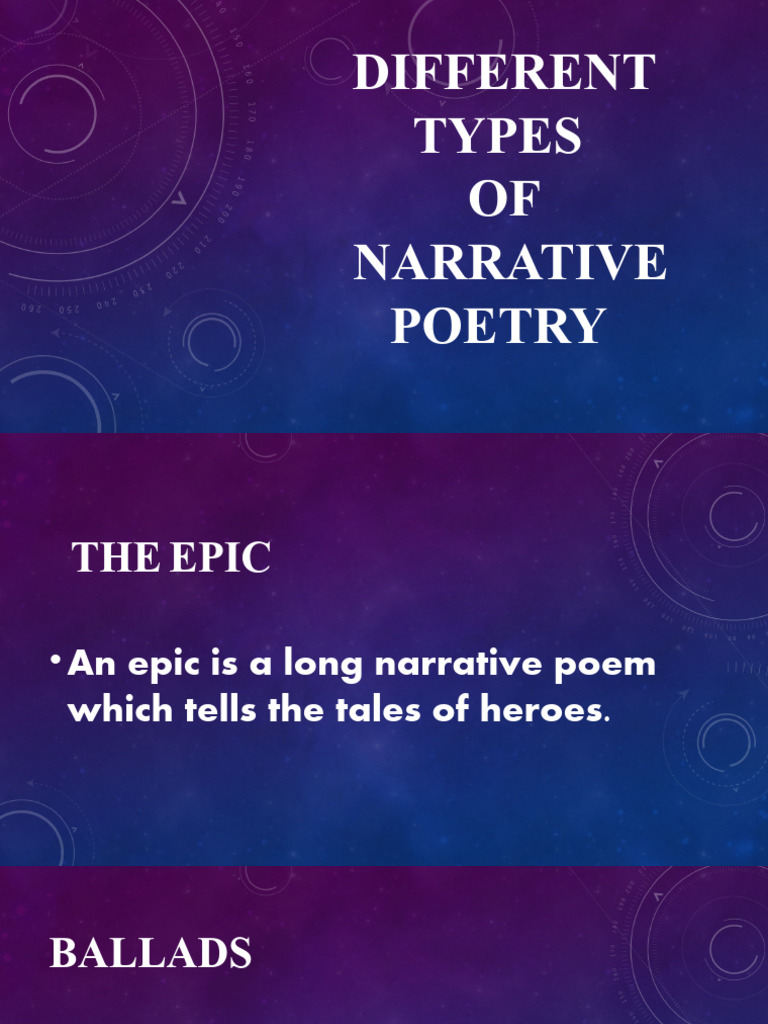
Narrative poetry is a captivating form of literary art that marries storytelling with verse, breathing life into characters and events through a rhythmic tapestry of words. Unlike lyrical poetry, which often expresses personal emotions or sentiments, narrative poetry unfolds a tale, inviting readers on a journey through its structured stanzas. This genre holds a remarkable capacity to shift perspectives and incite intrigue, offering a glimpse into varied human experiences through the lens of vivid narration.
To better understand the essence of narrative in poetry, one must delve into its defining characteristics. At its core, narrative poetry employs a plot, setting, and characters, much like any fictional tale. It draws the audience into a world crafted by the poet’s imagination, where tales, often profound in their simplicity, revel in the joys, sorrows, and complexities of life.
Consider the varied approaches to narrative poetry, each with a unique style and perspective that enchants readers. The epic poem provides an extraordinary example, whereby grand adventures and heroic deeds are recounted over extensive lengths. Works such as Homer’s “The Iliad” and “The Odyssey” exemplify this grandiosity, chronicling tales of valor, love, and loss, punctuated by the trials faced by their protagonists. Their sweeping narratives not only entertain but invite philosophical contemplation on the human condition, ethics, and morality.
Beyond epics, narrative poetry can also take on more intimate forms, capturing personal experiences and reflections. Take, for instance, the poignant storytelling found in Langston Hughes’ “The Weary Blues.” This piece intertwines the rich cultural heritage of African American music with the struggles of the speaker, conveying a deep sense of longing and existential exploration. Hughes expertly illustrates how the blues serve as a vehicle for both personal revelation and broader societal commentary. The emotional undercurrents evoke empathy and understanding, thus shifting the reader’s perspective on the experiences of marginalized voices.
The structure of narrative poetry plays a vital role in delivering its message. Many poets opt for traditional forms such as ballads or rhymed verse, while others embrace free verse, allowing for greater fluidity and expression. The rhythmic quality of these poems often mirrors the ebb and flow of storytelling itself, guiding the reader through moments of tension, release, and resolution.
In addition to its structural aspects, the use of imagery is paramount in enriching narrative poetry. Vivid descriptions transport readers into the heart of the story, creating a multisensory experience. For instance, in Edgar Allan Poe’s “The Raven,” the haunting imagery of the raven’s midnight visit weaves a tale of loss and despair. As the poet delves deeper into the protagonist’s psyche, the reader is swept into a maelstrom of grief, isolation, and haunting questions about life and death. The rich details evoke a sense of foreboding, enhancing the narrative’s emotional depth and leaving an indelible impression.
Notable examples of narrative poetry resonate with readers not simply because of their plots—but also due to their thematic depth. A poem may recount tragic events, yet it often reflects broader societal issues, illuminating the human experience in myriad forms. “The Ballad of Birmingham” by Dudley Randall serves as a case in point. Through the story of a mother and her daughter, Randall addresses the horrors of racial violence, conveying a powerful message about innocence and the fragility of peace. The poignant dialogue and tragic resolution compel readers to engage with the historical context, compelling a shift in perspective toward issues of justice and humanity.
Modern narrative poets continue to innovate, infusing contemporary themes into their works. Ocean Vuong, in his poem “Night Sky with Exit Wounds,” combines personal and cultural narratives to explore identity, loss, and love. His deft weaving of imagery and emotion reveals the intricacies of human relationships, compelling readers to reflect on their own experiences while navigating complex themes such as migration and belonging. This ability to resonate with the reader makes contemporary narrative poetry as relevant today as in centuries past.
Moreover, the transcendent nature of narrative poetry lies in its flexibility. Poets can draw from various styles, languages, and forms, creating a rich tapestry that speaks to diverse audiences. The inclusion of multilingualism, as seen in the works of poets like Gwendolyn Brooks, lends a unique texture to narratives, fostering a deeper connection with readers from different backgrounds. Embracing cultural nuances and varying perspectives elevates the narrative, allowing for an expansive exploration of shared human experiences.
In conclusion, narrative poetry serves as a window into the heart and soul of humanity. It not only implores readers to reconsider their perspectives but also invokes a desire to explore the intricate stories of others, thereby fostering empathy and understanding. Through its diverse forms, rich imagery, and profound themes, narrative poetry captivates, challenges, and enchants, creating a lasting impact that lingers long after the last line is read. It is a testament to the power of storytelling, reminding us that each narrative holds the potential to shift perspectives, spark curiosity, and celebrate the kaleidoscope of human experience.













